Israel Intensifies Military Offensive in Lebanon Despite US-Brokered Ceasefire
Jerusalem, Tuesday, 26 May 2026.
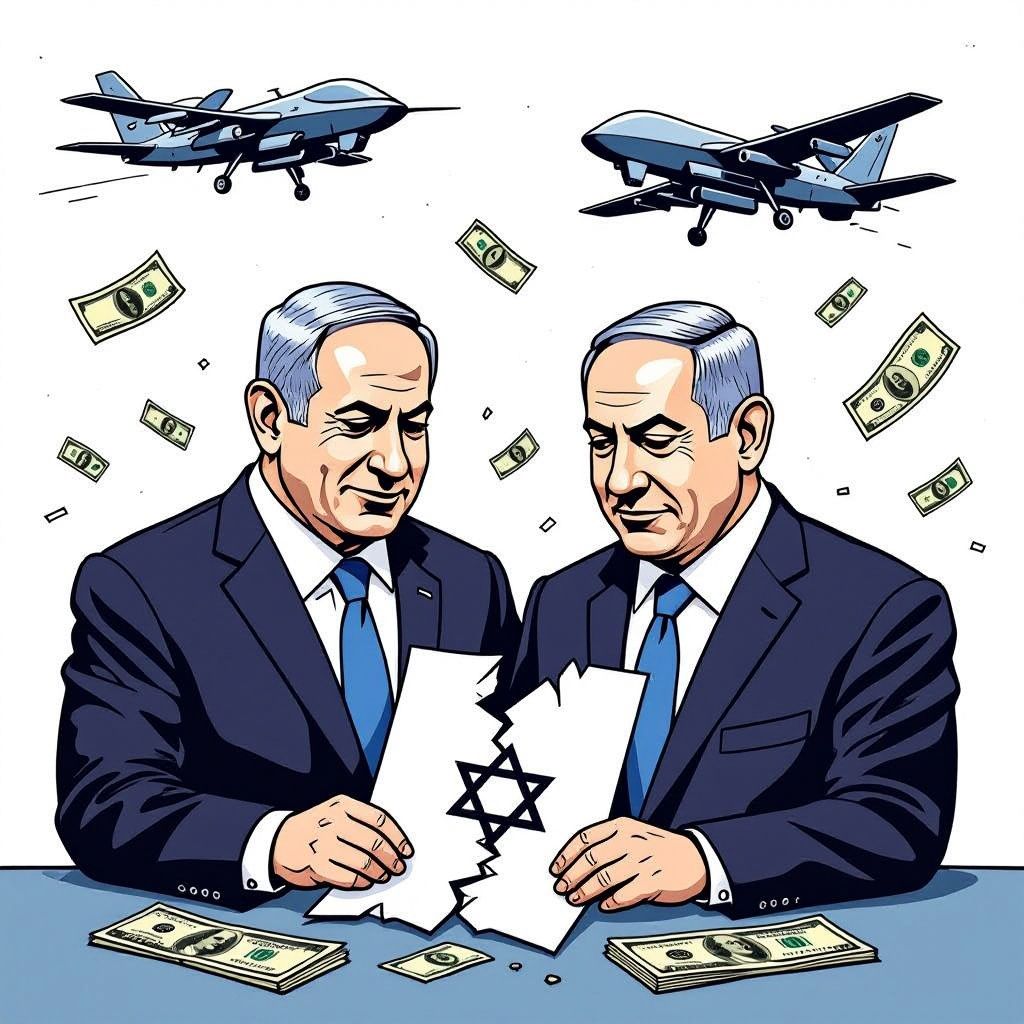
Israeli Prime Minister Netanyahu is escalating strikes against Hezbollah to counter advanced fiber-optic drone attacks, threatening regional stability despite an active US-brokered ceasefire.
The Escalation of Hostilities Amidst a Fragile Truce
On May 25, 2026, Prime Minister Benjamin Netanyahu commanded the Israeli military to intensify its offensive in Lebanon, explicitly ordering his forces to “step on the gas even more” to crush Hezbollah [2][4]. This directive directly undermines a fragile ceasefire that had been brokered by the United States and implemented in mid-April 2026 [1][2][5]. The renewed military campaign coincided with Lebanon’s Liberation Day, marking the 26th anniversary of the withdrawal of Israeli troops from southern Lebanon in 2000 [4]. Since the broader conflict erupted on March 2, 2026, Lebanese authorities report that Israeli operations have resulted in over 3,100 deaths [1][4].
Advanced Weaponry and Mounting Casualties
Hezbollah has met the Israeli escalation with sustained retaliation, heavily relying on advanced drone technology. Since the April ceasefire, the militant group has launched over 1,000 fiber-optic drones and 700 rockets into northern Israel [5]. These strikes, which recently targeted military installations such as the Shomera barracks and a post in Misgav Am [1], have inflicted significant casualties on Israeli forces. During the post-truce period, drone attacks have killed at least 11 Israeli soldiers [2][8], including Sgt. Nehoray Leizer [7]. The persistent drone threat has exposed vulnerabilities in Israel’s northern defense, prompting the government to approve a massive 2 billion shekel ($692 million) defense budget specifically allocated for drone countermeasures during the week of May 17, 2026 [4][7], which reflects an exchange rate of approximately 2.89 shekels per US dollar.
Military Strategy and Geopolitical Ripple Effects
The push for escalation extends deep into the Israeli military establishment. Following a month of severe attrition and growing anger among northern Israeli residents, IDF Chief of Staff Lt.-Gen. Eyal Zamir formally recommended striking Beirut in response to the drone attacks [7][8]. Furthermore, intelligence reports on May 24, 2026, revealed significant drama within the political-security echelon, indicating that Netanyahu and Defense Minister Israel Katz are reviewing a comprehensive fire plan developed by the IDF [8]. This proposed strategy would drastically alter the rules of engagement, authorizing immediate and expanded strikes against Hezbollah’s structural assets in southern Lebanon [8].
Diplomatic Horizons and Future Risks
The juxtaposition of escalating military action in Lebanon and delicate diplomatic maneuvering in Qatar underscores the extreme volatility of the Middle East [GPT]. As a critical test of diplomatic endurance, Lebanese and Israeli military officials are scheduled to convene at the Pentagon on May 29, 2026 [5]. These unprecedented bilateral talks—the first direct military discussions between the two nations in over three decades—aim to negotiate a 45-day extension of the ceasefire and address the structural disarmament of Hezbollah [5]. However, an unnamed US State Department official warned that “the status quo is untenable,” emphasizing that a successful, Lebanese government-led ceasefire is essential to stripping Hezbollah of its operational power [5][7]. Whether diplomacy can outpace the accelerating drumbeat of war remains highly precarious [alert! ‘Future diplomatic outcomes and the success of the May 29 talks cannot be definitively predicted’], leaving global investors to navigate an increasingly complex geopolitical risk premium [GPT].
Sources
- www.theguardian.com
- www.reuters.com
- www.facebook.com
- www.aljazeera.com
- www.pbs.org
- www.dw.com
- www.jpost.com
- www.instagram.com