President Trump Uses Wartime Funds for $700 Million US Coal Industry Boost
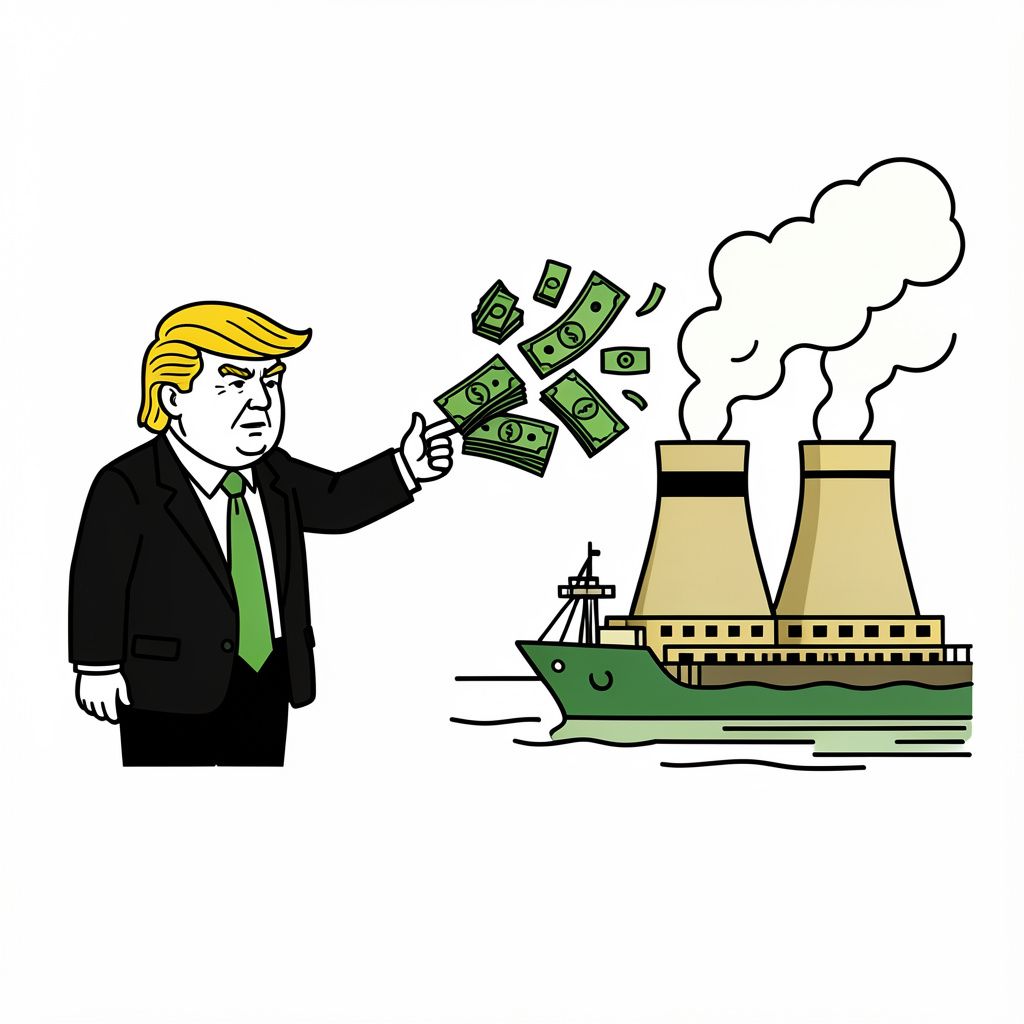
Washington, Thursday, 4 June 2026.
On June 4, 2026, President Trump invoked Cold War-era wartime powers to inject $700 million into the US coal sector, funding domestic plants and a California export terminal.
The Strategic Pivot to Legacy Energy
On Thursday, June 4, 2026, President Donald Trump formally announced a $700 million capital injection into the United States coal industry during an address from the Oval Office [1][4]. Joined by key Republican cabinet members—Interior Secretary Doug Burgum, Energy Secretary Chris Wright, and Environmental Protection Agency Administrator Lee Zeldin—the President outlined a robust federal commitment to legacy fossil fuels [4]. The administration is invoking the 1950 Defense Production Act (DPA), a Cold War-era statute, to bypass traditional legislative funding routes and classify coal supply chains as essential to national defense [5][6][7]. This executive maneuver aims to stabilize an industry that has faced decades of structural decline, framing domestic coal production as a cornerstone of both economic stability and national security [6][8].
The funding package is strategically bifurcated to address both domestic consumption and international export capabilities [6]. Under the DPA authority, $425 million is earmarked to upgrade and extend the operational lifespans of 13 existing coal-fired power plants across ten states, including West Virginia, Kentucky, and North Dakota [1][4]. An additional $75 million in DPA funds will finance the construction of the Oakland Bulk and Oversized Terminal in Northern California [1][8]. Furthermore, the Department of Energy (DOE) is deploying $185 million in grant funding to construct two new coal plants in Alaska and West Virginia, and to restart a dormant facility in Maryland [1][2][8]. Notably, the Alaskan and West Virginian facilities will be the first new coal plants built in the United States since 2013 [4].
Economic Justifications and Market Realities
The economic rationale provided by the Trump administration centers on lowering domestic living costs and securing reliable baseload power for emerging, energy-intensive sectors [1][5]. A White House official projected that these initiatives could save American consumers $50 billion in energy generation costs [4]. Industry advocates emphasize that coal provides around-the-clock power with on-site fuel storage, a critical asset as electricity demand surges from artificial intelligence data centers and broader electrification efforts [7]. Michelle Bloodworth, President and CEO of America’s Power, noted that the United States possesses approximately 400 years of domestic coal reserves, providing a buffer against international supply chain disruptions [7].
Despite these federal interventions, the coal industry faces stark macroeconomic headwinds [GPT]. According to the U.S. Energy Information Administration, coal’s share of domestic electricity generation has plummeted from over 50 percent in the year 2000 to less than 20 percent by June 2026 [6]. Looking at specific historical benchmarks, coal energy production declined from 45 percent in 2010 to 15 percent in 2024, representing a relative drop of -66.667 percent over that period [4]. This contraction has actively impacted the labor market, with the number of active U.S. coal miners decreasing from approximately 51,500 in 2017 to 39,800 in 2025, a workforce reduction of -22.718 percent [5]. Meanwhile, natural gas has expanded to provide about 43 percent of U.S. electricity, and global renewable energy capacity continues to surge [4].
Geopolitics and the Export Economy
A significant component of Thursday’s policy announcement is the aggressive pivot toward Asian export markets [5]. The $75 million allocation for the West Gateway export terminal in Oakland, California, is designed to bypass domestic demand constraints by shipping carbon-intensive fuel across the Pacific [5][6][8]. The administration expects the facility to break ground this summer and reach operational status by the summer of 2028 [1]. Wyoming Governor Mark Gordon recently traveled to Japan and Taiwan to cultivate demand for imported U.S. coal, describing the industry as “absolutely essential for the lifeblood of our state” [5]. President Trump echoed this international focus during his remarks, stating, “If you look at China, if you look at so many of the successful countries, they’re using coal” [4].
This export strategy aligns with broader administrative actions taken prior to June 2026 to prop up the sector [6]. On May 28, 2026, the administration announced it had approved 76 new coal permits since taking office in 2025 [4]. Furthermore, the Interior Department has expanded coal leasing opportunities on federal lands, while the Department of Energy issued emergency orders directing select coal-powered stations to continue operations beyond their scheduled retirement dates [6]. The President even directed the Pentagon to pursue agreements to purchase electricity generated by coal-fired plants for military installations, cementing the administration’s April 20 presidential determination that coal baseload generation is essential to national defense [6][7].
Regulatory Pushback and Environmental Concerns
Unsurprisingly, the administration’s financial commitment to fossil fuels has drawn immediate and fierce condemnation from environmental organizations and political opponents [4]. Critics argue that the federal government is artificially subsidizing a declining industry at the expense of public health and long-term economic efficiency [4]. Patrick Drupp, climate policy director at the Sierra Club, called the policy “disgusting and reprehensible,” arguing that taxpayer dollars are being funneled to “deadly and expensive coal plants” [4][5]. Similarly, Kit Kennedy of the Natural Resources Defense Council stated that the move props up “coal billionaires” while putting the public at risk [4].
There are also emerging legal and regulatory questions regarding the deployment of the DOE grant funding [1]. Danielle Lemmon, a former official in the DOE’s Office of Clean Energy Demonstrations during the Biden administration, pointed out that the structural intent of these specific funds was historically to assist coal plants in capturing planet-warming emissions [1]. Lemmon suggested that the current DOE is failing to enforce legal alignments requiring carbon capture integration, stating that “the DOE doesn’t appear to be enforcing that alignment” if recipients choose to bypass emission-reduction technologies [1]. As the administration moves to distribute the $700 million, these regulatory disputes and localized opposition—particularly in the San Francisco Bay Area regarding the Oakland terminal—are likely to trigger protracted legal battles [alert! ‘potential future legal challenges usually follow controversial federal funding repurposing’] [8].
Sources
- thehill.com
- thehill.com
- www.c-span.org
- www.cbsnews.com
- www.reuters.com
- www.foxbusiness.com
- americaspower.org
- www.eenews.net