Seven States Sue Trump Administration Over $1 Billion Deal to Cancel Offshore Wind Farms
New York, Tuesday, 2 June 2026.
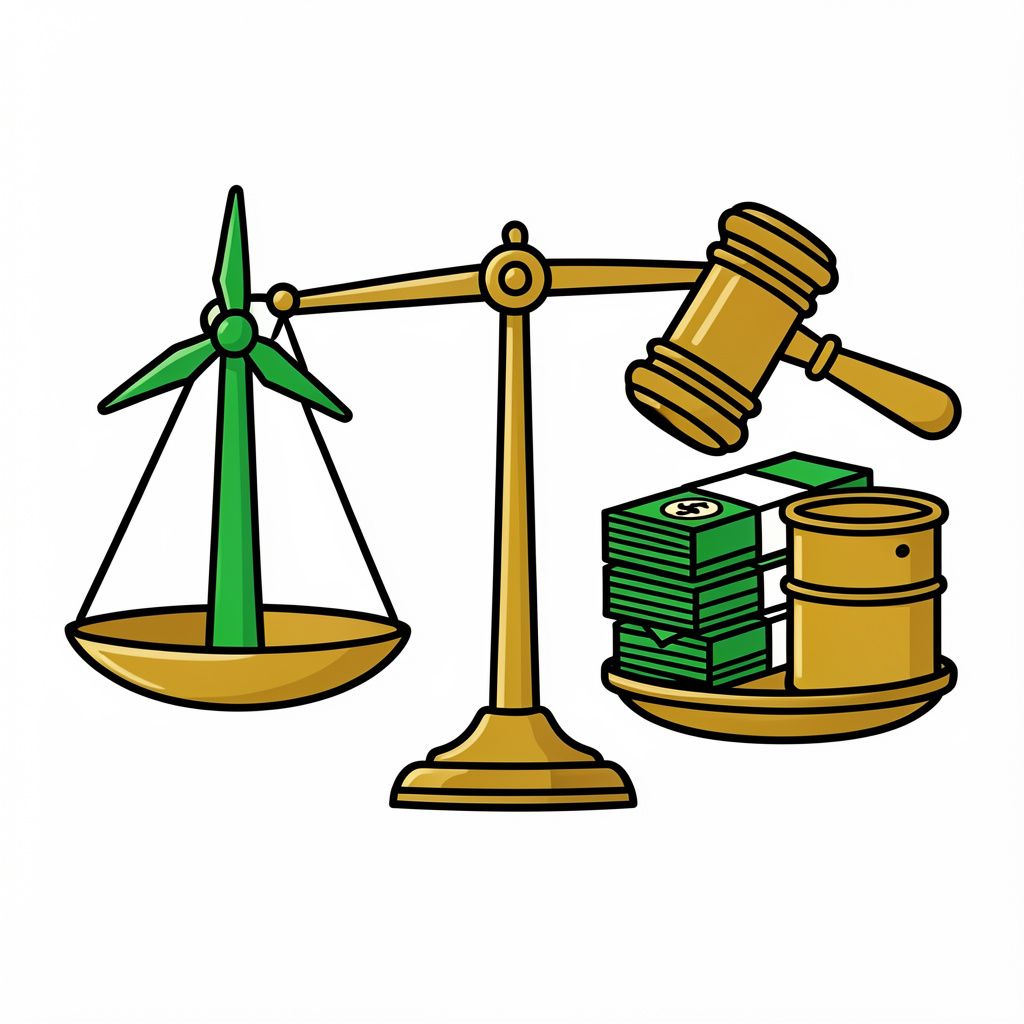
Seven US states sued the Trump administration on June 2, 2026, over a $1 billion taxpayer payout to a foreign corporation to abandon wind energy for fossil fuels.
A Legal Challenge to a Paradigm Shift in Energy Policy
On June 2, 2026, a coalition of seven Democratic-led states—New York, New Jersey, Connecticut, Maine, Massachusetts, Rhode Island, and Vermont—filed a federal lawsuit in the U.S. District Court for the District of Columbia against the Trump administration [2][5][8]. Led by New York Attorney General Letitia James, the plaintiffs are challenging a controversial settlement agreement executed on March 23, 2026, between the U.S. Department of the Interior (DOI) and French energy conglomerate TotalEnergies [2][8]. The lawsuit, officially docketed as Case 1:26-cv-01910, seeks to vacate the administration’s cancellation of offshore wind lease OCS-A 0538 in the New York Bight [8]. The states allege that the federal government unlawfully bypassed statutory requirements to redirect nearly $1 billion in taxpayer funds to a foreign corporation in exchange for abandoning renewable energy development [1][4][8].
The Mechanics of the “Pay-Not-To-Play” Agreement
The administration’s explicit strategy to dismantle offshore wind infrastructure has been met with fierce resistance from state officials. New York Governor Kathy Hochul characterized the arrangement as an “outrageous abuse of taxpayer dollars” and a “pay-not-to-play scheme” designed to pressure a private company into favoring oil and gas drilling [4]. New York Attorney General Letitia James further criticized the move as a “sham deal” engineered after the administration faced repeated legal defeats over its previous attempts to halt wind energy approvals [2][4]. The plaintiffs argue that the agreement violates several federal statutes, including the Administrative Procedure Act (APA), the National Environmental Policy Act (NEPA), and the Judgment Fund Act, by operating without required public hearings or environmental impact reviews [8]. Furthermore, the suit asserts that the DOI breached the Outer Continental Shelf Lands Act (OCSLA), which strictly limits the Interior Secretary’s authority to cancel leases without demonstrating serious harm to life, property, or national security [3][8].
Regulatory Uncertainty and Grid Reliability Risks
The cancellation of the Attentive Energy lease introduces severe complications for regional grid reliability and state-level climate mandates. The lease area was slated to host two major developments: Attentive Energy One and Attentive Energy Two, which together would have provided a combined capacity of 2746 megawatts [8]. This infrastructure was projected to power over 1.350 million homes across New York and New Jersey [8]. The loss of this capacity arrives at a precarious moment for regional energy markets. According to reports from the New York Independent System Operator (NYISO), New York City faces a critical need for additional electricity generation as early as the summer of 2026, exacerbated by the impending retirement of 6.5 gigawatts of aging fossil fuel plants by 2028 [8] [alert! ‘Specific status of summer 2026 reliability solutions remains unclear as grid operators scramble to address the shortfall’]. With New York’s electricity demand projected to surge by 8% by 2030 and up to 42% by 2050—driven largely by economic development and data centers—the removal of the Attentive Energy projects severely compromises the state’s statutory goal of procuring 9 gigawatts of offshore wind by 2035 [8].
Sources
- www.windpowermonthly.com
- www.cnn.com
- www.theguardian.com
- ag.ny.gov
- www.nytimes.com
- www.usnews.com
- ag.ny.gov