India Speeds Up Domestic Carbon Market to Shield Exporters From European Taxes
New Delhi, Monday, 28 September 2026.
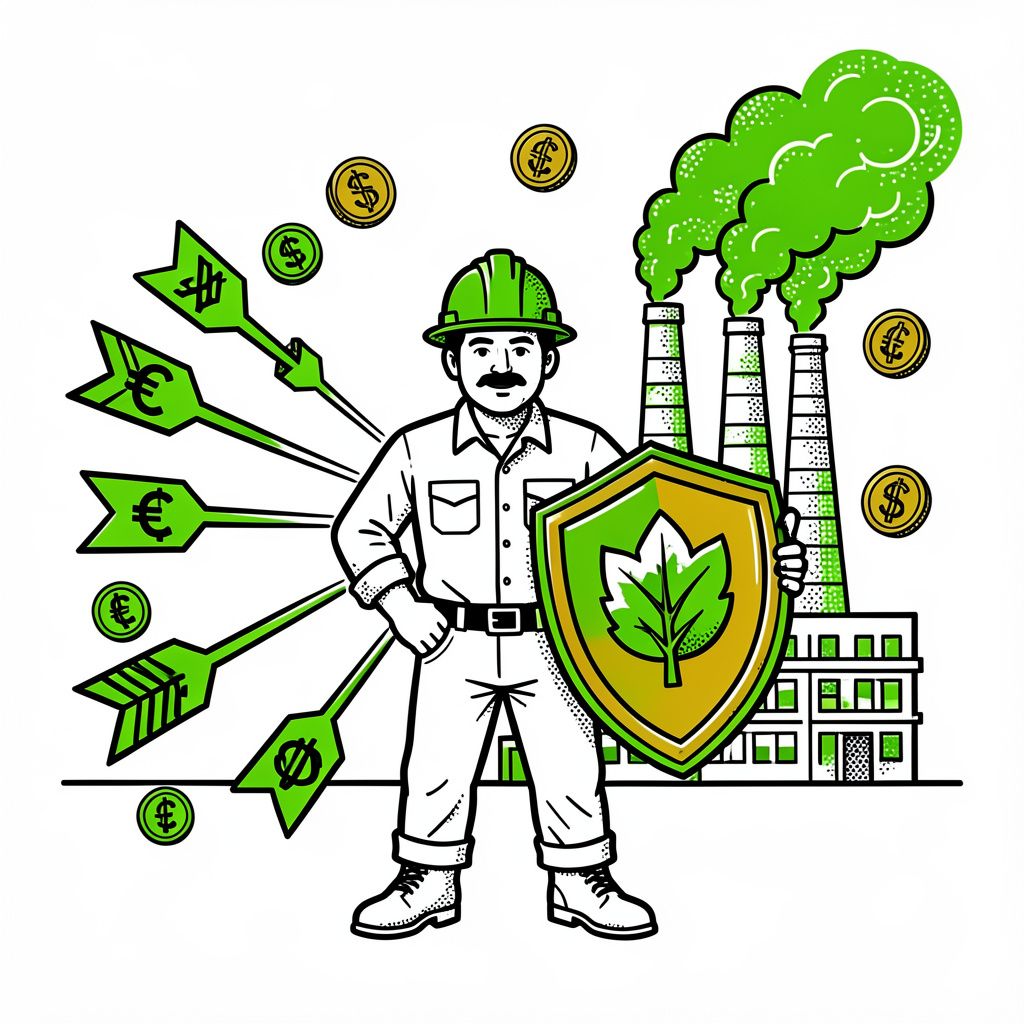
To retain carbon revenues locally, India is accelerating its domestic carbon market as European border taxes threaten to reduce Indian steel exports to Europe by up to 24 percent.
The CBAM Shock to Indian Exports
Indian industrial exporters are navigating a transformed trade landscape following the definitive implementation of the European Union’s Carbon Border Adjustment Mechanism (CBAM) in January 2026 [1]. This mechanism levies carbon costs on imports based on production emissions, targeting six specific sectors including iron, steel, aluminium, cement, fertilisers, and hydrogen [1]. The economic stakes are substantial, as India’s merchandise exports totaled $441.78 billion in FY26, with the EU accounting for 39.3% of India’s iron and steel exports [1]. Metals represented a critical portion of this trade value, with annual metals exports reaching approximately $34.8 billion in 2025 [1]. Within this category, iron, steel, and aluminium comprised roughly 78% of the total volume, representing a calculated value of 27.144 billion dollars in exposed assets [1]. The pressure on competitiveness is tangible; a June 2026 working paper by the Indian Council for Research on International Economic Relations (ICRIER) estimates that India’s steel exports to the EU could decline by 24% under the new carbon regime [1].
Domestic Carbon Pricing Strategy
In response to these external pressures, New Delhi is accelerating its domestic Carbon Credit Trading Scheme (CCTS), which was notified in June 2023 [1]. The strategic objective is to establish domestic carbon pricing, allowing India to retain carbon-related revenues locally rather than forfeiting tariffs to European tax authorities [1]. The CCTS currently oversees over 700 industrial units across seven emissions-intensive sectors, utilizing two-year compliance cycles that began in FY 2025–26 [1]. However, a significant pricing gap remains between the domestic and European systems; while the EU carbon price is currently about €75 per tonne of CO₂, CCTS credits are valued between US$11 and US$15 per tonne [2]. Despite this disparity, the UK has agreed to recognize India’s CCTS, scheduling its own carbon mechanism for January 2027 [1]. Indian officials have established a Committee on Export Preparedness for EU CBAM, and accredited verifiers under the Bureau of Energy Efficiency are aligning protocols for the first annual CBAM declarations, due by September 2027 for 2026 emissions [1].
Global Trade Tensions and Legal Challenges
The implementation of carbon border taxes has sparked significant geopolitical friction, culminating in formal disputes at the World Trade Organization (WTO) [4]. The WTO Dispute Settlement Body has established a panel to adjudicate Russia’s complaint against the EU’s CBAM, with India and 17 other countries reserving third-party rights to monitor the proceedings [4]. Concurrently, the 18th BRICS Summit adopted the New Delhi Declaration, formally opposing unilateral and discriminatory climate-linked trade measures [3]. At the 12th Environmental Ministers Meeting on 18 August 2026, BRICS nations collectively argued that the mechanism creates asymmetric burdens for developing economies with carbon-heavy industries [5]. While India secured a forward-looking most-favoured-nation assurance during January 2026 Free Trade Agreement negotiations with Brussels, this functions as a non-discrimination guarantee rather than formal EU recognition of CCTS as an equivalent carbon-pricing mechanism [2]. Consequently, Indian exporters remain liable for substantial CBAM payments in the EU and UK despite domestic compliance efforts [1].
Industrial Decarbonisation and Future Outlook
Long-term competitiveness depends on reducing the carbon intensity of Indian manufacturing, which currently relies heavily on coal-based Blast Furnace–Basic Oxygen Furnace routes [5]. Experts emphasize that decarbonising hard-to-abate sectors ultimately depends on affordable clean power and reinvestment of carbon revenues into transmission and energy storage [1]. A proposed India CBAM Levy Industrial Decarbonisation Fund could collect domestic levies on CBAM-covered exports to finance this transition [2]. However, implementation challenges persist, particularly for micro, small, and medium enterprises (MSMEs) that form critical parts of affected supply chains but face rigorous measurement, reporting, and verification requirements [3]. As global climate-trade governance becomes increasingly characterized by fragmented negotiations, India aims to leverage partnerships like the BRICS Carbon Markets Partnership to develop common emissions tracking methodologies [3]. The solution lies in actually reducing carbon emissions rather than offsetting, ensuring that India’s industrial growth does not come at the expense of climate vulnerability [1].