Argentina's Poverty Rate Reaches 32% as Inflation Outpaces Household Income
Buenos Aires, Friday, 25 September 2026.
Official statistics reveal Argentina’s poverty rate rose to 32.3% in early 2026, driven by basic basket costs outstripping family earnings, though figures remain below 2024 peaks.
Official Data Reveals Sharp Rise in Poverty Levels
Official government data released on 24 September 2026 indicates that Argentina’s poverty rate increased to 32.3% during the first half of the year [1][2]. This figure represents a significant shift from the 28.2% recorded in the preceding six-month period, marking a rise of 4.1 percentage points [1][3]. The National Institute of Statistics and Censuses (INDEC) reported that approximately 15.5 million people are now living below the poverty line across the country’s 31 major urban agglomerations [2][4]. Concurrently, the rate of extreme poverty, or indigence, expanded to 7.5% from 6.3% in the previous semester [1][5].
Inflation Outpaces Income Growth
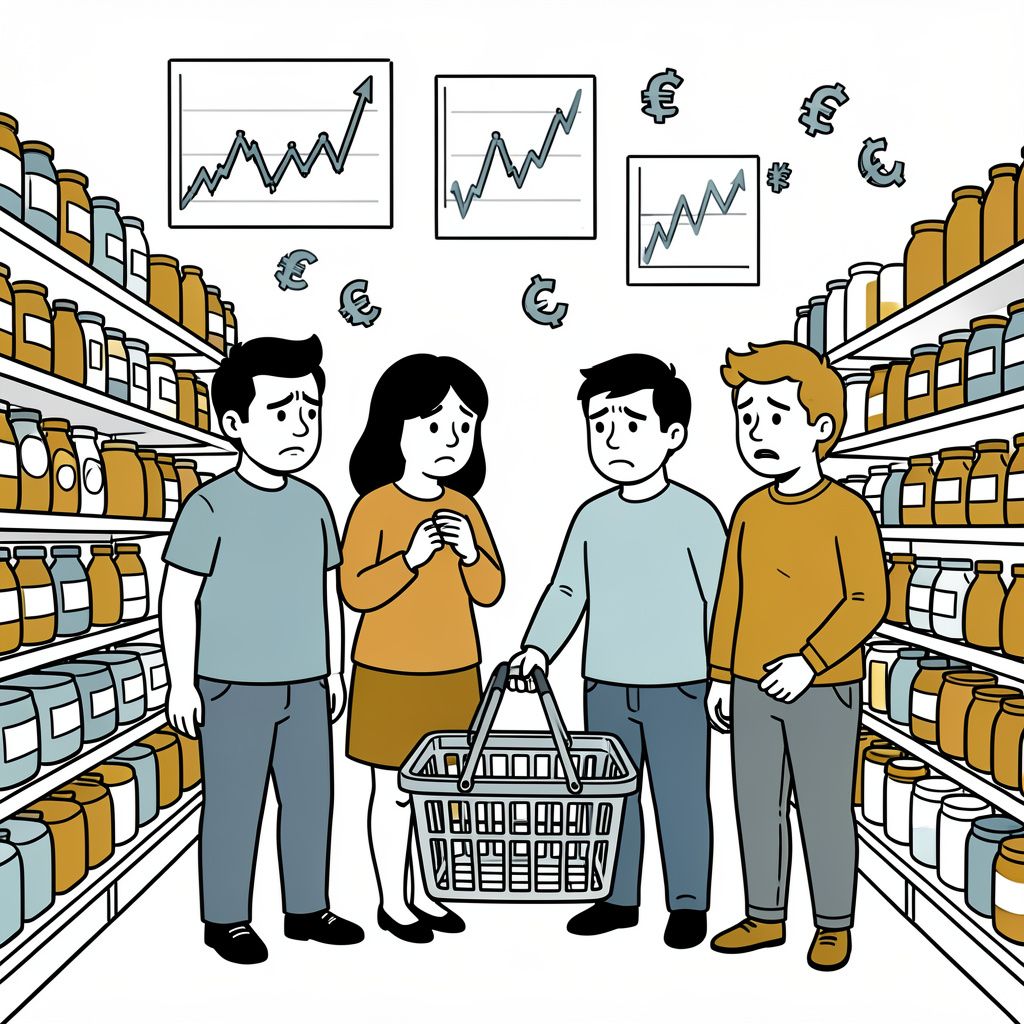
The surge in poverty correlates with persistent inflationary pressures that have eroded household purchasing power despite nominal income gains [1]. During the first semester of 2026, inflation reached 16.8%, while the cost of the Total Basic Basket (CBT) rose by 19.6% [3][4]. In contrast, the average total family income per capita increased by only 11.5% over the same period, creating a tangible deficit for vulnerable households [2][4]. This disparity highlights the economic challenge where price increases for essential goods outstrip the ability of families to afford them, driving the poverty metric upward [3].
Demographic and Regional Disparities
The impact of these economic conditions is not distributed evenly across the population, with children facing the highest risk [1]. Among Argentines aged 14 and under, 44.5% were classified as poor, and 10.8% as extremely poor [1][5]. Regional data shows the Northeast region recorded the highest poverty incidence at 41.5%, while the Patagonia region recorded the lowest at 28.4% [2][4]. At the city level, Concordia registered the highest rate at 56.2%, whereas the City of Buenos Aires recorded the lowest at 11.1% [4][5].
Government Response and Economic Outlook
President Javier Milei’s administration acknowledges the increase but emphasizes long-term gains compared to the 52.9% poverty rate observed in the first half of 2024 [1][3]. Economy Minister Luis Caputo stated that while rates increased relative to the previous semester, they remain significantly lower than during the prior administration, citing a reduction from 52.9% to 32.3% over two years [3][5]. Experts suggest that while inflation has slowed to 1.7% as of August 2026, job insecurity and informal labor remain critical barriers to sustaining poverty reduction [1][5].