UK Economic Growth Forecast Upgraded as Tech Expansion Drives Resilience
London, Wednesday, 14 October 2026.
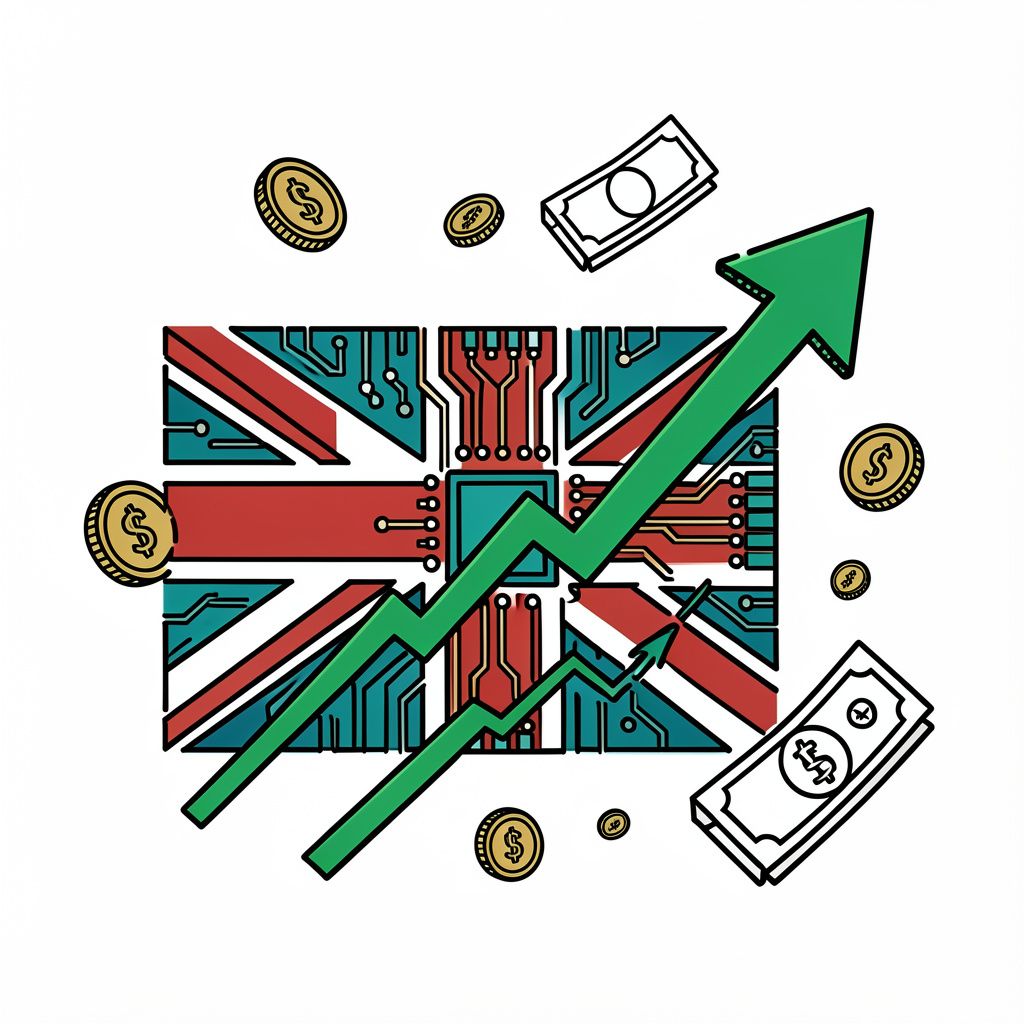
The International Monetary Fund raised the UK’s 2026 economic growth forecast to 1.3 percent, driven by artificial intelligence adoption, though rising energy costs could slow momentum next year.
IMF Revises 2026 Growth Projections Upward
The International Monetary Fund (IMF) has officially upgraded the United Kingdom’s economic growth forecast for 2026 to 1.3 percent, a significant revision from the 1.0 percent predicted in July 2026 [1][2]. This adjustment represents a 30 percent increase in the projected growth rate, positioning the UK as one of the better-performing economies within the G7 group for the current year [1][6]. The announcement was made on 12 October 2026, highlighting improved consumer resilience and stabilizing inflation as key drivers behind the optimistic outlook [1]. Despite global economic instability, the UK is projected to tie with Germany for the second-fastest growing economy among G7 nations in 2026 [1][2].
Inflation and Medium-Term Outlook
While the immediate forecast shows improvement, the IMF warns that momentum may slow in 2027, with growth expected to edge down to 1.2 percent [2][3]. Inflation is forecast to average 3.3 percent for 2026, with the 2027 forecast raised to 2.8 percent, up from a previous 2.4 percent prediction [1][5]. This persistent inflationary pressure is largely attributed to disrupted energy transportation and production in the Middle East, alongside rising interest rates [1][3]. IMF Chief Economist Silvana Tenreyro noted on 13 October 2026 that the UK’s debt management process is currently leading G7 economies, with the nation on track to achieve the lowest annual borrowing in the group by 2031 [2].
Drivers of Growth and Structural Risks
A significant factor contributing to the 2026 growth spurt is the rapid adoption of artificial intelligence technology, which has driven business expansion in the first half of the year [3][4]. Strong early 2026 performance, including 0.6 percent growth in Q1 and 0.5 percent in Q2, was partly fueled by AI-related business expansion [3]. However, structural risks remain, as the IMF warns that escalating conflict in the Middle East, extreme weather, or cyber attacks could keep energy and food prices elevated and volatile [5][6]. Sir Howard Davies, former deputy governor of the Bank of England, cautioned that while the UK looks better than some peers, the nation is still growing slowly, likening it to winning a slow bicycle race because others are going backwards more rapidly [1][2].
Interest Rates and Monetary Policy
In response to the upgraded growth figures and persistent inflation, Bank of England policymaker Megan Greene argued on 6 October 2026 that the IMF growth upgrade justifies higher UK interest rates [3]. Investment strategist Tim Armitage predicts at least one interest rate rise in 2026, with additional increases expected in 2027 to counter inflationary pressure [1]. The Office for National Statistics data released prior to 12 October 2026 confirms UK inflation hit 3.1 percent in August 2026, with the Bank of England anticipating inflation will rise to slightly above 4 percent during the first four months of 2027 due to January 2027 energy price cap increases [5]. Unemployment is expected to hit 5.3 percent for 2026, an improvement from the previous 5.6 percent forecast [5].
Policy Responses and Budget Expectations
Chancellor John Healey is preparing tax and spending plans for the upcoming Budget, scheduled to be announced on 28 October 2026 [2][3]. The Chancellor is expected to present the budget in approximately two weeks, facing pressure to announce energy support measures before expected January 2027 bill increases [3]. On 11 October 2026, the UK government emphasized international resilience, claiming the nation is forecast to be the joint second fastest-growing G7 economy in 2026 and aims for the lowest G7 deficit by 2031 [5]. However, the Institute for Fiscal Studies (IFS) warned on 12 October 2026 that the upcoming UK budget faces £35bn in future spending pressures and risks being a work of fiction without detailed mitigation plans [3].
Political and Fiscal Challenges
Political reactions to the forecast have been mixed, with Conservative shadow chancellor Andrew Griffith warning that if the Chancellor reaches for more tax rises, he is choosing slower growth and working people will pay for it [2][5]. Chancellor Healey stated that Britain’s economy is showing strong international resilience in the face of challenges such as conflict in the Middle East and Europe [3][5]. The IMF’s message for the UK is simply to stay the course, as the country has already started a consolidation process and stands out among G7 countries in having a plan to narrow its deficit [3]. Chancellor Healey is also expected to meet international finance ministers in Bangkok, Thailand, for annual IMF and World Bank meetings to discuss conflict impact mitigation and fiscal discipline [5].