Whistleblowers Warn Insurers Are Downplaying Climate Risks to Protect Profits
London, Wednesday, 14 October 2026.
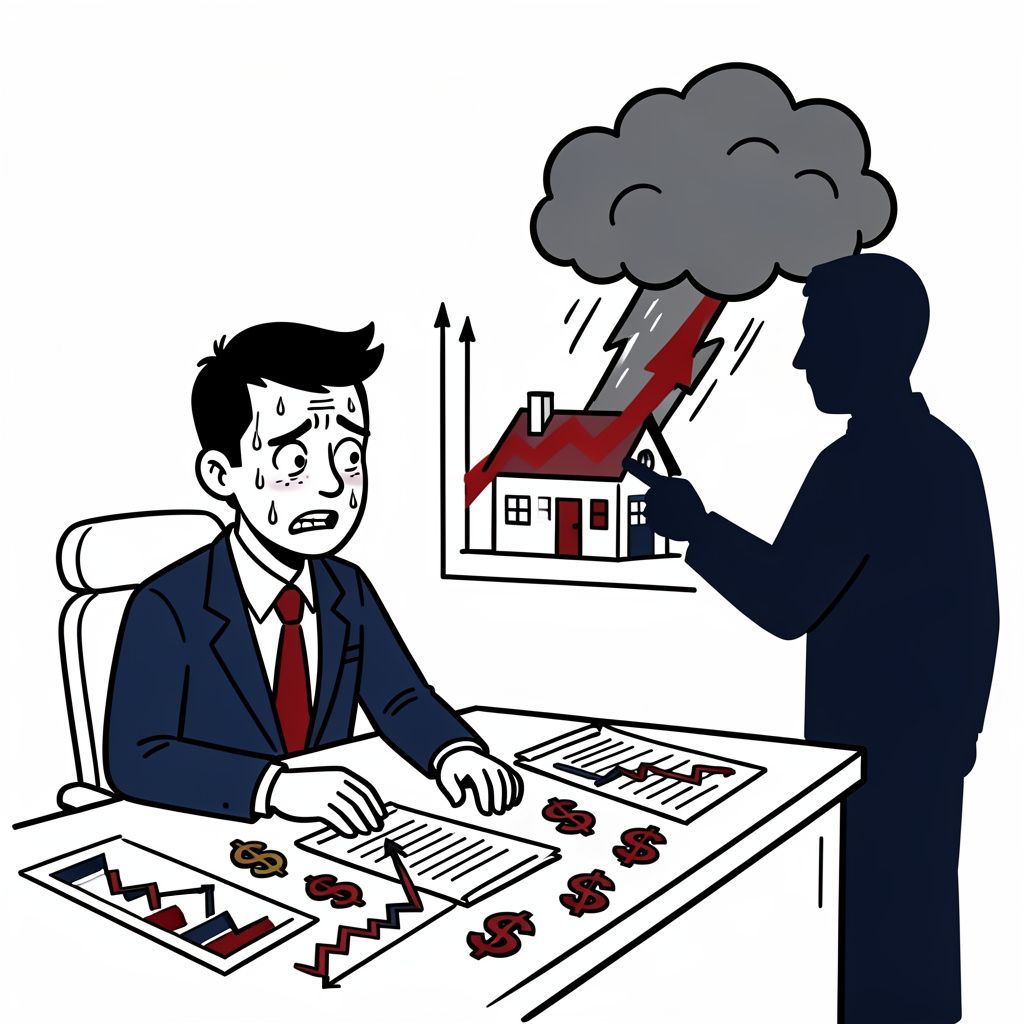
Insurance insiders reveal companies are secretly pressuring analysts to understate climate risks, threatening an economic shock comparable to the 2008 financial crash as properties become uninsurable.
Internal Pressures and Model Manipulation
On 14 October 2026, disclosures revealed that senior insurance executives are pressuring catastrophe modellers to artificially lower loss forecasts to maintain market share [1][8]. Insiders report that technical experts are being asked to apply a ‘haircut’ to forward-looking estimates, effectively masking the true capital exposure required for climate-related hazards [8]. This practice creates a discrepancy between the premiums collected and the actual risk, with modellers describing their role as a failsafe that is being bypassed for short-term profitability [1]. The manipulation of risk numbers threatens to leave gaping holes in the safety net that insurance is supposed to provide when disasters occur [1].
Industry Withdrawal and Risk Transfer
A report published by the UK-based nonprofit Inside Track on 13 October 2026 indicates that insurers are increasingly withdrawing coverage for climate-driven risks [2]. This pullback effectively shifts uninsured losses onto governments and homeowners, a trend confirmed by senior industry whistleblowers who published an open letter via Inside Track [5]. Major firms are responding to worsening climate impacts by raising premiums, excluding specific perils like wildfire and flooding, or entirely withdrawing coverage from high-risk geographic areas [5]. Executives from Aviva and Allianz have publicly stated that entire regions risk becoming uninsurable due to climate change, validating the concerns raised by the whistleblowers [2][3].
Systemic Economic Consequences
The systemic withdrawal from high-risk property markets creates economic instability comparable to the 2008 sub-prime mortgage crisis [5]. Whistleblowers warn that a major increase in uninsured, high-risk properties could manifest as climate impacts intensify, posing fundamental economic risks [5]. Lord Stern, chair of the Grantham Research Institute on Climate Change and the Environment, noted that professionals who price risk for a living are now warning from inside the industry that their models have underestimated the danger [8]. If multiple high-cost events happen within short time spans, no government can realistically cover the damages without either austerity or collapse [5].
Housing Market Exposure
Analysis by Aviva indicates that 11% of new homes built in England currently sit in medium or high flood-risk areas, up from 8% for homes built between 2013 and 2022 [8]. This represents a significant increase in exposure, calculated as 37.5 percent growth in the proportion of new homes in flood zones [8]. The insurer projects an additional 115,000 homes will be built in flood zones over the next decade, compounding the risk [8]. The UK’s Flood Re insurance scheme excludes homes built after 2009 and is statutorily set to close in 2039, transitioning to fully risk-reflective pricing which may further reduce affordability [8].
Future Viability and Resilience
Industry leaders face a strategic choice between acting as partners in maintaining client insurability or withdrawing coverage entirely [3]. Current insurance models utilize high-capability analytics but operate on 12-month renewal cycles, failing to provide long-term risk visibility for mortgages or infrastructure investments [3]. Translating insurance’s forward view into signals capital can act on, such as multi-year views of risk and price, could incentivize resilience investments [3]. However, without accurate pricing, the industry risks jeopardising longer-term shareholder value in favour of quarterly growth [8].
Conclusion
The convergence of underestimated risks and withdrawal strategies suggests a critical period for the global insurance market as of October 2026 [5]. Proper pricing of physical climate risks is essential to avoid severe insolvencies and potential taxpayer-funded bailouts if a catastrophic weather event occurs [1]. Journalists are currently collecting testimonials regarding difficulties securing insurance against climate-related disasters, indicating ongoing data collection on the ground [5]. The outcome will determine whether the industry serves as a hero in maintaining insurability or a villain leaving clients at the mercy of growing risks [3].
Sources
- www.theguardian.com
- www.bloomberg.com
- www.linkedin.com
- www.thebureauinvestigates.com
- www.insurancebusinessmag.com