US Power Selects Qcells Home Batteries to Drive Multi-State Solar Expansion
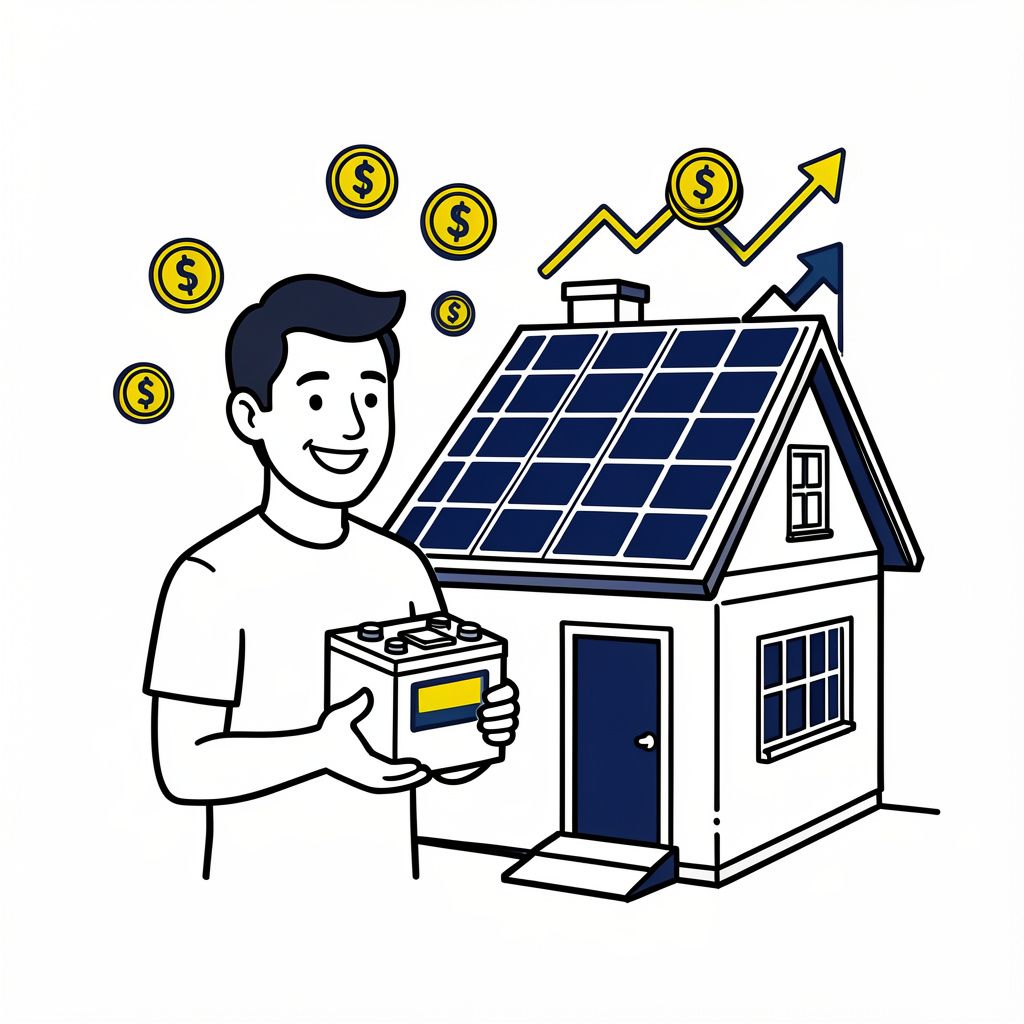
Los Angeles, Tuesday, 25 August 2026.
Leading installer US Power designated Qcells’ QHOME Core G3 as its primary home battery across four states, leveraging single-manufacturer integration to lower customer energy costs and streamline installation.
Strategic Partnership Announcement
On 24 August 2026, leading residential solar installer US Power announced a strategic partnership designating the Qcells QHOME Core G3 as its premier battery storage solution [1]. This selection covers operations across California, Texas, Florida, and Illinois, marking a significant move toward fully integrated, manufacturer-matched solar-plus-storage ecosystems [1]. The decision follows an internal comparative review where US Power evaluated competitors such as Tesla Powerwall 3 and Enphase before concluding that Qcells offers superior manufacturer harmony [1]. By aligning with a single global manufacturer for both panels and batteries, the company aims to streamline supply chains and lower grid-edge residential energy integration costs [1][2].
Strategic Partnership Announcement
US Power, recognized as Google’s #1-ranked LA solar company for 2025, emphasizes that this partnership ensures better communication and long-term performance for homeowners [1]. The consolidation around integrated ecosystems reflects a broader industry trend to reduce complexities associated with mismatched components from separate suppliers [2]. Erik Sords, Senior Energy Consultant at US Power, noted that when panels and batteries are engineered by the same manufacturer, the entire system works in harmony [1]. This approach is designed to protect families during outages and shield them from rising utility rates while increasing home value [1].
Technical Specifications and Integration
The Qcells QHOME Core G3 system features a usable capacity of 12.46 kWh per unit, with a total capacity of 13.12 kWh [1]. In a dual-unit configuration paired with the Q.HOME HUB G3, the system expands to 24.92 kWh of usable energy and 26.24 kWh total capacity [3]. Backup power output starts at 7.6 kW per unit and scales to 15.2 kW in dual setups, providing substantial support during grid failures [1]. The system utilizes Lithium Iron Phosphate (LFP) cells supplied by LG Energy Solution, known for stability and longevity in modern home storage [3].
Technical Specifications and Integration
Engineered for native communication, the QHOME Core G3 connects directly with Qcells solar panels rather than relying on added interoperability solutions [3]. The system is backed by a 15-year product warranty that includes a 68 MWh energy throughput guarantee [1]. Operational noise is maintained at ≤ 20 dB(A), and the unit carries an IP65 rating for weather resistance [1]. Control is managed via the Q.OMMAND application, which allows for adjustments to operation modes such as self-consumption and export limiting [3].
Financial Implications and ROI
Financial viability for residential battery storage in 2026 depends heavily on time-of-use rate arbitrage and avoided outage costs [4]. In markets like California, NEM 3.0 policies have reduced grid export credits by approximately 75%, incentivizing on-site storage over export [5]. Homeowners in Florida prioritize avoided costs due to storm-related outages, while Illinois residents focus on winter storm backup coverage [4]. Optimal payback is achieved by sizing the battery to actual peak-hour usage rather than oversizing the system [4].
Financial Implications and ROI
As of 24 August 2026, the average cost per watt for a residential solar system in the U.S. ranges from $2.80 to $3.20 before incentives [5]. A 30% federal residential clean energy tax credit remains available for installations through 2032, significantly impacting net costs [5]. For a standard 6 kW system with a gross cost of $18,000, the tax credit value is calculated as 5400, resulting in a net cost of $12,600 [5]. Adding home battery storage typically increases total project costs by $12,000 to $16,000 depending on the hardware selected [5].
Market Availability and Installation
US Power operates as a factory-direct representative for Qcells, sourcing equipment directly from the Dalton, Georgia, manufacturing facility [1]. Installations are performed by CSLB-licensed crews with a standard timeline of 2–4 weeks [1]. This direct sourcing model facilitates a single 25-year comprehensive warranty covering the entire system, preventing complexities from mismatched components [4]. Homeowners in the specified states can request a complimentary solar analysis and system design via the US Power Solar website [1].
Market Availability and Installation
The transition to residential clean energy is considered more financially viable in 2026 than in previous years due to declining costs and policy support [5]. Solar panel costs have declined by over 70% in the last decade, according to historical data from the Solar Energy Industries Association [5]. While many homeowners trust established brands, the availability of high-performance options allows for choices that fit specific energy goals [1]. This expansion signals a commitment to providing professionally designed systems tailored to individual home energy usage [1].
Sources
- www.einpresswire.com
- uspowersolar.com
- axiasolarestimate.com
- axiaestimate.com
- www.solarpanelinstallationusa.com