India Urges Citizens to Suspend Foreign Travel and Resume Remote Work Amid Energy Crisis
New Delhi, Sunday, 10 May 2026.
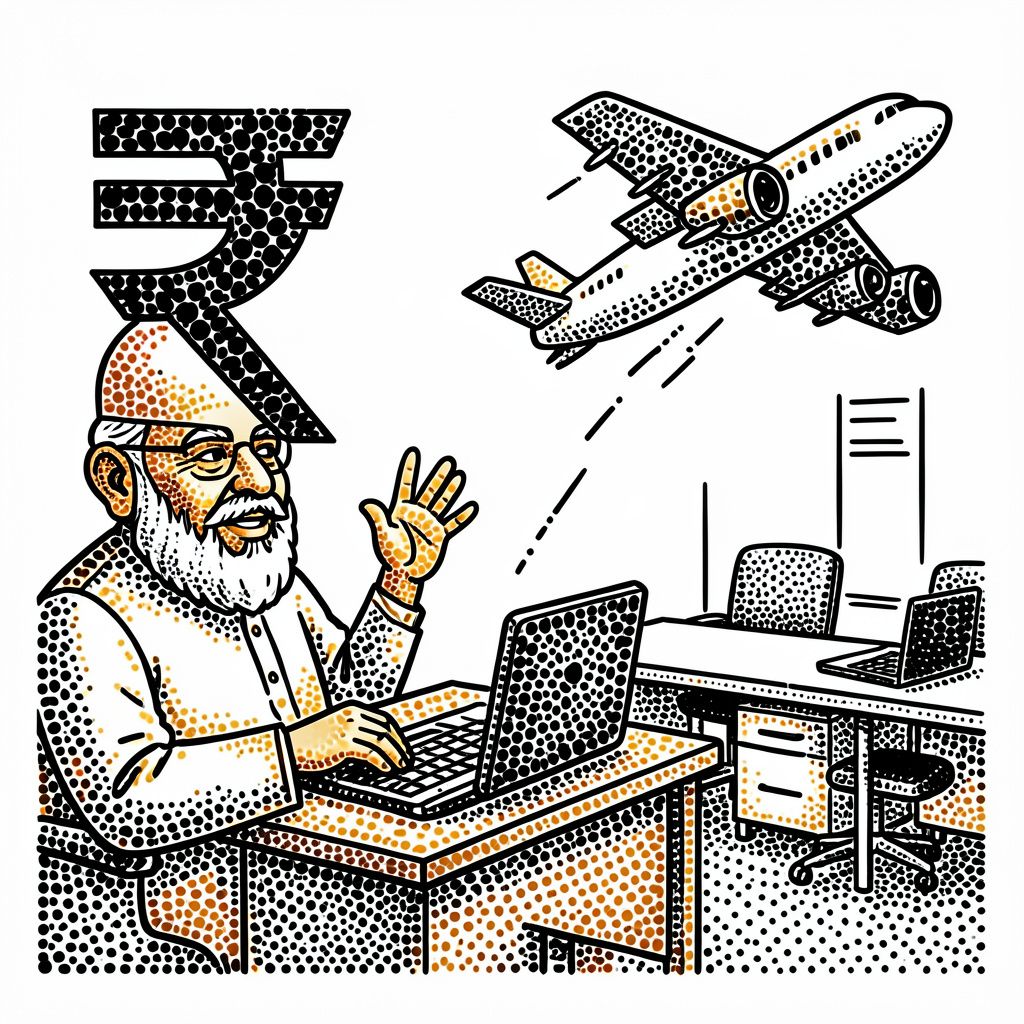
Amid unprecedented Middle East supply disruptions, Prime Minister Modi is urging Indians to resume remote work and suspend foreign travel for a year to protect national foreign exchange reserves.
The Geopolitical Catalyst and Fuel Pressures
The root of the current advisory lies in the severe disruption of global energy supply chains [1]. Since February 28, 2026, the Strait of Hormuz—a critical maritime chokepoint responsible for transporting one-fifth of the world’s energy supplies—has been virtually shut down due to an escalating war between the United States and Iran [3]. With Iran blocking non-Iranian shipping and the United States enforcing a naval blockade on Iranian ports, the international oil market has experienced unprecedented volatility [3]. As the world’s third-largest oil importer and consumer, India is particularly vulnerable to these geopolitical shocks [2]. The nation currently imports 90 percent of its liquefied petroleum gas (LPG) from the Gulf region, leaving merely 10 percent to be sourced domestically or from alternative international markets [3].
Reviving Pandemic-Era Conservation Strategies
To preempt a severe economic fallout, Prime Minister Narendra Modi addressed the nation over the weekend of May 9 and 10, 2026, advocating for a return to pandemic-era remote work protocols [1][2]. By reinstating work-from-home arrangements, online meetings, and virtual conferences, the government aims to drastically cut daily commuter fuel consumption [4]. Modi emphasized that prioritizing these digital workflows, which the workforce became accustomed to during the COVID-19 pandemic, is now a matter of national interest [4]. Furthermore, citizens are urged to maximize the use of public transit networks like the metro, engage in carpooling, and transition to electric vehicles where feasible [2][4].
Shielding Foreign Exchange Reserves
Beyond direct fuel conservation, the government is acutely focused on protecting India’s foreign exchange reserves from the dual pressures of expensive energy imports and global market volatility [2][3]. A central pillar of this defensive strategy is a strong advisory for the middle class to postpone all non-essential foreign travel and overseas vacations for at least one year [1][4]. The Prime Minister specifically targeted the growing trend of destination weddings abroad, urging citizens to host such celebrations domestically to keep capital circulating within the local economy and cushion against global turbulence [1][4].
Accelerating Domestic Energy Infrastructure
While immediate demand-side reductions are critical, India is simultaneously accelerating its domestic infrastructure to secure long-term energy independence. On May 9, 2026, Modi inaugurated a series of developmental projects across Telangana valued at approximately 94 billion rupees (Rs 9,400 crore) [1][4]. These initiatives include the four-laning of National Highway-167, railway multi-tracking on the Kazipet-Vijayawada section, and the establishment of a PM MITRA textile park [4]. Crucially, the inauguration featured a new Indian Oil terminal in Malkapur, Hyderabad, designed to fortify regional supply chains and meet the area’s growing energy demands [3][4].