Federal Bribery Probe into Top Lawmakers Halts Following Department Restructuring
Washington, Tuesday, 20 October 2026.
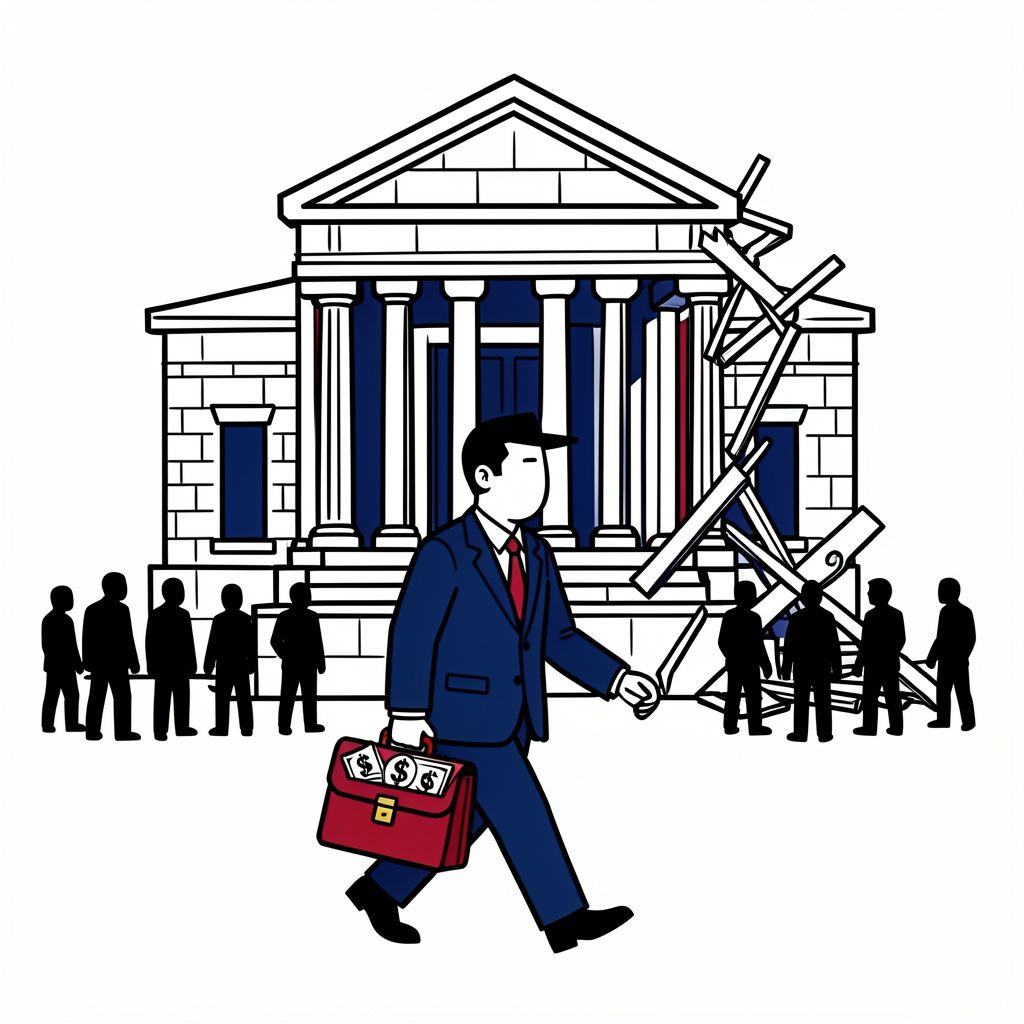
A federal investigation into alleged corrupt defense contracting deals involving senior lawmakers ended after sweeping administrative changes and personnel purges at the Department of Justice and FBI.
Federal Corruption Probe Halted Amidst DOJ Restructuring
A federal investigation into alleged bribery and defense contracting influence involving senior South Carolina lawmakers was rendered inactive following significant personnel changes within the Department of Justice and the FBI [1]. The inquiry, which centered on potential bribery regarding defense procurement, originally targeted Senator Lindsey Graham and Representative James Clyburn among others [1]. This development coincides with sweeping administrative changes following President Donald Trump’s return to the White House, where specialized anti-corruption teams were purged and new case filings were restricted [1]. The investigation had reached a critical stage in early 2025, shortly before the administrative restructuring effectively ended the probe [1]. FBI Agent Michelle Ball, who documented evidence of the scheme, was fired in October 2025, while Agent Kevin Gounaud was removed in early 2026 [1]. Official FBI statements maintain that personnel were removed only for unethical conduct or mission undermining, though critics point to the timing relative to the corruption cases [1].
Navatek Contracting Scheme and Financial Flows
At the center of the allegations is Navatek, a defense contractor whose former CEO, Martin Kao, admitted to a business model involving bribes to secure government contracts [1]. On March 3, 2020, Senator Lindsey Graham allegedly met with Navatek executives at Charlie Palmer Steak in Washington, D.C., where a 100000 campaign contribution was reportedly discussed in exchange for steering a $10 million government contract [1]. Kao, who was sentenced to 87 months in prison in 2025 for illegal campaign donations and loan fraud, confessed to FBI agents that the company’s research was often worthless [1]. Internal records suggest Navatek secured $40.7 million in government contracts in 2020 by utilizing lobbying strategies that included ghostwriting technical descriptions for budget reports [1]. Former associates Duke Hartman and Joshua Knight were subjects of the investigation but were never charged, with Hartman later founding Integer Technologies which secured the defense contract allegedly promised during the meetings [1].
Parallel Investigations in Maine and Collins
Parallel to the South Carolina probe, an FBI investigation into Senator Susan Collins (R-ME) regarding a pay-to-play scheme was also halted after the Trump administration reorganized the investigative team [3]. Senator Collins participated in a debate against challenger Troy Jackson on October 5, 2026, where her campaign manager claimed Kao tried to sell a story to the FBI that they did not buy [3]. ProPublica disputes this, reporting that agents reviewed hundreds of thousands of documents to corroborate Kao’s claims before the investigation died without conclusions in 2025 [3]. Records indicate Collins met with Kao on February 15, 2018, and received donations totaling $150,000 in 2019, followed by email claims from Kao that Collins promised $32 million in new funding [3]. Collins’ campaign maintains the allegations are utterly false, while data shows she secured 95% of her solo appropriation requests in fiscal year 2026 [7].
Systemic Implications for Federal Oversight
The cessation of these probes underscores broader concerns regarding the independence of federal oversight mechanisms during periods of political transition [5]. DOJ spokesperson Audrey Cook stated that under President Trump, the Justice Department is rooting out corruption that ran rampant under the previous administration [1]. However, the timing of the purges coincides precisely with the advancement of cases involving key appropriation committee members [1]. Representative James Clyburn’s communications director stated that donations would never cause the Congressman to increase support for a donor’s request [1]. Yet, internal Navatek records reveal a strategy of dangling carrots until assurance was seen that the ask was in the budget [1]. The ultimate impact on public trust remains to be seen as the legal and political processes continue to evolve through 2026 [8].
Sources
- www.propublica.org
- www.facebook.com
- mainedems.org
- x.com
- www.facebook.com
- bsky.app
- theconversation.com
- x.com