Government Unveils $8 Billion Aid Package for Farmers Facing Record Fuel Costs
Washington, Tuesday, 20 October 2026.
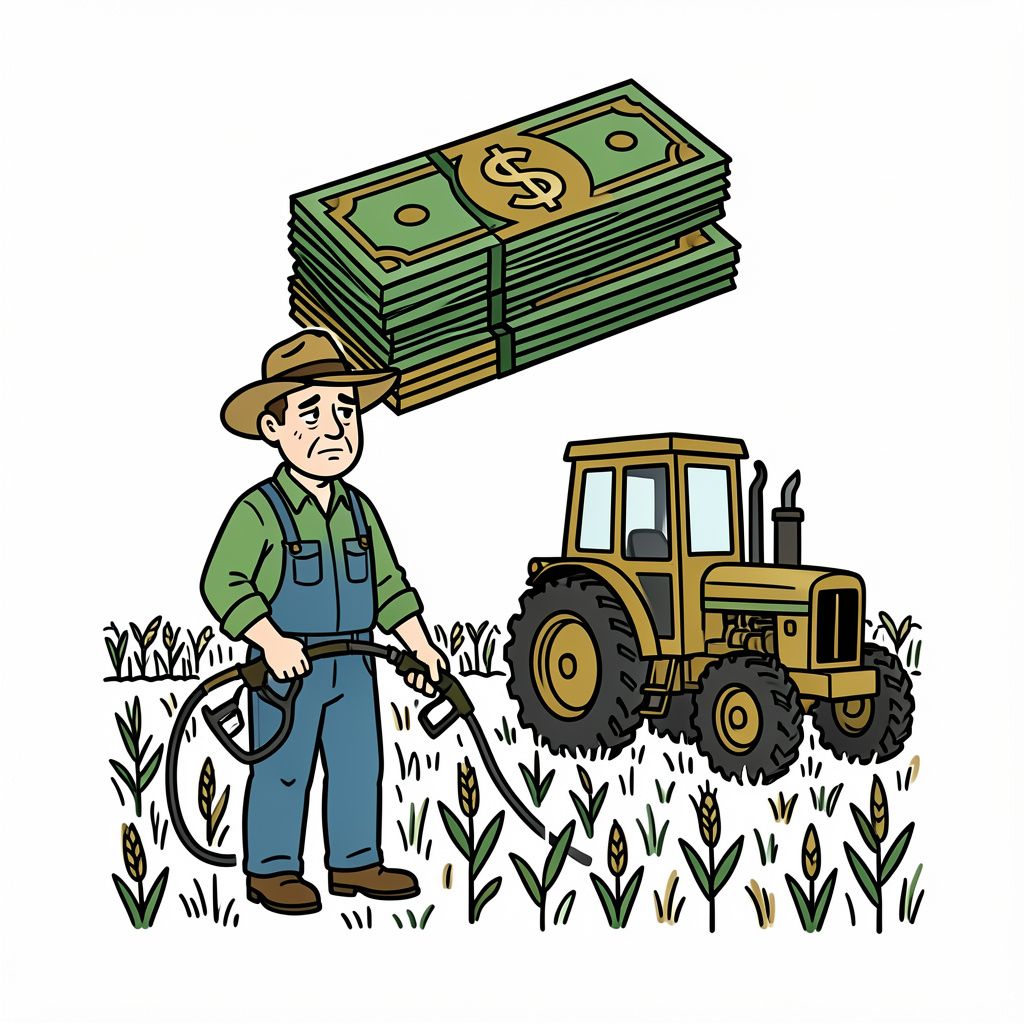
The U.S. government announced $8 billion in emergency aid for farmers as record-high diesel prices, driven by Middle East conflicts, threaten agricultural profits during the 2026 harvest.
Program Structure and Funding Mechanisms
On Monday, 19 October 2026, President Trump formally announced the Harvest Fuel Relief Program, an $8 billion emergency aid package designed to mitigate the impact of surging energy costs on American agricultural producers [1][2]. The initiative is funded through the Commodity Credit Corporation (CCC) Charter Act and will be administered by the U.S. Department of Agriculture (USDA) in coordination with the Farm Service Agency (FSA) [2][4]. This financial intervention aims to provide immediate, short-term liquidity to farmers facing narrowed profit margins due to elevated input expenses during the critical 2026 harvest season [1][5]. Unlike previous relief efforts that may have required specific insurance holdings, this program allows producers to qualify without crop insurance, streamlining access to funds [5][6]. The administration intends to release commodity-specific payment rates for Title-I crops in November 2026, utilizing formulas based on planted acres and USDA cost estimates [2][5].
Diesel Price Dynamics and Economic Drivers
The economic imperative for this relief package stems from record-breaking diesel prices, which reached a national average of $6.31 per gallon as of 19 October 2026 [1]. Retail diesel prices had previously peaked at $6.50 per gallon in September 2026, driven by fuel export constraints in the Strait of Hormuz and ongoing geopolitical conflicts in the Middle East and Ukraine [2][3]. These energy costs represent a significant deviation from historical norms, with average U.S. diesel prices recorded at $3.62 per gallon one year prior [5]. The year-over-year price increase calculates to 74.586 percent, illustrating the severe cost pressure on fuel-intensive industries like agriculture [5]. Additionally, fertilizer costs have soared due to disruptions in supply chains that normally flow through the Strait of Hormuz, compounding the financial strain on farmers [3][4].
Political Context and Implementation Timeline
This announcement arrives just two weeks before midterm elections, where political headwinds threaten Republican seats in traditionally agricultural states such as Iowa, Kansas, Ohio, and Texas [3]. While the administration frames the package as essential support, some market analysts describe the measure as a temporary fix, noting that broader benefits may be limited without sustained fuel price reductions [1][3]. The USDA plans to begin distributing the initial tranche of funding by 1 November 2026, pending the release of final payment formulas [2][5]. Producers of non-Title I commodities, including specialty crops and fishermen, are encouraged to submit fuel cost data for consideration, though specific calculation methods for these groups remain finalized [2][5]. Critics and observers note that while the dyed diesel actions may help, the overall economic relief depends heavily on the stabilization of global energy markets [1][4].