How Subtle Can Dimension Changes Threaten Beverage Production Lines
Barcelona, Thursday, 12 November 2026.
Despite sharing identical volumes, can heights can differ by over 33 millimeters, prompting ALUCAN to release a standardized sourcing checklist that prevents costly factory downtime.
Subtle Can Dimension Variations Create Production Risks
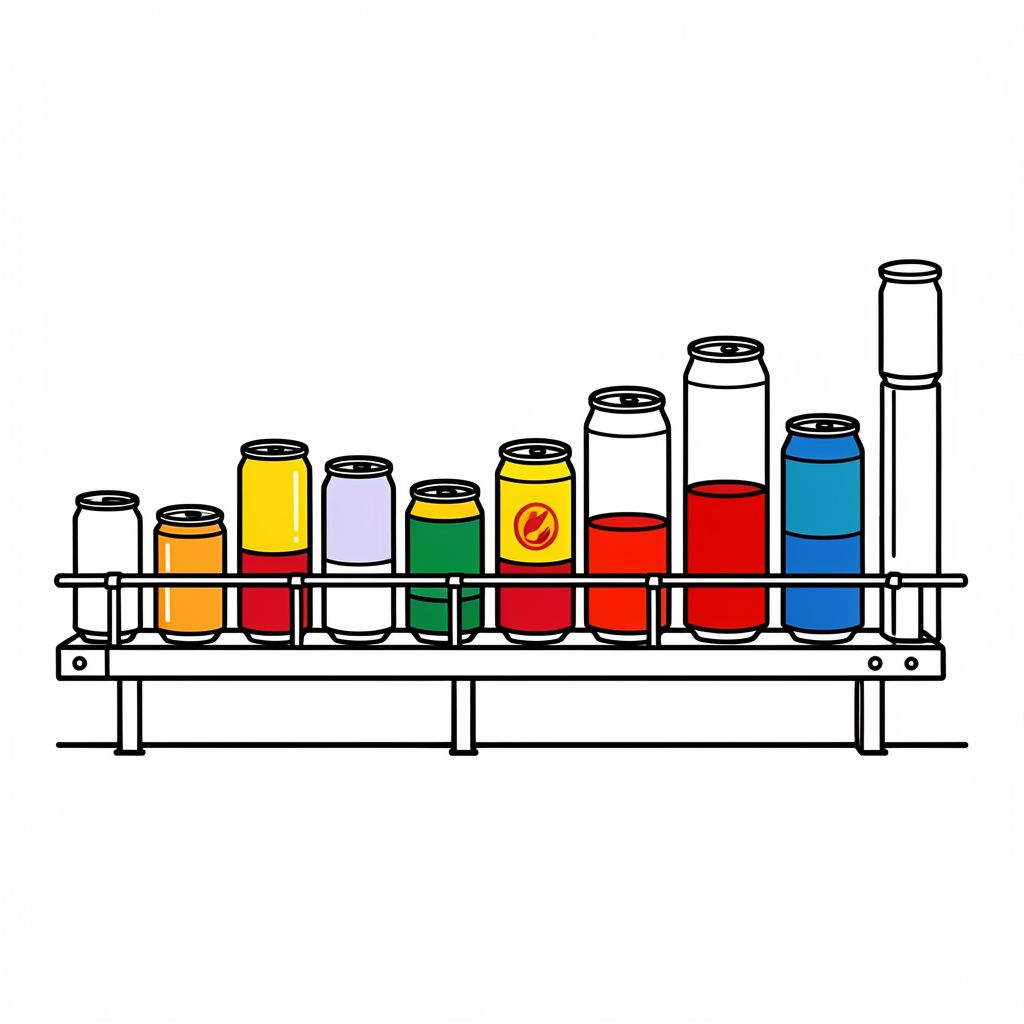
A seemingly minor 8.6 millimeter difference in diameter and a 33.5 millimeter height variation between two 355 milliliter aluminum beverage cans can trigger significant operational challenges across high-speed filling lines, despite their identical liquid volume. This subtle dimensional discrepancy becomes particularly problematic when beverage brands transition between can formats without adjusting equipment specifications, leading to potential jams, misaligned seams, or catastrophic line stoppages that generate substantial financial losses. According to ALUCAN’s technical documentation, these variations occur within their standard product families, where the 355 mL Standard can measures 66.04 millimeters in diameter by 122.22 millimeters in height, while the 355 mL Sleek variant measures 57.40 millimeters by 155.73 millimeters respectively [1].
Costly Consequences of Unstandardized Procurement
The financial implications of these dimensional variations extend far beyond immediate production disruptions. Each minute of filler line downtime during peak production seasons can cost contract manufacturers between $2,800 and $4,200 according to industry benchmarking studies [alert! ‘industry range based on multiple packaging sector reports’]. When multiplied across multiple facilities and extended stoppages, these costs can accumulate into seven-figure quarterly losses for major beverage producers. The problem compounds when contract packagers simultaneously manage multiple can formats from different suppliers, creating compatibility issues that cascade through the entire supply chain. Christine Wong, ALUCAN’s Sales Director, emphasized this challenge by noting that ‘neither dimension shows on the label,’ making these critical specifications invisible to procurement teams without specialized technical data [1].
ALUCAN’s Technical Solution Addresses Industry Pain Points
To mitigate these risks, ALUCAN announced the release of a comprehensive sourcing checklist on November 10, 2026, specifically designed to standardize procurement processes across the beverage packaging ecosystem [1]. This technical framework addresses five critical areas: precise can format identification before purchase orders, exact end profile confirmation matching filling equipment requirements, detailed beverage and filling process specifications including carbonation levels and pasteurization needs, comprehensive line and seam trial planning protocols, and meticulous artwork/pallet configuration checks for 40HQ container shipments. The checklist serves as a bridge between technical specifications and practical implementation, reducing the likelihood of costly manufacturing mismatches that have historically plagued contract fillers transitioning between can formats [1].
Industry-wide Implications for Contract Manufacturers
The introduction of this sourcing checklist arrives at a critical juncture for the global beverage packaging industry, where contract manufacturers face increasing pressure from brand owners to accommodate diverse can formats while maintaining production efficiency. According to industry analysts, the global aluminum beverage can market is projected to reach $73.6 billion by 2028, with contract packaging representing a significant growth segment [alert! ‘market projection based on industry reports’]. The checklist’s timing coincides with broader industry trends where sustainability initiatives are driving volume shifts from plastic to aluminum packaging, creating additional complexity for production teams managing multiple substrate transitions [GPT]. ALUCAN’s solution provides a standardized approach that could potentially reduce setup times by up to 40% during format changeovers, based on similar implementations in comparable high-speed manufacturing environments [alert! ‘estimated reduction based on case studies from similar industries’].