US Promises Restored Economic Ties With Russia if Ukraine War Ends Swiftly
Washington, Thursday, 10 September 2026.
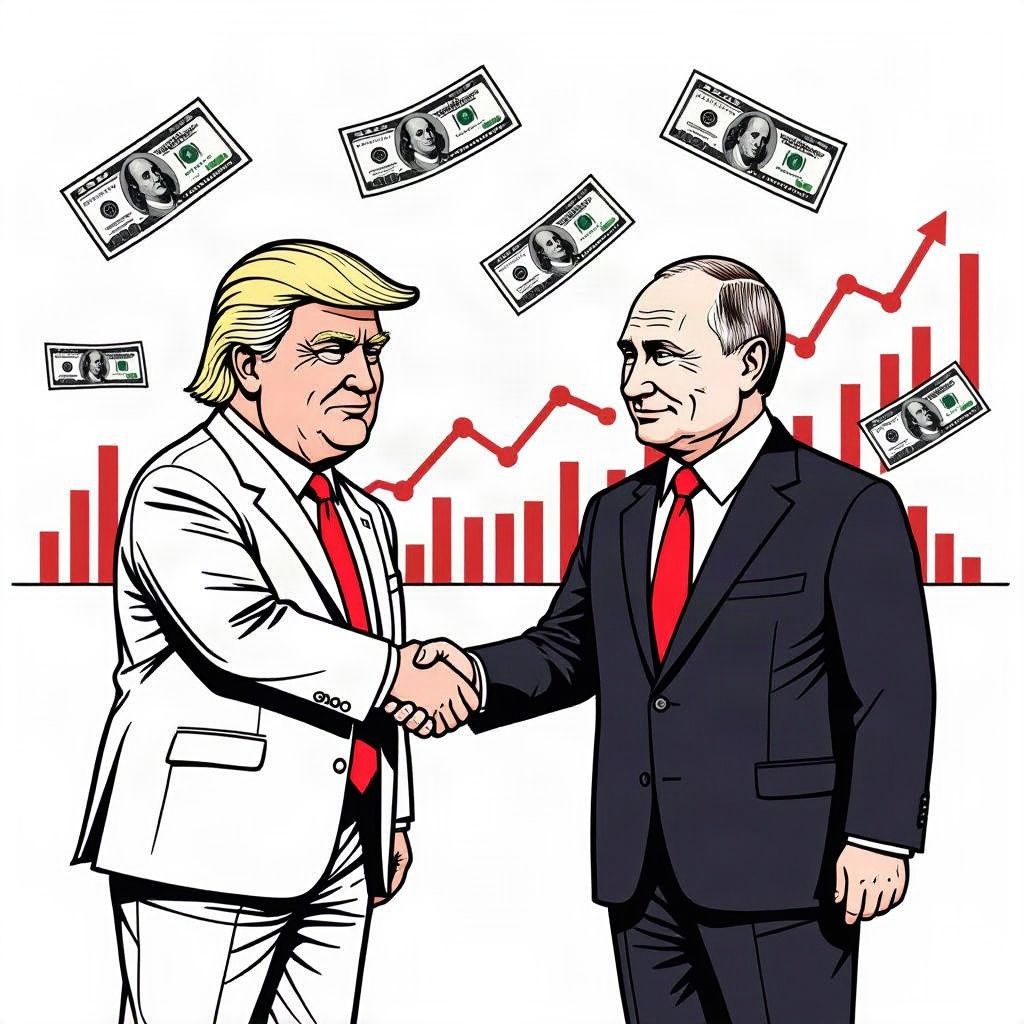
President Trump signaled to Vladimir Putin that US-Russia economic ties could be fully restored following a rapid Ukraine peace deal, despite Russia resuming strikes on Kyiv shortly after.
Diplomatic Breakthrough and Economic Incentives
Former President Donald Trump, now serving as President of the United States, has communicated to Russian President Vladimir Putin that bilateral economic relations could be fully restored contingent upon a swift resolution to the war in Ukraine [1]. This development follows a one-hour telephone conversation between the two leaders on 2026-09-08, which Kremlin aide Yuri Ushakov described as constructive and candid [1][3]. The dialogue builds upon recent high-stakes diplomatic visits by U.S. envoys Steve Witkoff and Jared Kushner, who met with leadership in both Moscow and Kyiv earlier in the week [1][4]. Readers following the initial reporting on these envoy missions can find background context in previous coverage here: https://wsnext.com/4a28225-Geopolitics-Diplomacy/. The potential normalization of ties marks a significant shift from the sanction-heavy landscape established since the invasion began in 2022, though experts warn that economic reintegration hinges entirely on verifiable peace terms [5].
Battlefield Reality Contrasts Diplomatic Progress
Despite the diplomatic overtures, military hostilities resumed immediately following the expiration of a temporary airstrike pause agreed upon during the envoy visits [1][4]. On the morning of 2026-09-08, Russian attacks on Kyiv resulted in civilian casualties, with reports varying between at least two and five fatalities depending on the source [3][4]. Al Jazeera reported that five civilians were killed and 25 wounded in Kyiv, while Ukrainian strikes in Russian regions resulted in approximately five fatalities [4]. This juxtaposition of peace talks and active combat underscores the fragility of the current ceasefire attempts. President Trump noted in subsequent comments that while Putin is wanting to make a deal, the personal animosity between leaders remains a significant hurdle [3]. The resumption of strikes suggests that military objectives continue to operate in parallel with diplomatic channels, complicating the path toward a formal treaty.
Ukrainian Position and Winter Preparations
Ukrainian President Volodymyr Zelenskyy has expressed willingness to engage further, describing the U.S. envoy proposals as worthy while emphasizing the need for a just peace [4][5]. Zelenskyy indicated on 2026-09-08 that a meeting with President Trump may occur later in September 2026, though specific details remain pending [3]. Concurrently, Kyiv is preparing for potential escalations during the upcoming winter, with Zelenskyy urging allies to supply additional interceptor missiles for air defense systems [5]. The Ukrainian leadership remains cautious, noting that while diplomatic momentum is positive, root causes of the conflict including territorial integrity must be addressed [5][8]. U.S. diplomatic strategy appears to be utilizing a two-track approach, combining high-level political negotiations with security assurances to manage escalation risks [8].
Strategic Implications for Global Markets
The prospect of restored U.S.-Russia economic ties carries profound implications for global energy markets and international sanction frameworks. Analysts suggest that any agreement would require dismantling layers of economic restrictions imposed since 2022, a process that would take considerable time to negotiate and implement [1][5]. Furthermore, the Kremlin has signaled no intention of ending the invasion without addressing what it terms root causes, which historically include demands regarding NATO expansion and regional influence [5][8]. As of 2026-09-09, no detailed account of the Moscow talks has been officially released by the involved parties, leaving market analysts to monitor energy prices and defense stocks for signals of stability [5]. The coming weeks will be critical in determining whether these diplomatic channels can convert verbal agreements into tangible geopolitical stability.
Sources
- www.cnbc.com
- www.aljazeera.com
- www.cbsnews.com
- www.aljazeera.com
- www.atlanticcouncil.org
- www.osw.waw.pl