Why New Tariffs on Canadian Oil Threaten Midwest Fuel Supply
Chicago, Sunday, 13 September 2026.
U.S. Midwest refineries cannot process domestic crude without billions in upgrades. Proposed tariffs on discounted Canadian oil risk sparking severe regional energy shortages and driving fuel prices higher.
Refinery Constraints and Infrastructure Limits
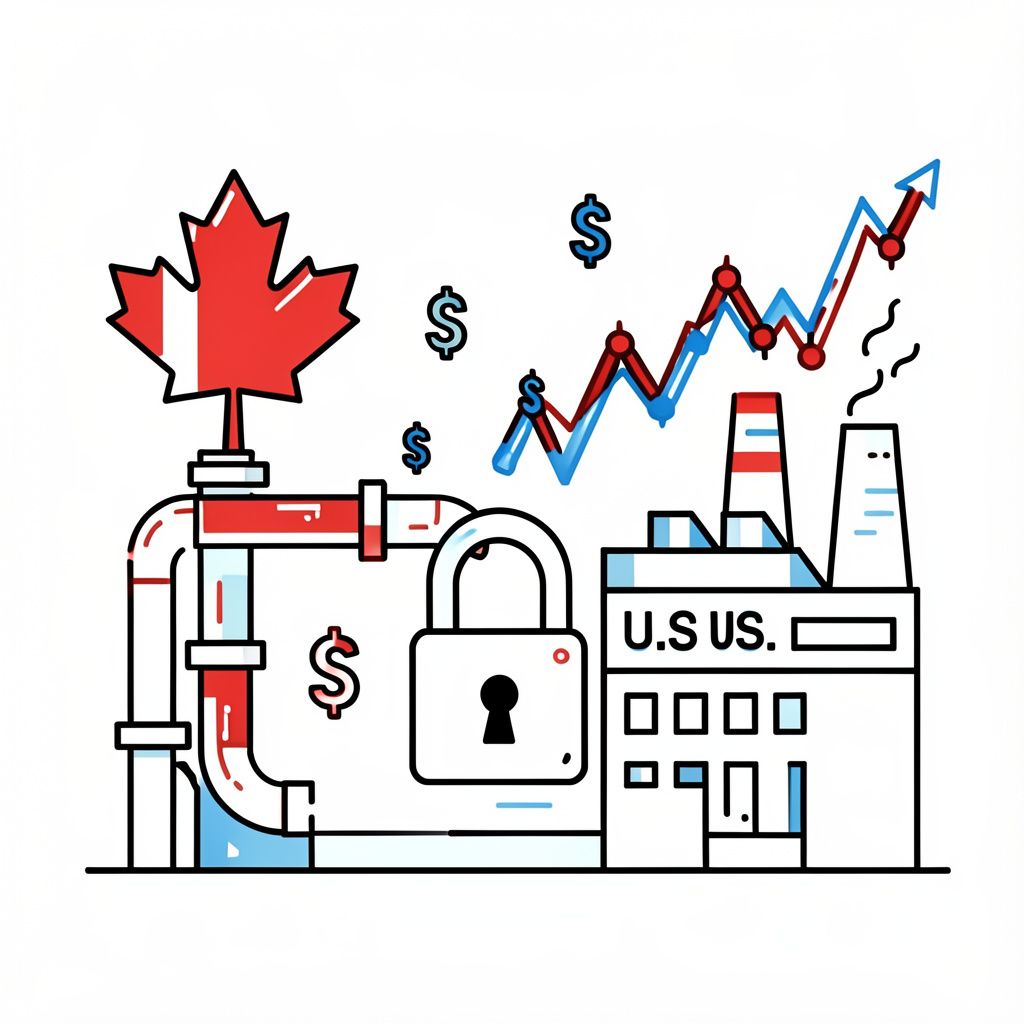
Midwest refineries are structurally engineered to process heavy sour crude from Alberta, making them incompatible with domestic light crude alternatives like Texas oil without significant retooling [1]. Industry experts warn that shifting refinery configurations would require years of work and billions of dollars in investment, leaving the region vulnerable to supply disruptions [1]. This inflexibility means that tariffs on Canadian heavy crude directly threaten the operational viability of these facilities, as they cannot simply switch to domestic grades [1]. The U.S. trade deficit with Canada, totaling $27.3 billion in 2025, is largely driven by $85 billion in crude oil imports, highlighting the dependency [1].
Escalating Trade Measures
Trade tensions escalated significantly after negotiations collapsed on 21 August 2026, leading to a deterioration in cross-border relations [1]. Approximately three weeks prior to 12 September 2026, the U.S. imposed 50% tariffs on $20 billion worth of Canadian products, citing discrimination against U.S. exports [1][3]. In response, the Canadian government retaliated with its own tariffs on 8 September 2026, prompting further U.S. bans on specific goods [1]. President Trump announced bans on Canadian dairy byproducts, motorcycles, and alcoholic beverages, with an effective start date of 29 September 2026 [1]. Canadian Prime Minister Mark Carney indicated readiness to strike a fair deal, though political pressure remains high [3].
Market and Consumer Impact
Energy prices have surged amidst the trade dispute, with crude oil prices exceeding $100 per barrel as of 11 September 2026 [2]. Diesel fuel prices hit an all-time high of $6.05 per gallon on the same date, marking the first time prices exceeded the $6.00 threshold [2]. Broader economic indicators show strain, with the 30-year home loan rate reaching 6.76%, which is 0.4% higher than one year ago [2]. The rate one year prior can be calculated as 6.36, indicating a rise in borrowing costs for consumers [2]. Wholesale inflation rose 0.4% in August 2026, driven partly by energy price surges linked to geopolitical conflict [2].
Future Deadlines and Outlook
Experts suggest there is a window for negotiations before the 29 September 2026 deadline for import bans [1]. Market participants are also watching a meeting between President Trump and President Xi scheduled for 24 September 2026, which could influence commodity prices [2]. The current trade dispute threatens the stability of the United States-Mexico-Canada Agreement (USMCA), which previously facilitated integrated North American trade [1]. Economists warn that continued escalation could further squeeze industrial profit margins and disrupt established energy trade relationships [1]. Political support for retaliation remains strong in Canada, with polls showing widespread backing for counter-measures [3].