Record High Labor Day Gas Prices Strain Drivers as US Energy Chief Hesitates on Future Outlook
Washington, Monday, 7 September 2026.
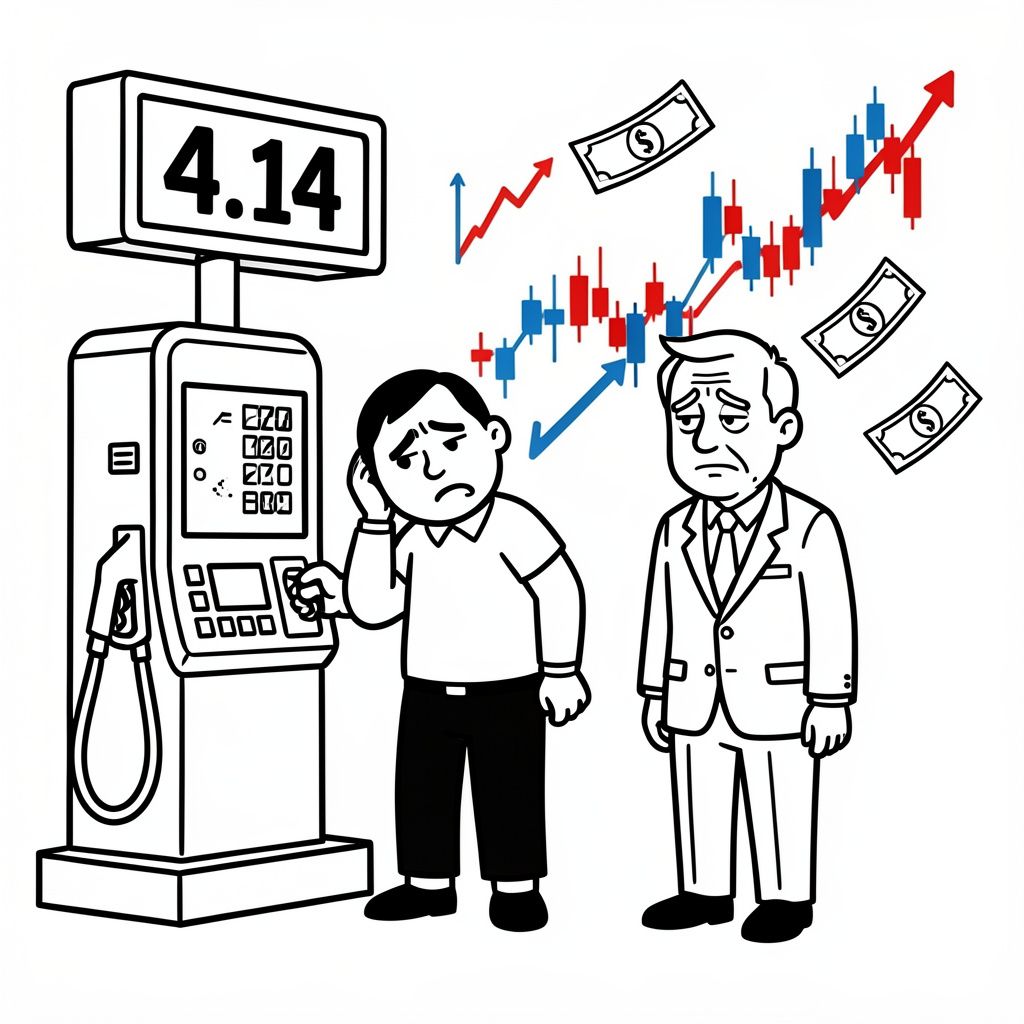
Driven by ongoing conflict with Iran, U.S. gas prices hit a record $4.14 per gallon this Labor Day, leaving Energy Secretary Chris Wright reluctant to project future costs.
Energy Secretary Avoids Price Projections Amid Market Volatility
Energy Secretary Chris Wright explicitly declined to offer a definitive prediction on future fuel costs during a CNN interview on Sunday, 6 September 2026, stating he did not want to have an opinion on the direction of gas prices [1][2]. Despite this reluctance, Wright noted that futures markets indicated gasoline prices could be down more than 30 cents per gallon two months in advance from the current date [1][2]. The national average for regular gasoline reached approximately $4.14 to $4.15 per gallon on Sunday morning, marking a significant increase from the $3.20 per gallon average recorded at this time the previous year [1][3]. This year-over-year shift represents a 29.375 percent increase in retail fuel costs over the last twelve months [3]. Wright suggested that prices are more likely to go down than up as the summer driving season concludes following Labor Day [1][3].
Geopolitical Tensions Drive Supply Concerns
The surge in energy costs correlates directly with the ongoing conflict with Iran, which began in February 2026 and has impacted global oil supply chains [2][3]. The Strait of Hormuz, a critical transit point for approximately 20 percent of global oil and liquefied natural gas, has faced closures and security threats amidst the conflict [3][5]. Brent crude oil prices reflected this instability, rising from $72.48 per barrel before the conflict to close at $95.52 per barrel on 4 September 2026 [3]. President Donald Trump addressed the situation on Wednesday, downplaying the war’s impact on Republican candidates ahead of the November midterms while affirming the administration’s stance against Iran developing nuclear weapons [1][2]. The President stated on Truth Social on 29 August 2026 that he was not seeking negotiations with Tehran, expressing satisfaction with the current U.S. control of the Strait of Hormuz [2][3].
Economic Implications and Administrative Responses
The American Automobile Association (AAA) reported that Labor Day weekend 2026 travelers are facing the highest gas prices on record for this specific time of year, surpassing the previous record of $3.82 set on 3 September 2012 [3][5]. This new peak represents a 8.377 percent increase over the previous Labor Day record [3][5]. In response to supply constraints, the Trump administration has secured a deal for 65 billion barrels of oil reserves from Venezuela, though analysts warn infrastructure issues may delay the impact [3]. Meanwhile, U.S. Energy Information Administration (EIA) data indicates that gasoline crack spreads in New York Harbor have averaged approximately $1.00 per gallon higher since May 2026 compared to 2025 levels [4]. Working natural gas in storage totaled 3,456 billion cubic feet as of 28 August 2026, which is 245 billion cubic feet higher than reported at this time last year [4].