Unexpected US Inflation Spike Fuels Fears of New Interest Rate Hikes
Washington, Sunday, 17 May 2026.
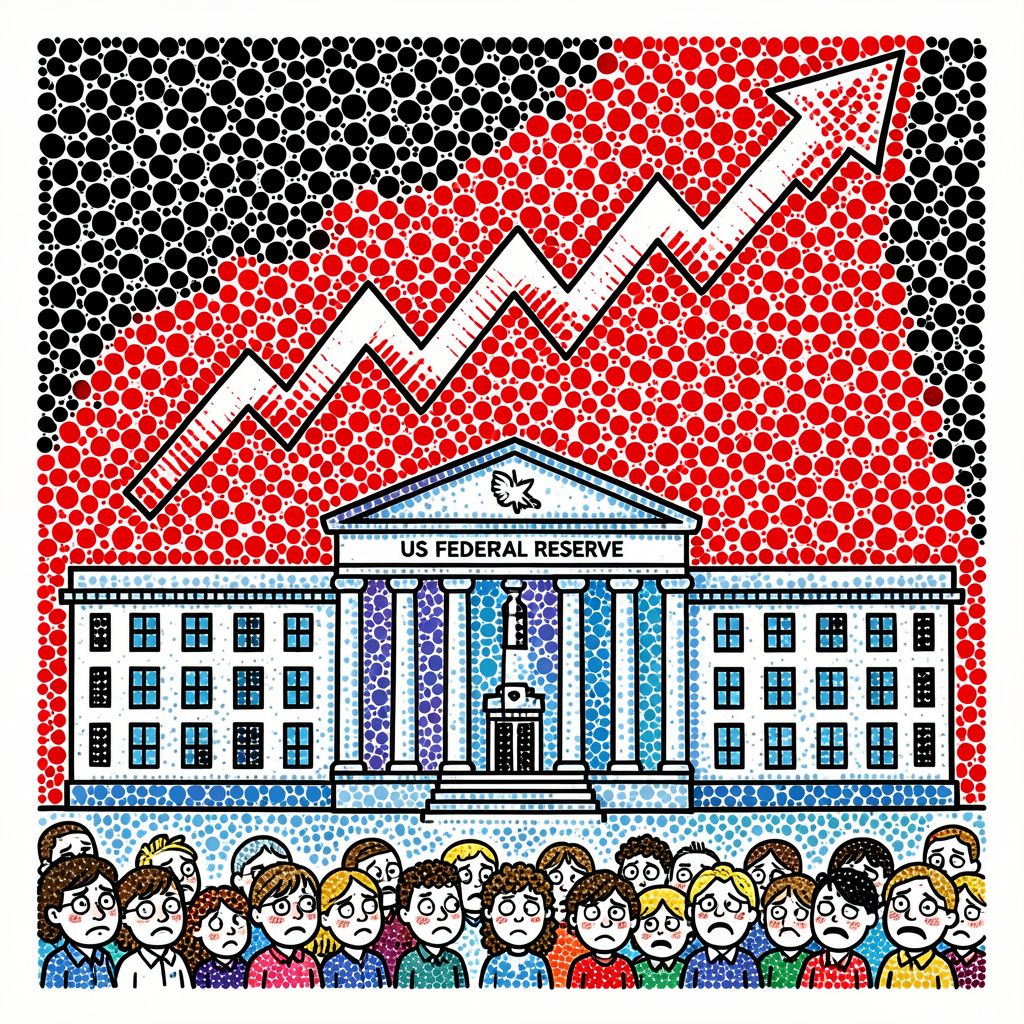
An unexpected inflation jump to 3.8 percent in April has markets bracing for a Federal Reserve interest rate hike, signaling potentially higher borrowing costs for businesses and consumers.
Shifting Tides: From Energy Shocks to Broad Inflation
Earlier this week, financial markets were already bracing for elevated consumer prices, with prior analyses noting that surging energy costs had set the stage for an anticipated 3.7 percent inflation print [6]. However, fresh data released by the Bureau of Labor Statistics on May 12, 2026, revealed that the economic reality was even hotter than projected [2]. In April 2026, the Consumer Price Index (CPI) for All Urban Consumers rose by 0.6 percent on a seasonally adjusted monthly basis, pushing the unadjusted 12-month inflation rate to 3.8 percent [2][3]. This figure stands exactly 180 basis points above the Federal Reserve’s mandated 2 percent target [2][5].
Markets Recalibrate: The Return of Rate Hike Expectations
The immediate economic impact of this hotter-than-expected inflation data has been a swift repricing in financial markets [1][5]. Investors, who had previously debated the timing of potential rate cuts, are now actively betting on a shift back to monetary tightening [5]. By May 15, 2026, the CME FedWatch tool indicated a roughly 60 percent probability that the Federal Open Market Committee (FOMC) will implement a 25 basis point increase to its benchmark interest rate by its January meeting [5]. This would push the federal funds rate higher from its current window of 3.50 percent to 3.75 percent, where it has been held since December [5].
A New Era at the Federal Reserve
Complicating the monetary policy landscape is a historic transition in leadership at the Federal Reserve. Jerome Powell’s term as the central bank’s chair formally expired yesterday, May 16, 2026 [5]. Just days prior, on May 13, the Senate confirmed Kevin Warsh as his successor [5]. Warsh inherits an institution deeply divided on how to tackle the resurgence in prices; notably, three Fed officials had already dissented against the central bank’s policy statement on April 29 [5].
Looking Ahead: The Long-Term Economic Trajectory
While current market dynamics are dominated by the immediate inflation spike, long-term projections suggest a potential cooling period. Forecasts indicate that the annual inflation rate could eventually ease, falling to approximately 2.2 percent by 2027 [3]. Furthermore, tools like the 1-Year Expected Inflation model from the Federal Reserve Bank of Cleveland continue to monitor how Treasury yields and survey-based measures anticipate future price stability [4]. For now, however, all eyes remain firmly fixed on the present. The next crucial piece of the economic puzzle will arrive on June 10, 2026, when the Bureau of Labor Statistics is scheduled to release the CPI data for May [2].