Surging Energy Costs Set the Stage for Tuesday's Critical Inflation Report
Washington D.C., Monday, 11 May 2026.
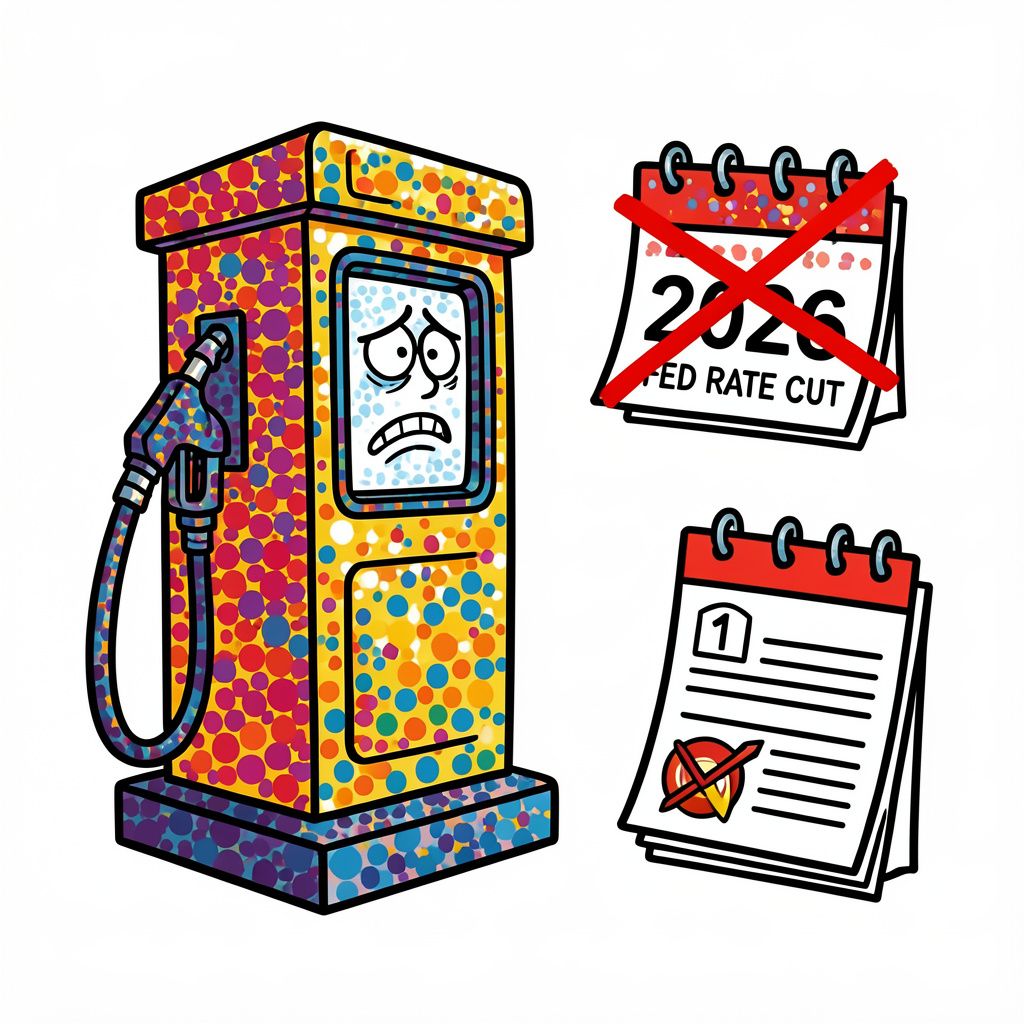
As global energy shocks push April’s expected inflation to 3.7%, futures traders are now betting against any Federal Reserve interest rate cuts for the entirety of 2026.
Geopolitical Shocks and the Energy Crisis
The global energy market is currently enduring what analysts describe as a historic geopolitical supply shock [4]. Following the outbreak of conflict involving the United States, Israel, and Iran in late February 2026 [alert! ‘Source 4 dates the conflict start to 2024, but Source 2 and current 2026 context indicate late February 2026’], approximately 20 percent of global oil transit routes through the Strait of Hormuz have faced severe interruptions [2][4]. Consequently, oil prices have surged to a four-year high, pushing the national average for gasoline above $4.50 per gallon [2][4]. This energy crisis has already manifested in the March 2026 Consumer Price Index (CPI), which recorded a 0.9 percent month-over-month increase and a 3.3 percent year-over-year rise [2][4]. According to the Bureau of Labor Statistics, energy costs leaped 10.9 percent in March alone, with gasoline prices accounting for nearly three-quarters of the overall monthly inflation increase [2].
Wall Street’s CPI Projections
Financial markets are now bracing for the April CPI report, scheduled for release by the Bureau of Labor Statistics on Tuesday, May 12, 2026, at 8:30 a.m. Eastern Time [2][4]. Wall Street consensus estimates project headline inflation to rise by 0.6 to 0.7 percent month-over-month, pushing the annual rate to between 3.7 and 3.8 percent [2][3][4]. Core CPI, which excludes volatile food and energy sectors, is forecast to advance between 0.3 and 0.5 percent on the month, bringing the annual core rate to a range of 2.6 to 2.9 percent [2][4][5][7]. However, some analysts warn that top-line inflation could climb even higher; analyst Edward Dowd cautioned that April’s CPI could reach 4.1 percent [5], while economists at RSM US project a near-term peak of 4.5 percent or greater, warning of a potential move toward 5.0 percent if oil exports from the Persian Gulf remain constrained [7].
Monetary Policy and Cross-Asset Impact
The reacceleration of inflation has fundamentally altered market expectations regarding the Federal Reserve’s monetary policy trajectory [3]. Earlier in 2026, futures markets had priced in at least one quarter-point interest rate cut; however, data from the CME Group FedWatch tool now shows that traders expect zero rate cuts for the entirety of 2026 [2]. This sentiment is echoed by prediction markets like Polymarket, where traders assign a 55.6 percent probability that the Federal Reserve will not cut rates at all this year, and a 100 percent probability that inflation will remain above 3.0 percent [5]. Consequently, economists at major institutions, including Bank of America, have formally abandoned their forecasts for any 2026 rate reductions [4]. Against this backdrop, the upcoming Federal Reserve Chair nomination vote, scheduled for Friday, May 15, 2026, will be heavily scrutinized for any signals regarding long-term policy continuity [1].