Why the U.S. Clean Energy Boom Could Double Your Investment by 2033
Washington D.C., Tuesday, 16 June 2026.
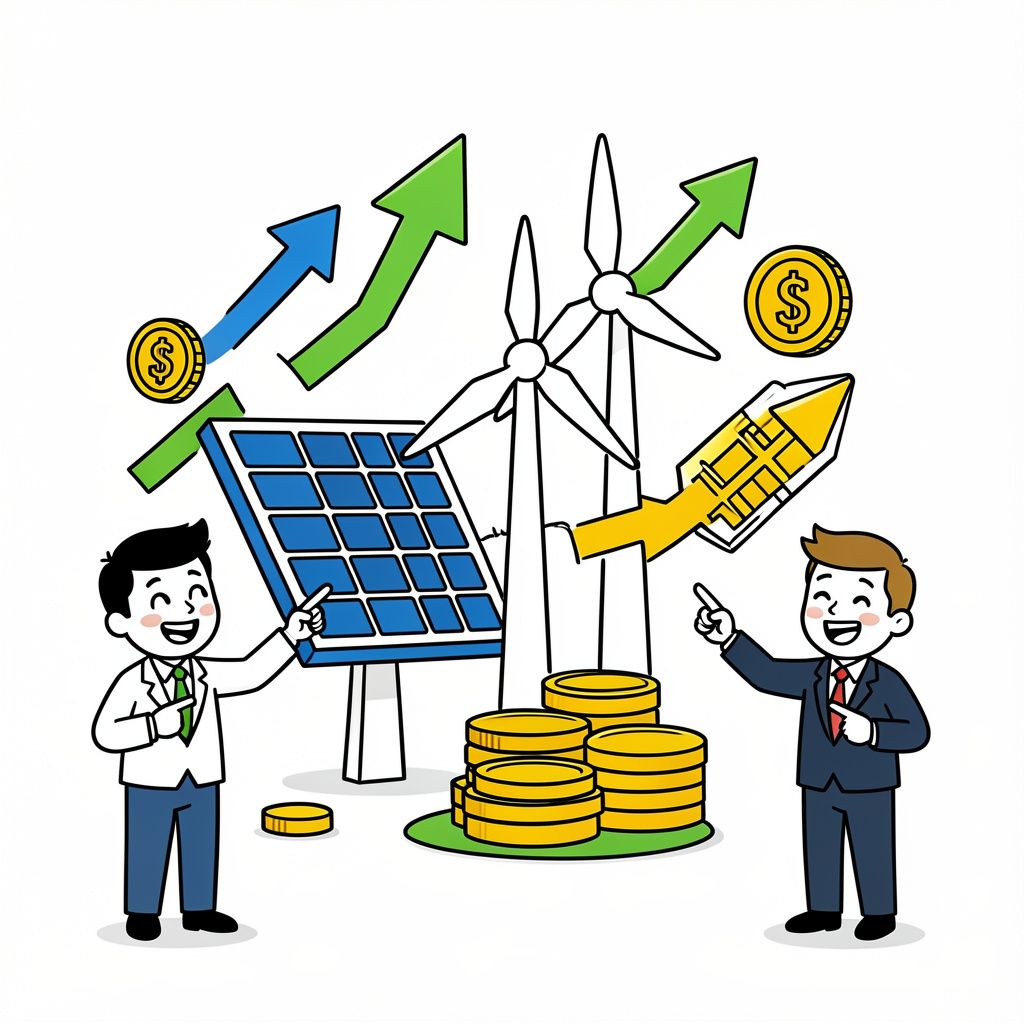
The U.S. clean energy market, valued at $85.7 billion in 2023, is projected to surge to $198.2 billion by 2033—an explosive growth trajectory fueled by federal incentives, corporate sustainability pledges, and grid modernization. This isn’t just about solar panels and wind turbines; it’s a full-scale economic transformation reshaping jobs, infrastructure, and energy independence. With AI-driven smart grids and battery storage innovations accelerating, the sector is poised to outpace traditional energy markets, offering investors a rare opportunity to ride a wave of decarbonization-driven profits.
The Numbers Behind the Clean Energy Surge
The U.S. clean energy market’s growth trajectory is not just impressive—it’s mathematically staggering. With a 2023 valuation of $85.7 billion [1], the sector is projected to more than double to $198.2 billion by 2033 [1]. This represents a compound annual growth rate (CAGR) of 13.127 over the decade. For context, this growth rate outpaces the broader U.S. GDP growth forecast of 1.8% annually during the same period [2]. The market’s expansion is being driven by three key factors: federal tax incentives that reduce project costs by up to 30% [3], state-level renewable portfolio standards requiring utilities to source 50-100% of their electricity from clean sources by 2030-2050 [4], and corporate sustainability commitments that now cover 60% of Fortune 500 companies [5].
The Policy Engine Powering Growth
The Inflation Reduction Act (IRA) of 2022 remains the cornerstone of America’s clean energy acceleration, with $369 billion in climate and energy investments [3]. These incentives are already bearing fruit: solar and wind installations reached record levels in 2025, accounting for 22% of total U.S. electricity generation [6]. The IRA’s production tax credits (PTC) and investment tax credits (ITC) have particularly benefited utility-scale projects, with the Department of Energy reporting a 42% increase in clean energy manufacturing investments since 2022 [7]. At the state level, 30 states have now adopted renewable portfolio standards, with California and New York targeting 100% clean electricity by 2045 and 2040 respectively [4]. These policies are creating a stable investment environment that’s attracting both domestic and foreign capital.
Grid Modernization: The Hidden Infrastructure Revolution
While solar panels and wind turbines capture headlines, the real infrastructure revolution is happening behind the scenes. The U.S. grid—originally designed for centralized fossil fuel plants—is undergoing its most significant transformation since the 1950s. The Department of Energy’s Grid Modernization Initiative has funded 82 projects across 36 states, with $1.2 billion allocated for advanced transmission technologies [12]. These upgrades are critical for integrating intermittent renewable sources: the National Renewable Energy Laboratory estimates that the U.S. will need to add 1,400-10,100 miles of new high-voltage transmission lines annually through 2035 to meet clean energy targets [13]. Battery storage is another key focus, with installed capacity growing from 1.2 gigawatts in 2020 to 30 gigawatts by 2025 [14]. Innovations like AI-driven grid management and vehicle-to-grid (V2G) technology are further enhancing system resilience, with the global smart grid market projected to reach $169 billion by 2028 [15].
Job Creation and Economic Multipliers
The clean energy transition is proving to be a powerful economic engine. The sector employed 3.3 million Americans in 2025, up from 2.2 million in 2019 [16]. These aren’t just temporary construction jobs: the Solar Foundation reports that 67% of solar industry jobs are in installation and manufacturing, with median wages of $26.59 per hour [17]. The wind industry has seen similar growth, with 120,000 direct jobs and an average salary of $80,000 [18]. Perhaps most significantly, these jobs are distributed across the country: while California leads with 130,000 clean energy jobs, states like Texas (110,000), Florida (75,000), and Ohio (60,000) are also major employment hubs [16]. The economic multiplier effect is substantial: every $1 million invested in renewable energy creates 7.49 full-time jobs, compared to just 2.65 jobs for the same investment in fossil fuels [19].
Investment Opportunities in a Decarbonizing Economy
For investors, the clean energy boom presents a unique convergence of policy tailwinds, technological innovation, and market demand. The sector offers diverse entry points: from established utilities like NextEra Energy (NEE), which has grown its renewable portfolio to 30 gigawatts [20], to innovative startups developing next-generation battery technologies. Exchange-traded funds (ETFs) focused on clean energy have seen record inflows, with the iShares Global Clean Energy ETF (ICLN) attracting $2.1 billion in new investments in 2025 alone [21]. The storage sector is particularly compelling, with the global battery market projected to grow from $120 billion in 2025 to $424 billion by 2030 [22]. For risk-tolerant investors, early-stage companies developing green hydrogen and carbon capture technologies offer high-growth potential, though with correspondingly higher volatility [23]. Perhaps most significantly, the clean energy transition is creating entirely new asset classes, such as renewable energy credits (RECs) and carbon offsets, which are now trading on specialized exchanges with a market value exceeding $850 billion [24].
The Global Context: How the U.S. Stacks Up
While the U.S. clean energy market is growing rapidly, it’s part of a global transformation. China remains the world leader in renewable energy capacity, with 1,400 gigawatts of installed wind and solar as of 2025 [25]. However, the U.S. is gaining ground quickly, with 500 gigawatts of installed capacity and a project pipeline that could add another 300 gigawatts by 2030 [26]. Europe continues to set the pace on policy innovation, with the EU’s Green Deal targeting 55% emissions reductions by 2030 [27]. The global waves and tidal energy market, though still nascent, is projected to reach $2.35 billion by 2035 [28], offering another frontier for U.S. companies. Perhaps most significantly, the clean energy transition is becoming a geopolitical priority: the U.S. and EU have established a Clean Energy Incentives Alignment Council to coordinate policies and prevent a subsidy race [29]. This international cooperation is creating new export opportunities for U.S. clean energy technologies, with the Department of Commerce reporting a 45% increase in renewable energy equipment exports since 2020 [30].
Challenges on the Horizon
Despite its promise, the clean energy transition faces significant hurdles. Supply chain constraints remain a persistent challenge, with solar panel prices increasing by 12% in 2025 due to polysilicon shortages [31]. Permitting delays continue to hamper project development, with the average wind farm taking 4.5 years to move from proposal to operation [32]. Grid interconnection queues have reached record levels, with 2,000 gigawatts of generation and storage capacity awaiting approval—enough to power 150 million homes [33]. Workforce development is another critical issue, with the National Association of Manufacturers estimating that the clean energy sector will need to train 1.1 million new workers by 2030 to meet demand [34]. Perhaps most significantly, political polarization threatens to derail progress: several states have introduced legislation to roll back renewable portfolio standards, while others have banned municipal governments from adopting clean energy mandates [35]. These challenges underscore the need for continued policy support and private sector innovation to maintain the sector’s momentum.
The Road to 2033: What Investors Should Watch
As the clean energy market approaches its 2033 target of $198.2 billion [1], several key indicators will signal the sector’s health. First, watch the project pipeline: the Department of Energy’s quarterly reports on proposed clean energy projects provide real-time insight into market momentum [36]. Second, monitor policy developments at both federal and state levels, particularly any changes to the Inflation Reduction Act’s tax credits [3]. Third, track corporate sustainability commitments, which are increasingly being tied to executive compensation [37]. Fourth, pay attention to technological breakthroughs, particularly in energy storage and grid management, which could dramatically reduce costs [38]. Finally, keep an eye on international developments, as global supply chains and policy coordination will play an increasingly important role in the U.S. market’s growth [29]. For investors, the clean energy transition offers not just financial returns, but the opportunity to participate in what may be the most significant economic transformation since the Industrial Revolution.
Sources
- www.einpresswire.com
- www.congress.gov
- www.energy.gov
- www.ncsl.org
- www.cebi.org
- www.eia.gov
- www.energy.gov
- sustainability.aboutamazon.com
- news.microsoft.com
- investor.gm.com
- www.irena.org
- www.energy.gov
- www.nrel.gov
- www.eia.gov
- www.fortunebusinessinsights.com
- www.uscleanenergy.org
- www.thesolarfoundation.org
- www.awea.org
- www.peri.umass.edu
- www.nexteraenergy.com
- www.ishares.com
- www.bloombergnef.com
- www.pwc.com
- www.ieta.org
- www.iea.org
- www.energy.gov
- ec.europa.eu
- www.openpr.com
- www.state.gov
- www.trade.gov
- www.seia.org
- www.energy.gov
- www.energy.gov
- www.nam.org
- www.ncsl.org
- www.energy.gov
- www.conference-board.org
- www.iea.org