Israel's President Tasks Former Military Chief With Building a Government
Jerusalem, Saturday, 7 November 2026.
Opposition leader Gadi Eisenkot secured 67 endorsements to attempt forming a government, aiming to unseat Benjamin Netanyahu after decisive backing from Arab-majority parties broke the parliamentary deadlock.
From Deadlock to Mandate: The Political Shift in Israel
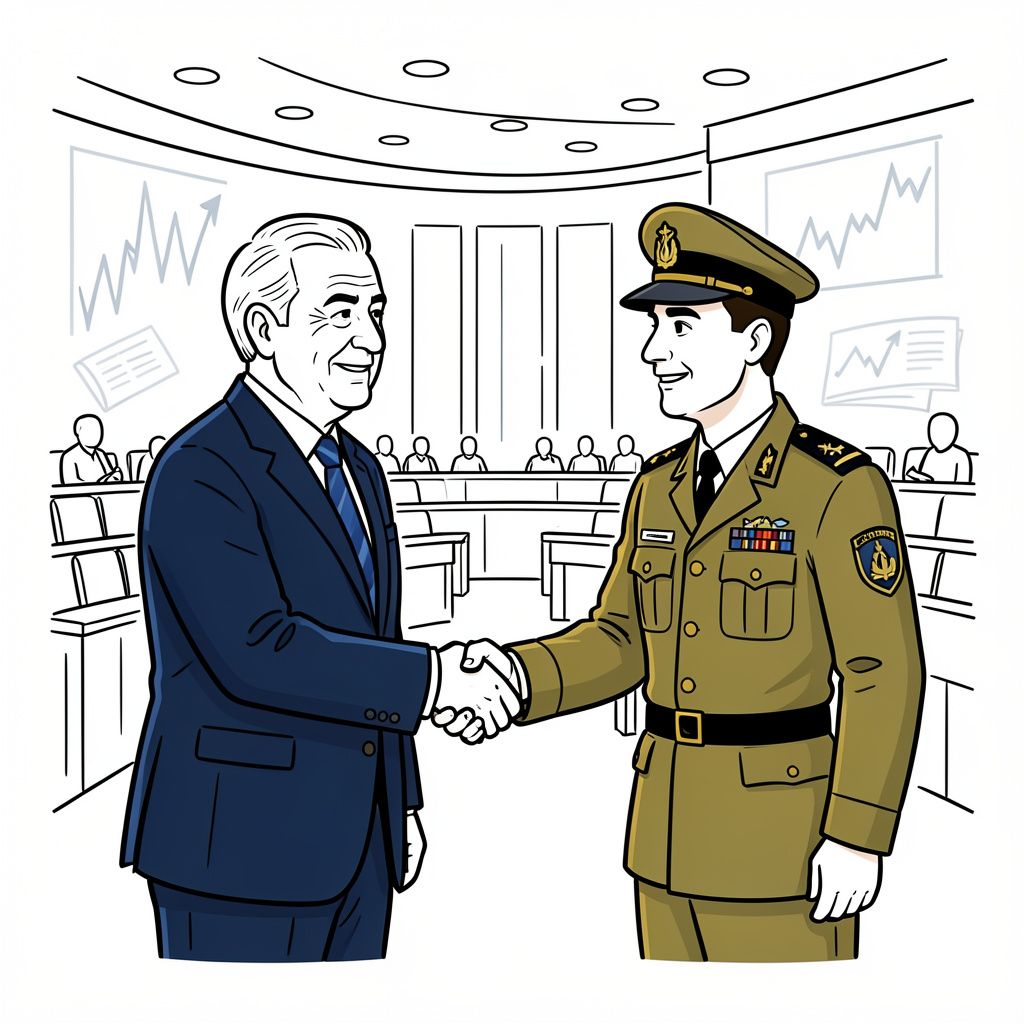
Just two weeks after Israel’s parliamentary elections left the Knesset deeply divided, President Isaac Herzog took decisive action late Saturday, 6 November 2026, tasking former military chief and opposition leader Gadi Eisenkot with forming a new government. This move follows the certification of election results by Herzog, who rejected fraud claims and opened a 28-day window for coalition negotiations—a process that has now entered its most critical phase as Eisenkot begins assembling a governing majority [alert! ‘previous certification process described in earlier reporting’][1]. The president’s announcement came after Eisenkot’s Yashar party secured the support of 67 Knesset members—including 18 from Arab-majority parties—for his candidacy, surpassing the 61-seat threshold needed to form a government [2][5][7]. In contrast, Prime Minister Benjamin Netanyahu’s Likud-led bloc, which held a narrow plurality with 53 seats following the 27 October vote, saw only 46 members endorse his continued leadership [2][7].
The Fragile Coalition: Arab Parties as Kingmakers
Eisenkot’s path to the premiership hinges on an unprecedented alliance with Arab-majority parties, whose 18 seats now hold outsized influence in determining Israel’s next government. While these parties endorsed Eisenkot’s bid, their refusal to explicitly designate Hamas as a terrorist organization—despite Eisenkot’s stated commitment to dismantle the group’s military wing—introduces a significant political vulnerability [3][5][8]. Yoram Cohen, former head of Israel’s Shin Bet security service and a key figure in Eisenkot’s coalition-building team, framed the stakes in stark terms: ‘We are in a critical state of emergency due to election outcomes in the U.S., Israel’s international standing, and the failure to achieve key war objectives. The threat to democracy and the delegitimization of election results demand urgent action’ [8]. Cohen’s remarks underscore the precarious balance Eisenkot must strike: leveraging Arab support to oust Netanyahu while maintaining cohesion among a coalition that spans ideological divides. The Yashar-led bloc’s proposed four core principles—recognition of Israel as a Jewish and democratic state, adherence to the Declaration of Independence, mandatory service for all citizens, and a commitment to dismantling Hamas’s military capabilities—aim to bridge these gaps, but their enforceability remains uncertain [4].
Eisenkot’s Vision: A National Emergency Government
In his first public statement following the president’s decision, Eisenkot framed the moment as Israel’s ‘moment of truth,’ calling for the swift formation of a ‘national emergency government’ to stabilize a nation grappling with war, political fragmentation, and eroding democratic norms [4]. His X post painted a grim picture: ‘Israel is in the midst of a real, tangible, and dangerous emergency. The current government threatens the very foundations of our democracy, particularly as war zones remain hostage to political whims’ [4]. Eisenkot’s urgency reflects both the constitutional timeline—he has 28 days to form a government, with a possible 14-day extension—and the political pressure to prevent a sixth election cycle in under two years [7]. His proposed government would prioritize replacing the Knesset speaker, passing critical legislation, and addressing what he describes as Netanyahu’s ‘dangerous entrenchment’ in power despite losing public confidence [8]. Yet, his reliance on Arab parties for this mandate has drawn sharp criticism from figures like Avigdor Lieberman, who vowed to oppose a ‘minority government’ and dismissed the coalition as inherently unstable [3].
Netanyahu’s Last Stand: Legal and Political Maneuvering
Netanyahu, Israel’s longest-serving prime minister, has vowed to fight efforts to unseat him, framing Eisenkot’s push as an undemocratic power grab despite his bloc’s loss of the majority [1]. His allies, including United Torah Judaism chair Yaakov Litzman, have signaled flexibility in negotiations, while others in the religious-nationalist camp have vowed to obstruct Eisenkot’s coalition-building efforts [2]. The political jockeying extends beyond the Knesset: reports suggest Netanyahu’s camp is exploring legal avenues to challenge the legitimacy of Arab party endorsements for Eisenkot, citing concerns over their stance on Hamas and allegations of election interference [6]. Meanwhile, Eisenkot’s team is reportedly prepared to move quickly, with plans to appoint a Knesset speaker from his bloc within days of receiving the mandate [7]. The coming week will be decisive, as Eisenkot navigates a high-stakes negotiation that could reshape Israel’s political landscape—or plunge the country back into electoral chaos.
Sources
- wsnext.com
- www.nytimes.com
- www.theguardian.com
- x.com
- chabad.info
- www.instagram.com
- www.emess.co.il
- www.kan.org.il