Israel Moves Closer to a New Government as President Validates Vote
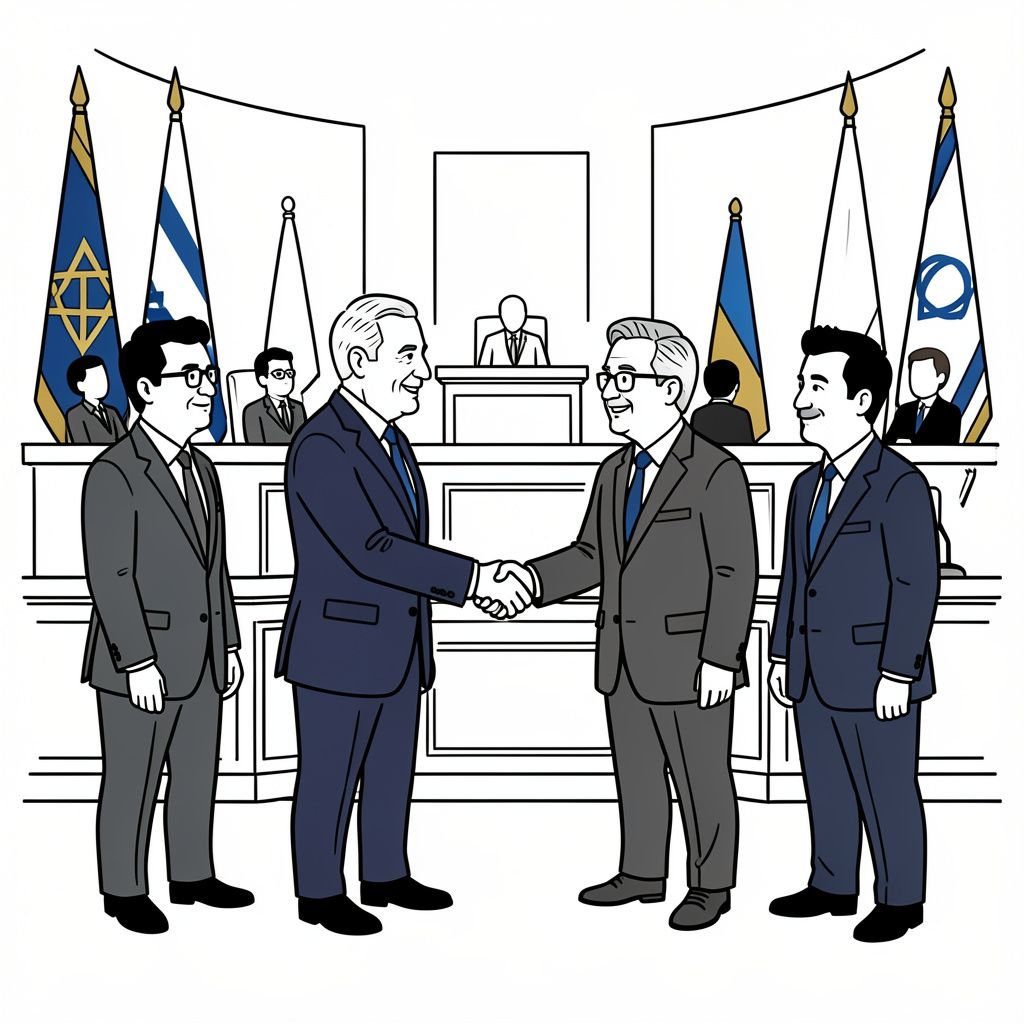
Jerusalem, Thursday, 5 November 2026.
President Isaac Herzog officially certified Israel’s parliamentary election results, rejecting fraud claims and launching coalition talks that leave neither major political bloc with an immediate governing majority.
Certified Results Trigger Coalition Talks
On Wednesday, 3 November 2026, Israeli President Isaac Herzog officially accepted the certified results of the 27 October 2026 parliamentary elections, rejecting claims of fraud and triggering a constitutional process to form a new government [1][4][5]. The certification followed a six-day audit by the Central Election Committee, which examined 9,069 ballot boxes (75% of regular boxes) and found no irregularities affecting electoral integrity [5]. President Herzog’s acceptance of the results—a move required under Israeli law—sets in motion a series of consultations with parliamentary factions aimed at identifying a candidate capable of forming a governing coalition [1][4]. This development follows a prolonged post-election stalemate, during which opposition leader Gadi Eisenkot and Prime Minister Benjamin Netanyahu’s bloc remained deadlocked, with neither securing a majority in the 26th Knesset [2][8].
Political Blocs Remain Deadlocked
As of 5 November 2026, the political landscape remains deeply fractured, with the Netanyahu-aligned bloc holding 53 seats and the opposition bloc, led by Gadi Eisenkot, commanding 48 seats. Arab-led parties hold the remaining 19 seats, complicating efforts to assemble a 61-seat majority [8][10]. The Central Election Committee’s certification process, which concluded on 4 November 2026, validated the election results despite allegations of foreign interference and ballot tampering raised by factions such as Zehut, which claimed unspecified foreign entities attempted to influence the vote [7]. President Herzog acknowledged these allegations as suspicions requiring thorough investigation but emphasized the need to respect the democratic process [1][4].
Factions Submit Recommendations Amidst Security Concerns
On 4 November 2026, President Herzog began formal consultations with party leaders, a process that included meetings with Religious Zionism, Shas, Yisrael Beytenu, and Zehut, all of which recommended Netanyahu for prime minister. United Torah Judaism, however, declined to recommend any candidate, while Ra’am and Yisrael Beytenu recommended Eisenkot [10][11]. The consultations, scheduled to continue through 5 November 2026, have been marked by heightened security measures following uncoordinated visits by foreign journalists and concerns over potential disruptions [11]. Meanwhile, the Shin Bet’s investigation into alleged foreign interference, which includes scrutiny of financial flows from unspecified foreign states, has added complexity to the political environment [2].
Deadlines Loom as Investors Await Stability
Under Israel’s Basic Law: The Government, President Herzog has up to 28 days to task a candidate with forming a government, with a possible 14-day extension if progress stalls. If no candidate secures a majority, the Knesset may dissolve automatically, triggering new elections within 90 days [10]. For international investors, the protracted negotiations underscore the challenges of achieving fiscal and regulatory predictability in Israel’s tech-driven economy [GPT]. The absence of a clear majority has already prompted warnings from opposition figures, including Yair Lapid, who argued that Netanyahu’s continued leadership poses risks to Israel’s security and global standing [9]. With the 10 November 2026 deadline for the Knesset’s swearing-in approaching, the coming days will determine whether Israel can avoid a third election in as many years.
Sources
- www.nbcnews.com
- www.kan.org.il
- www.facebook.com
- www.zman.co.il
- www.srugim.co.il
- www.zman.co.il
- www.maariv.co.il
- www.mako.co.il