China Shifts Supply Chains to Developing Nations
Washington, Thursday, 3 September 2026.
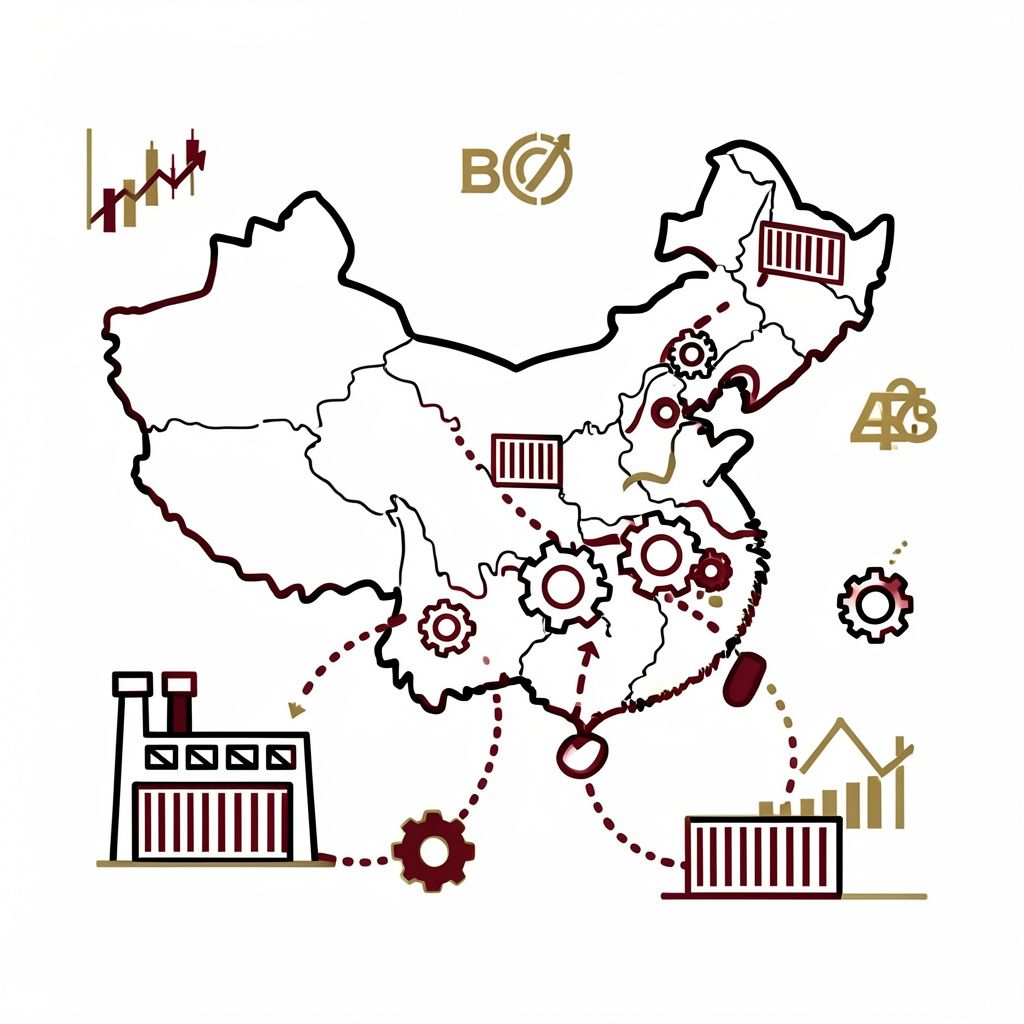
China is rewiring global trade by embedding production networks in emerging markets, reducing reliance on Western economies while shifting supply chain leverage amid ongoing U.S. trade tensions.
Global Trade Rewiring
On September 2, 2026, the Institute of International Finance released a dispatch indicating the global economy is being rewired rather than reversed [1]. This structural shift highlights how national security now deeply shapes economic policy following discussions with policymakers [1].
China’s integration with emerging economies is becoming more commercial and selective, focusing on production networks alongside lending [1]. This strategy reduces reliance on Western consumer markets while altering capital flows across developing nations [1].
Strategic Retaliation and Leverage
Prior to this report, China implemented targeted economic countermeasures against the United States on August 25, 2026 [3]. These restrictions specifically affected drones, dual-use goods, and certification services in response to U.S. Entity List actions [3].
Analysis suggests China’s economic leverage may be significant, with claims that 40% of American agricultural products are tailored for export to China [2]. This dynamic creates a precarious position for the U.S. economy within the complex geopolitical landscape [2].
Diplomatic Horizons
President Donald Trump has expressed intent to host Chinese President Xi Jinping for a meeting in Washington in September 2026 [3][alert! ‘Status pending as of 2026-09-03’]. This planned engagement aims to address ongoing trade tensions and investment restrictions [3].
However, as of September 3, 2026, the status of this meeting remains pending with no confirmation of a specific date [3]. Uncertainty regarding future negotiations continues to impact investor expectations and supply chain stability [3].
Regional Economic Shifts
ASEAN countries are positioned to potentially benefit from supply chain diversification by multinationals seeking to avoid geopolitical risks [3]. Resilient supply chains and regional economic integration are identified as essential strategies to counteract great-power trade conflicts [3].
The fundamental drivers of global growth are changing, with AI already acting as a macroeconomic shock through investment and trade [1]. Executives must navigate these altered manufacturing hubs and cross-border commerce patterns in developing nations [1][3].