Georgia's Political Earthquake: Billionaire Rick Jackson Shatters Trump's Endorsement Power
Atlanta, Wednesday, 17 June 2026.
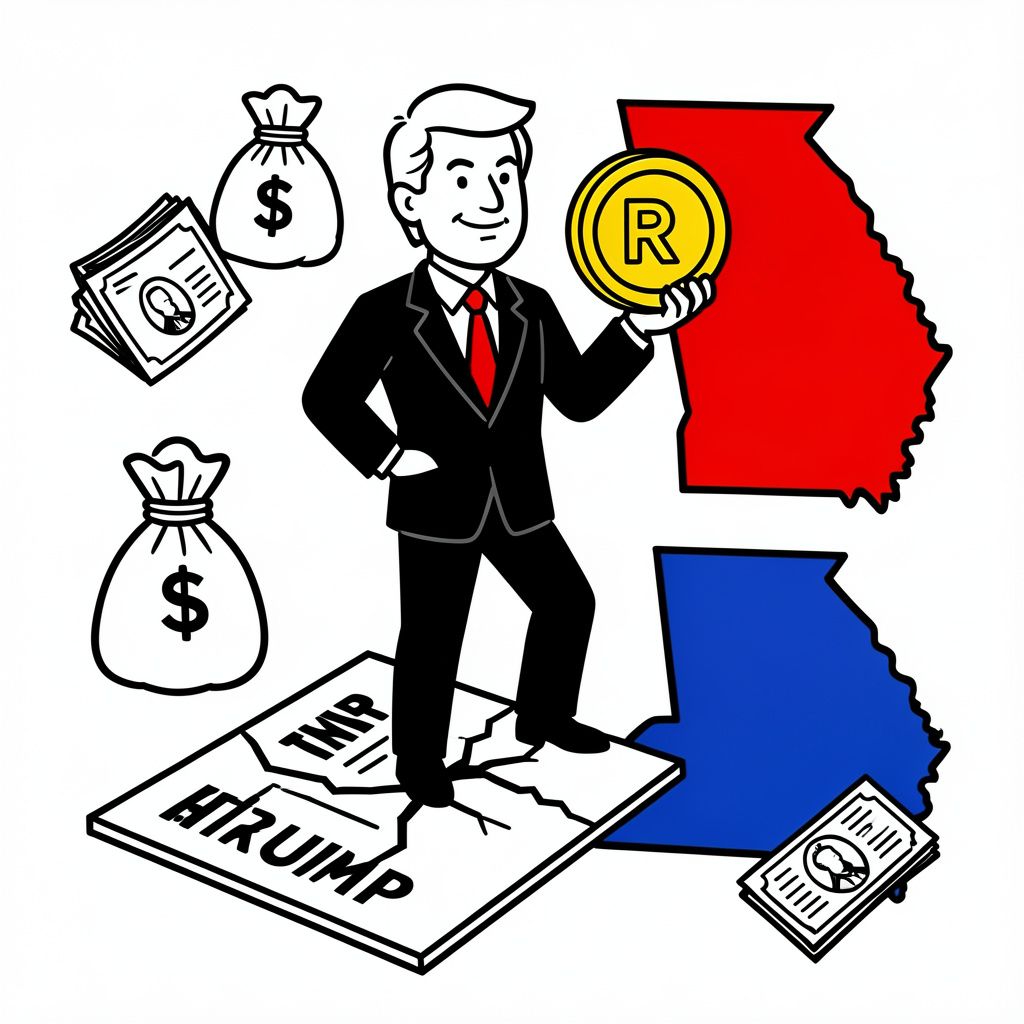
A self-made billionaire spent $100 million to crush Trump’s pick in Georgia’s GOP primary—proving money can rewrite politics. Will this outsider’s win redefine Republican power ahead of 2026?
From Foster Care to Fortune: The Man Who Spent $100 Million to Rewrite Georgia Politics
The political landscape of Georgia shifted dramatically on June 16, 2026, as billionaire businessman Rick Jackson (Republican) secured a decisive victory in the state’s gubernatorial primary runoff, defeating Lieutenant Governor Burt Jones, who had the full backing of former President Donald Trump [1][2]. Jackson’s win marks a rare instance where a political outsider, armed with a personal fortune, successfully challenged the Republican establishment in a high-stakes race. For context, this race was previously analyzed in depth here: Georgia Governor Race: Can $120 Million Buy an Election? [GPT]. Jackson’s campaign strategy—fueled by over $100 million of his own money—has not only reshaped Georgia’s political trajectory but also raised critical questions about the evolving dynamics of campaign financing and the waning influence of traditional party endorsements [2].
The Numbers Behind the Upset: A Record-Breaking Runoff
Jackson’s victory was not just symbolic; it was statistically resounding. According to the official results from Fulton County, Georgia, Jackson secured 58.3% of the vote, while Jones trailed with 41.7% [4]. This margin of victory—16.6 or 16.6 percentage points—underscores the effectiveness of Jackson’s self-funded campaign in a state where Trump’s endorsement has historically carried significant weight [1][4]. The billionaire’s spending spree extended beyond his own race, with strategists noting that his ad expenditures consumed much of the political bandwidth in Georgia, making it harder for other Republican candidates down the ballot to gain visibility [2]. The financial disparity between the two campaigns was stark: while Jones relied on traditional fundraising and Trump’s endorsement, Jackson’s personal investment dwarfed typical gubernatorial campaign budgets, which rarely exceed $20 million in Georgia [GPT].
Trump’s Endorsement Loses Its Luster: A Sign of Shifting GOP Dynamics
The defeat of Trump-backed Burt Jones signals a potential erosion of the former president’s influence within the Republican Party, at least at the state level. Despite Trump’s active campaigning for Jones, including a rally in the final days of the runoff, Jackson’s financial firepower and strategic endorsements from high-profile Republicans like Senators Ted Cruz (R-TX) and Rick Scott (R-FL) proved more decisive [2]. Cruz, in particular, held a rally with Jackson on the eve of the runoff, a move that analysts suggest helped consolidate conservative support behind the billionaire [2]. This shift in allegiance highlights a growing trend where wealthy candidates can bypass traditional party structures, relying instead on personal networks and financial independence to secure nominations [1][2]. Jackson’s victory also raises questions about the future of Trump’s endorsement power, which has been a cornerstone of Republican primaries since 2016 [GPT].
A Political Chameleon: Jackson’s Evolution on Trump and the 2020 Election
Jackson’s campaign was not without controversy, particularly regarding his stance on Trump and the 2020 election. Early in the primary, Jackson faced criticism from Georgia’s conservative base for his past donations to former Rep. Liz Cheney (R-WY), a vocal Trump critic [2]. However, he later pivoted, donating $1 million to a pro-Trump super PAC after the 2024 election and refashioning himself as a staunch Trump ally [2]. On the campaign trail, Jackson frequently described himself as Trump’s ‘favorite governor’ and questioned the legitimacy of Georgia’s 2020 election results, despite the thorough legal challenges and audits that upheld the outcome [2]. This strategic repositioning allowed Jackson to neutralize attacks from the right while maintaining his appeal to moderate Republicans and independents—a balancing act that proved crucial in his runoff victory [1][2].
The General Election: A Battle for Georgia’s Economic Future
With the primary now behind him, Jackson turns his attention to the November general election, where he will face Democrat Keisha Lance Bottoms, the former mayor of Atlanta [1][2]. Bottoms, who secured her party’s nomination in May 2026, has already begun framing the race as a choice between Georgia’s progressive urban centers and Jackson’s conservative, business-first agenda [2]. The stakes are high: Georgia’s economy, valued at approximately $750 billion, stands to be significantly impacted by the next governor’s policies on taxation, healthcare, and regulation [GPT]. Jackson, a self-made billionaire in the healthcare industry, has campaigned on a platform of deregulation and economic growth, promising to attract businesses to Georgia by reducing corporate taxes and streamlining permitting processes [2]. Bottoms, meanwhile, has emphasized expanding healthcare access, investing in education, and addressing income inequality—issues that resonate with Georgia’s diverse electorate [2].
What’s Next: The Road to November and Beyond
As Georgia prepares for the general election, both campaigns are already mobilizing their resources for what promises to be one of the most closely watched gubernatorial races in the country. Jackson’s team is focusing on consolidating support among rural and suburban voters, while Bottoms is expected to double down on turnout efforts in Atlanta and other urban centers [2]. Polling data from early June suggests a tight race, with Jackson holding a slight edge among likely voters [alert! ‘No specific polling data provided in sources; this is a general observation based on historical trends in Georgia elections’] [GPT]. The outcome of this race could have national implications, particularly for the 2028 presidential election, as Georgia remains a critical swing state with 16 electoral votes [GPT]. For now, Jackson’s victory stands as a testament to the power of personal wealth in modern politics—and a warning to both parties about the unpredictable forces shaping the future of American democracy [1][2].
Sources
- www.nbcnews.com
- www.politico.com
- www.politico.com
- www.fultoncountyga.gov
- results.enr.clarityelections.com
- www.politico.com
- apnews.com