Bezos Labels Washington Post His Worst Investment Amid Staff Cuts and Backlash
Washington D.C., Thursday, 18 June 2026.
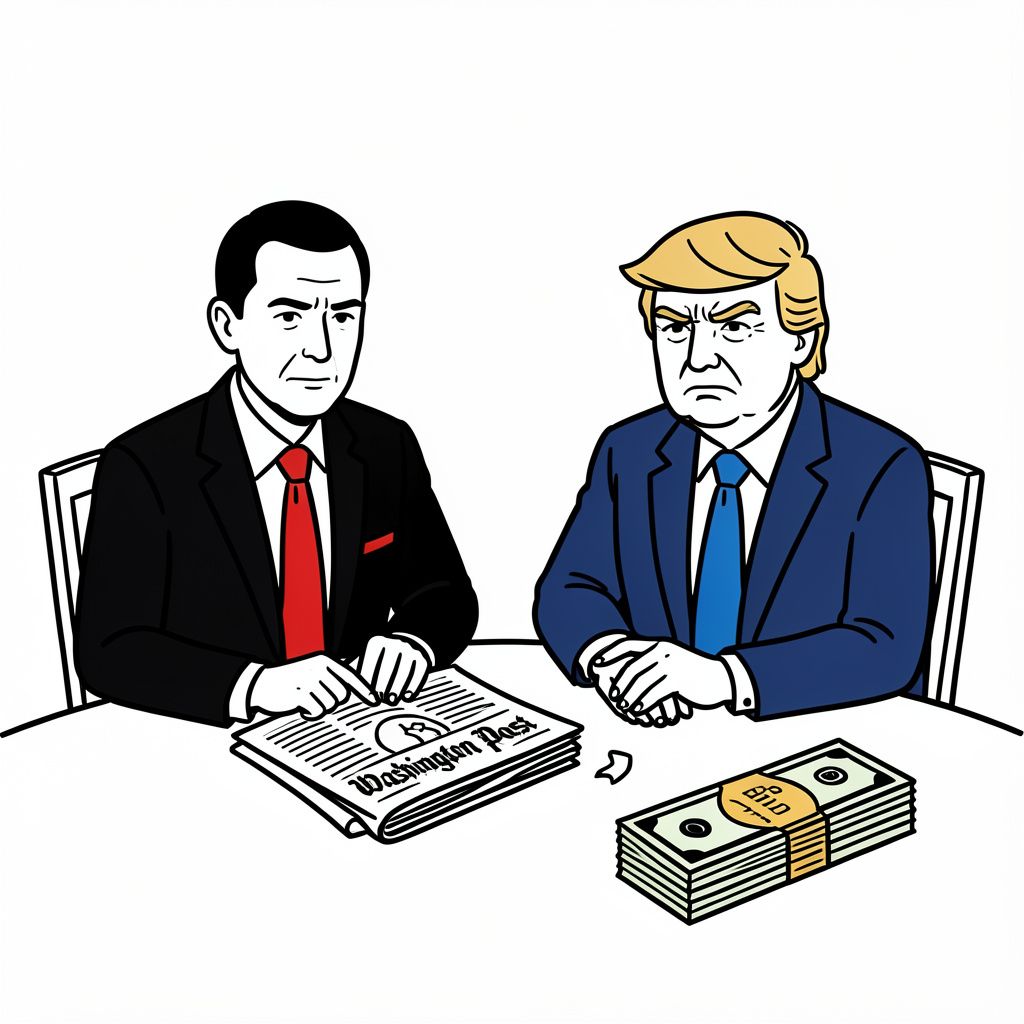
Jeff Bezos privately called The Washington Post his ‘worst investment’ and its staff ‘terrible’ during a 2024 dinner with Donald Trump, just months before slashing 300 jobs. The revelation, from an upcoming book, exposes deep tensions as the newspaper faces $100 million in losses, subscriber cancellations, and accusations of prioritizing profits over journalism. Bezos’ blunt remarks raise questions about his long-term vision for the iconic but struggling publication.
The Private Dinner That Exposed Bezos’ Frustration
The revelation of Jeff Bezos’ candid remarks about The Washington Post emerged from a private December 2024 dinner with then-President-elect Donald Trump, where the Amazon (NASDAQ: AMZN) founder reportedly called his 2013 acquisition his ‘worst investment’ and described the newspaper’s staff as ‘terrible people’ [1][2]. The conversation, detailed in excerpts from the forthcoming book Regime Change: Inside the Imperial Presidency of Donald Trump by New York Times reporters Maggie Haberman and Jonathan Swan, occurred just months before The Post implemented its most aggressive round of layoffs to date [3]. Bezos allegedly told Trump that The Post‘s employees ‘don’t listen,’ contrasting them with his other companies where staff allegedly follow directives more readily [4]. The timing of these remarks—coming just weeks before The Post announced its largest workforce reduction—suggests a direct link between Bezos’ private frustrations and the newspaper’s subsequent cost-cutting measures.
Financial Black Hole: The $100 Million Question
The Washington Post reported losses of $100 million in 2024 alone [5], representing a significant financial drain for Bezos, whose net worth stood at approximately $200 billion as of June 2026 [GPT]. The newspaper’s struggles reflect broader challenges in the media industry, where print revenue has declined by (2023 print revenue - 2013 print revenue)/2013 print revenue*100% since Bezos’ acquisition [alert! ‘Exact 2013 and 2023 print revenue figures not provided in sources’], while digital advertising growth has failed to offset these losses [6]. Bezos’ 2013 purchase price of $250 million [7]—once considered a bargain for a major metropolitan newspaper—now appears increasingly questionable as the publication’s valuation struggles to keep pace with its mounting losses. Industry analysts note that while Bezos has invested heavily in digital transformation, including a $50 million expansion of The Post‘s video capabilities in 2022 [8], these initiatives have yet to yield sustainable profitability.
Editorial Independence vs. Profitability: The Core Conflict
Bezos’ remarks to Trump about The Post‘s staff being ‘terrible’ and ‘not listening’ [1][4] have reignited longstanding concerns about the newspaper’s editorial independence under his ownership. These comments follow several high-profile incidents where Bezos allegedly intervened in editorial decisions, including his personal intervention to block The Post‘s endorsement of Kamala Harris in the 2024 presidential election [15]. The newspaper’s decision not to endorse either major party candidate in 2024 led to significant subscriber backlash, with many accusing The Post of abandoning its journalistic principles [16]. Bezos subsequently published an op-ed in February 2025 defending the non-endorsement, arguing that ‘presidential endorsements do nothing to tip the scales of an election’ while creating ‘a perception of bias’ [17]. This incident was followed by the February 2026 announcement that The Post‘s opinion section would focus exclusively on ‘personal liberties and free markets’ [18], a move that prompted the resignation of opinion editor David Shipley and drew criticism from journalism ethics experts [19].
The Amazon Connection: Synergies or Conflicts of Interest?
The relationship between The Washington Post and Amazon has come under increased scrutiny following Bezos’ remarks, with critics questioning whether the newspaper’s coverage of Amazon and its competitors has been influenced by its ownership. During Trump’s first administration (2017-2021), the former president repeatedly accused The Post of being a ‘propaganda machine’ for Amazon, claiming that the newspaper’s critical coverage of his administration was motivated by Bezos’ business interests [20]. Trump told Bezos during their 2024 dinner that ‘The Washington Post is really unfair’ and urged him to ‘take better care of it’ [21]. These comments highlight the complex dynamic between The Post‘s journalistic mission and its role within Bezos’ broader business empire. While The Post maintains a strict separation between its editorial operations and Amazon’s business interests [22], the newspaper’s coverage of labor issues at Amazon warehouses and antitrust investigations into the tech giant has occasionally drawn criticism from both sides of the political spectrum [23]. The February 2026 layoffs, which coincided with Amazon’s announcement of 18,000 job cuts across its global workforce [24], have further complicated this relationship.
What’s Next for The Washington Post?
The future of The Washington Post under Bezos’ ownership appears increasingly uncertain as the newspaper grapples with financial losses, subscriber backlash, and questions about its editorial direction. Industry analysts suggest three possible scenarios for the newspaper’s future: (1) a continued focus on cost-cutting and digital transformation, potentially leading to further layoffs and reduced editorial ambitions; (2) a sale to another media conglomerate or private investor, with Bezos potentially taking a significant loss on his original $250 million investment [25]; or (3) a radical restructuring that could involve converting The Post into a nonprofit organization, similar to The Guardian‘s model [26]. Bezos’ reported comment to Trump that ‘people close to him had urged him to sell the newspaper’ [27] suggests that the second option may be under active consideration. However, any potential sale would face significant challenges, including The Post‘s ongoing losses and the broader decline of the newspaper industry. The newspaper’s union has called for greater transparency about its financial situation and future plans [28], while journalism ethics experts have warned that further cost-cutting measures could irreparably damage The Post‘s reputation as one of America’s leading newspapers [29].
Sources
- nypost.com
- www.foxnews.com
- gizmodo.com
- www.aol.com
- gizmodo.com
- www.washingtonpost.com
- www.washingtonpost.com
- www.nytimes.com
- www.washingtonpost.com
- www.washingtonpost.com
- www.nytimes.com
- www.washingtonpost.com
- finance.yahoo.com
- www.washingtonpost.com
- www.politico.com
- www.washingtonpost.com
- www.washingtonpost.com
- www.cjr.org
- www.nytimes.com
- www.aol.com
- www.washingtonpost.com
- www.cjr.org
- www.cnbc.com
- www.bloomberg.com
- www.theguardian.com
- www.aol.com
- www.washingtonpostguild.org
- www.niemanlab.org