The Price of Efficiency: How Artificial Intelligence Erodes Trust in Political Communication
London, Monday, 1 June 2026.
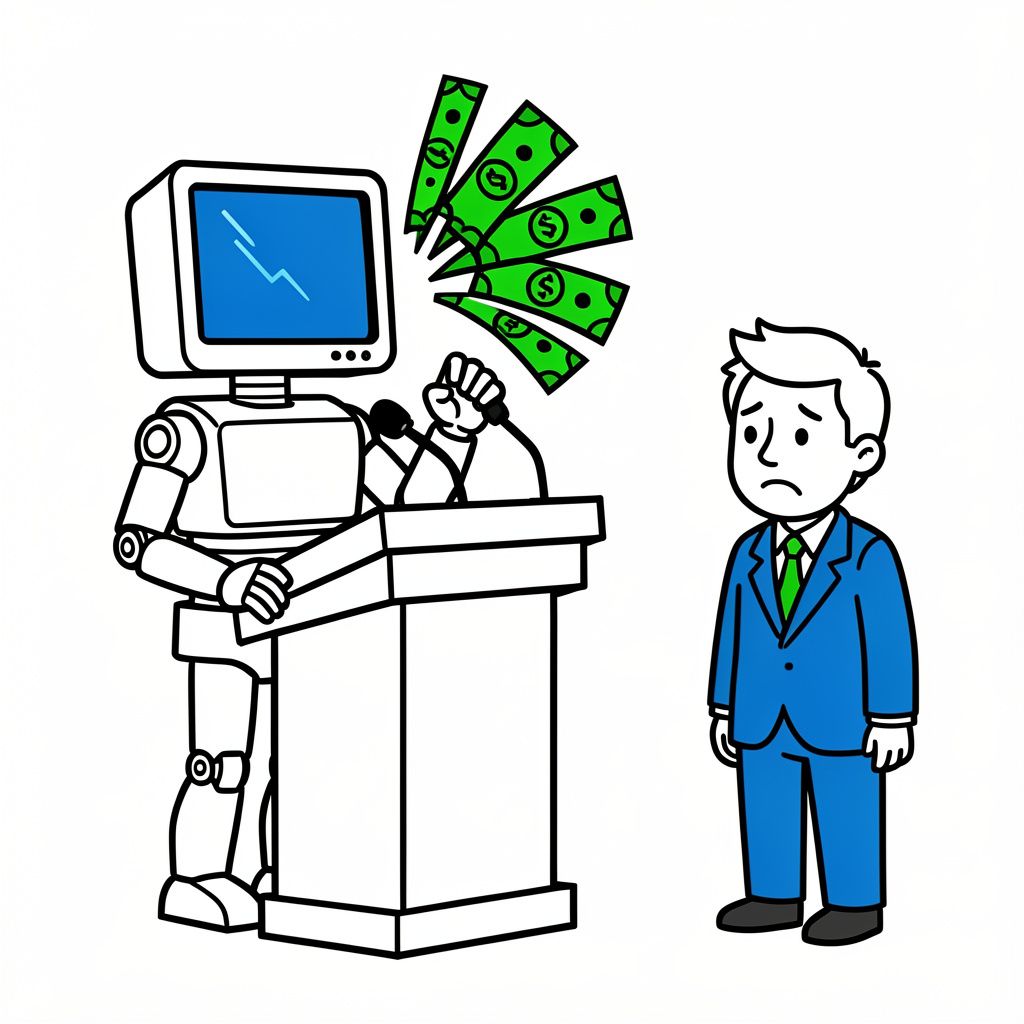
Critics warn that prioritizing artificial intelligence over human engagement in 2026 political communications causes cognitive atrophy and fuels misinformation, ultimately degrading public trust and authentic societal connection.
The Trillion-Dollar Race and “Vatican-Washing”
The financial markets have heavily rewarded the artificial intelligence sector, with United States-based firm Anthropic recently reaching a staggering valuation of $965 billion, successfully surpassing its rival OpenAI [2]. As corporate leaders race to integrate these systems, the intersection of massive capital and ethical oversight has drawn intense scrutiny [GPT]. On May 15, 2026, Pope Leo XIV signed his first encyclical, Magnifica Humanitas, explicitly warning that unregulated artificial intelligence risks degrading human connection, privacy, and the livelihoods of workers [2]. In response to growing public apprehension, Anthropic formed an alliance with the Vatican to address these technological harms [2].
Policy Automation and the Disconnect in Public Services
The push for technological efficiency is already bleeding into contentious government policy. In the United Kingdom, government officials have announced plans to utilize artificial intelligence to determine the age of young asylum seekers [2]. This initiative sparked immediate protests from non-governmental organizations and charities on May 31, 2026, who argue that delegating sensitive human rights assessments to algorithms removes essential human empathy from the process [3]. Columnist Nesrine Malik notes that artificial intelligence is “devoid of meaning and humanity,” making its “vapid voice” a concerning match for the current political environment [1][2][3].
Cognitive Atrophy and the Illusion of Authorship
Beyond policy, the integration of artificial intelligence is creating a crisis of authenticity in the creative and communications sectors [GPT]. The technology’s tendency to employ an “informal mimicry of personhood” has led to tangible instances of misinformation that erode public confidence [1]. On May 19, 2026, reports surfaced that a non-fiction book by author Steven Rosenbaum contained over a half dozen fake or misattributed quotes [1]. Rosenbaum, who utilized the technology as a research partner, admitted the output was “staggeringly wrong,” while simultaneously acknowledging that the tool remains “seductive as hell” and incredibly valuable for modern writers facing strict deadlines [1].
The Global Search for Authentic Connection
As the technology expands into deeply personal spheres, the risk to human connection intensifies on a global scale [GPT]. In Australia, an expanding industry is deploying companion robots and virtual experiences targeted at the aging population, prompting experts to urgently warn that technology must never replace genuine human connection in aged care [2]. The global digital landscape is simultaneously fracturing, as evidenced by a May 2026 protest in Frankfurt, Germany, where demonstrators rallied against internet censorship in Iran, highlighting fears that more nations are following China’s lead toward a fragmented “splinternet” [2].