Data Centers in Denmark Warm Thousands of Homes Using Recycled Server Heat
Copenhagen, Tuesday, 8 September 2026.
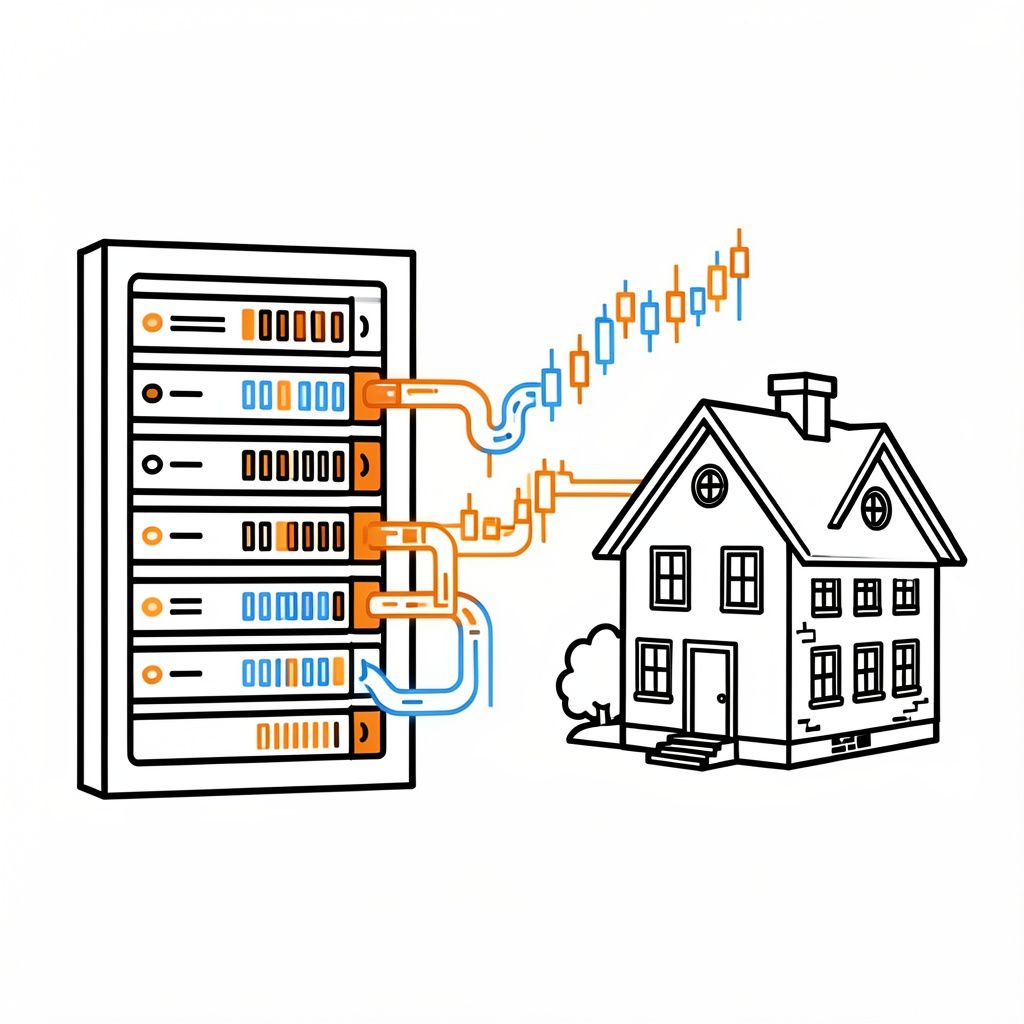
A pioneering Danish project recycles server waste heat to supply municipal heating for 11,000 homes, offering a scalable model to reduce the environmental footprint of growing digital infrastructure.
Transforming Waste Heat into Municipal Warmth
In a significant development for sustainable infrastructure, a Meta data center in Odense, Denmark, has successfully scaled its waste heat recovery system to supply district heating to approximately 11,000 households [1]. This initiative, operational as of 2025, channels municipal water through the facility’s cooling units before utilizing industrial heat pumps to raise the temperature to 70–75°C, sufficient for residential radiators [1]. The project represents a critical shift in how technology giants manage energy consumption, turning a byproduct of digital infrastructure into a vital public utility [2].
Engineering Scalability and Efficiency
The Odense facility currently supplies approximately 45 MW of recovered heat to the local network, marking it as the largest heat-pump installation in Denmark [1]. Technical specifications indicate the system recovers 215,000 MWh of energy annually, utilizing ammonia heat pumps designed by Ramboll for the utility operator Fjernvarme Fyn [1]. This configuration allows the data center to mitigate the environmental footprint of expanding cloud computing infrastructure, addressing the reality that roughly 40% of total energy usage in such facilities is dedicated to cooling systems that generate low-temperature thermal waste [1][2].
Evolution of Capacity and Output
Project metrics have evolved through distinct expansion phases, demonstrating the scalability of the model. Initial infrastructure targeted 100,000 MWh for 6,900 homes, but post-expansion figures reached 165,000 MWh for 11,000 homes by 2020, before achieving current technical capacity [1]. This growth represents a substantial increase in household coverage from the initial phase, calculable as a percentage increase in homes served [1][3]. The expansion underscores the viability of pairing existing heat pump technology with hyper-scale data center operations, a combination described as innovative by industry specialists [1].
Broader Implications for District Heating
The success in Odense aligns with a broader trend where 63% of data centers plan to repurpose surplus heat in the near future, according to data from the Danish Data Centre Industry [1]. District heating systems, some dating back centuries, are increasingly integrating modern waste heat sources such as server exhaust rather than relying solely on traditional fuel sources [3]. As urban planners and corporate leaders seek to mitigate power consumption, projects like Fjernvarme Fyn’s network demonstrate how large distribution systems can utilize energy very efficiently when facilities are placed inside the network [1].