Florida State Football Faces High Financial Risk With Multimillion Dollar Coach Buyout
Tallahassee, Tuesday, 8 September 2026.
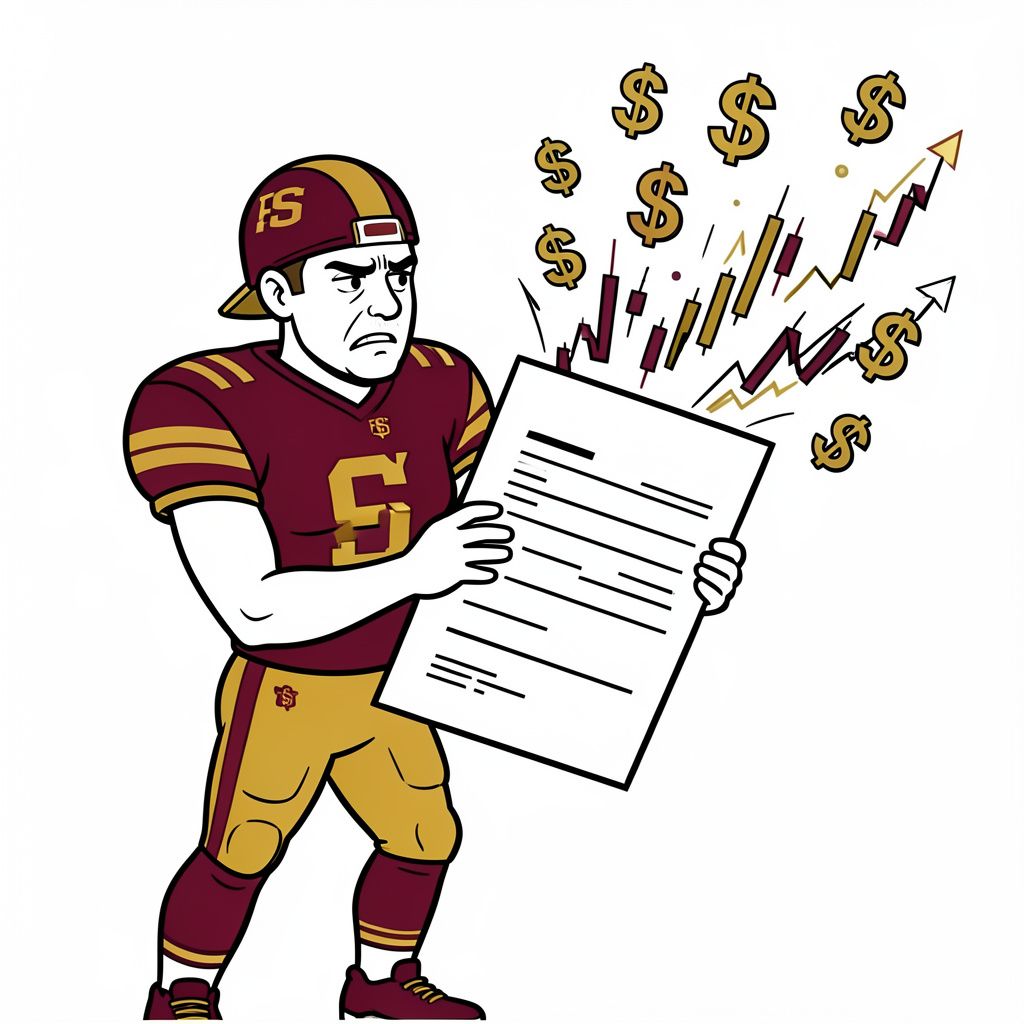
Florida State University faces a massive $51 million buyout obligation to fire football coach Mike Norvell in 2026, highlighting the severe financial risks of modern sports contracts.
Contract Obligations and Performance Metrics
The financial framework surrounding Mike Norvell’s employment was established prior to the 2024 season through an eight-year contract extension valued at more than $84 million through 2031 [1][2]. This agreement averages roughly $10 million annually and includes a scheduled $150,000 salary increase each season [1]. The contract structure reflects a corporate-style executive guarantee, designed to secure leadership stability but creating significant liability amidst performance volatility [2]. Following a 13-0 regular season and an ACC championship in 2023, the program experienced back-to-back losing years with records of 2-10 in 2024 and 5-7 in 2025 [1]. Through six seasons, Norvell holds an overall record of 38-34 at Florida State, including a 22-26 record in ACC play [2].
Buyout Structure and Financial Impact
If Florida State terminates Norvell without cause during or before the conclusion of the 2026 season, the university would owe him approximately $51 million [1][2]. Should the decision occur after the 2026 season, the buyout figure drops to roughly $45.6 million [2]. The difference between these two termination windows amounts to 5.4 million in potential savings for the institution [1]. According to reported details, Norvell is owed 85% of his remaining salary and supplemental compensation [2]. The buyout would reportedly be paid in monthly installments of approximately $800,000 through 2031 if fired after this season [1]. This long-term payment structure extends the financial impact well beyond the coach’s tenure, influencing budget allocations for other athletic initiatives [2].
Public Sentiment and Market Perception
Market reaction to the financial exposure has manifested sharply on social media platforms as of September 8, 2026 [3]. Commentary on X highlighted concerns regarding the university’s liquidity, juxtaposing the multimillion-dollar obligation against operational costs like stadium utilities [3]. Similar sentiment appeared on Instagram, where observers noted the contrast between the buyout sum and the institution’s ability to manage routine expenses [4]. These discussions underscore the scrutiny public universities face when private-sector compensation models intersect with public funding constraints [3]. The discourse emphasizes the growing tension between competitive sports spending and fiscal responsibility in collegiate athletics [4].