Japanese Tech Rout Triggers Historic Market Downturn
Tokyo, Friday, 6 November 2026.
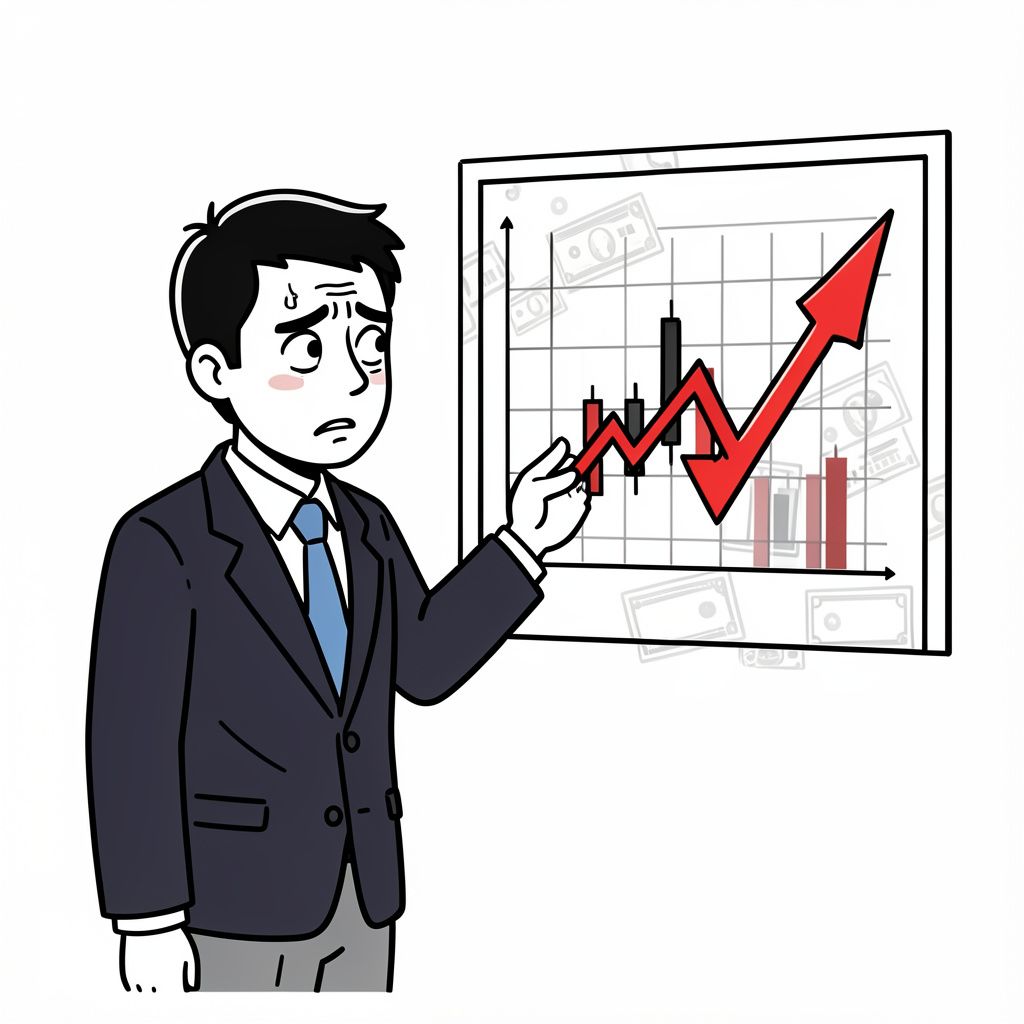
Tokyo’s benchmark index plunged over twenty percent from its summer peak, entering a bear market as global doubts over artificial intelligence profitability sparked massive tech-sector liquidations.
A Bear Market Declared: The Nikkei 225’s Historic Descent
Japan’s benchmark Nikkei 225 entered a technical bear market on Friday, 6 November 2026, after plunging more than 20% below its record intraday peak of 72,831.73 recorded on 22 June 2026 [alert! ‘declared by Investing.com on 6 November 2026’]. The index fell as low as 56,745.81 during the session—a drop of 745.81, or approximately 22.1%—crossing the widely accepted 20% threshold that defines a bear market. This marks the first time the index has traded below the 60,000 level since May 2026 [1]. The broader Topix index also suffered a steep decline of up to 6.4%, its largest single-day drop since April 2025 [1].
Semiconductor and AI Stocks Lead the Collapse
The sell-off was led by semiconductor and artificial intelligence-linked equities, with Kioxia Holdings plunging 11.73%, SK Hynix down 9.02%, and TDK declining 7.08% [1]. In a broader Japanese tech rout, Rohm fell 20%, Furukawa Electric dropped more than 19%, Resonac lost 15%, and SoftBank Group tumbled around 11% [1]. These declines followed a 1.8% drop on Thursday, 5 November 2026, and a sharp overnight selloff on Wall Street, where the Nasdaq Composite fell 5.5% and the Philadelphia Semiconductor Index (SOX) plunged 12.3%—its steepest intraday decline since March 2020 [1][5]. The cumulative impact of regulatory concerns and profit-taking triggered a wave of institutional deleveraging across Asian technology-heavy markets.
Regulatory and Profitability Concerns Deepen the Rout
Investor sentiment soured amid growing doubts about the profitability of massive AI infrastructure investments, with particular unease centered on potential regulatory tightening by a Democratic-controlled U.S. Congress [1][3]. Analysts highlighted concerns that new policies could slow data center expansion or increase scrutiny over AI model training and deployment [3]. This anxiety was compounded by profit-taking after a prolonged period of tech-led gains, especially in semiconductor and AI-related equities, which had been key drivers of Japan’s market performance in recent quarters [GPT]. The Nikkei Volatility Index (Nikkei VI) surged by 11.04 points to 44.60 on 6 November, breaching the warning threshold of 40 and signaling heightened market stress [7].
Sector-Wide Contagion and Market Breadth Collapse
Market breadth collapsed on 6 November, with only 21 advancing stocks versus 1,524 declining issues on the Prime Market; all 33 Tokyo Stock Exchange industry sectors ended in negative territory [7]. Trading volume soared to ¥12.48 trillion, reflecting a surge in forced liquidations and panic selling [7]. Leveraged products tied to the Nikkei also experienced extreme volatility: the NEXT Nikkei 225 Leverage ETF (1570) recorded its lowest intraday level since March 2023, and its trading volume spiked to ¥245.9 billion, making it the most actively traded ETF on the exchange [3][4]. Meanwhile, bear and inverse ETFs saw surging interest, with the NEXT Nikkei 225 Double Inverse Index ETF (1357) and Nikkei 225 Bear 2x ETF (1360) attracting significant inflows as investors sought downside exposure [4].
Global Context: A Global Wave of Bear Markets
Japan is not alone in facing a bear market. According to BeInCrypto, 27 of 43 monitored national stock markets entered bear territory by early November 2026, with Japan joining South Korea (down 46.1%), Indonesia, Turkey, Brazil, and Taiwan among those most affected [6]. Only seven markets reached new year-to-date highs, and 11 remain below their peaks from 1999–2008 [6]. In contrast, the U.S. market—while volatile—has not yet entered a bear market, with the Nasdaq down approximately 12% from its October 2026 peak and the S&P 500 off around 6% [6]. Analysts warn that if the Nasdaq were to fall another 9%, it too would breach the 20% threshold [6]. The global nature of this downturn underscores the systemic risk posed by AI-related overvaluation and regulatory uncertainty.
Market and Policy Outlook: What Comes Next?
The immediate outlook remains uncertain. Nomura Securities noted that the global tech rout intensified following the U.S. midterm elections on 3 November 2026, when a Democratic victory raised concerns over AI regulation and data center capital expenditure (CapEx) growth [3]. Nomura’s strategists suggest that stabilization may depend on upcoming policy signals, including a potential U.S. Democratic Party meeting from 12–14 November 2026 and NVIDIA’s earnings announcement on 17 November 2026 [3]. Until then, investors are likely to remain cautious, particularly in sectors tied to AI infrastructure and high-multiple technology valuations [1][3][7].
Sources
- finance.yahoo.com
- www.investing.com
- www.nomura.co.jp
- finance.yahoo.co.jp
- www.investing.com
- jp.beincrypto.com
- www.moomoo.com
- note.com