Syria Emerges as Alternative Oil Route to Bypass Bottlenecked Strait of Hormuz
Damascus, Saturday, 5 September 2026.
Following shipping disruptions in the Persian Gulf, 5,000 daily trucks are transporting Iraqi crude across Syria to the Mediterranean, driving plans for a multibillion-dollar pipeline network.
Logistical Shifts Amidst Maritime Disruption
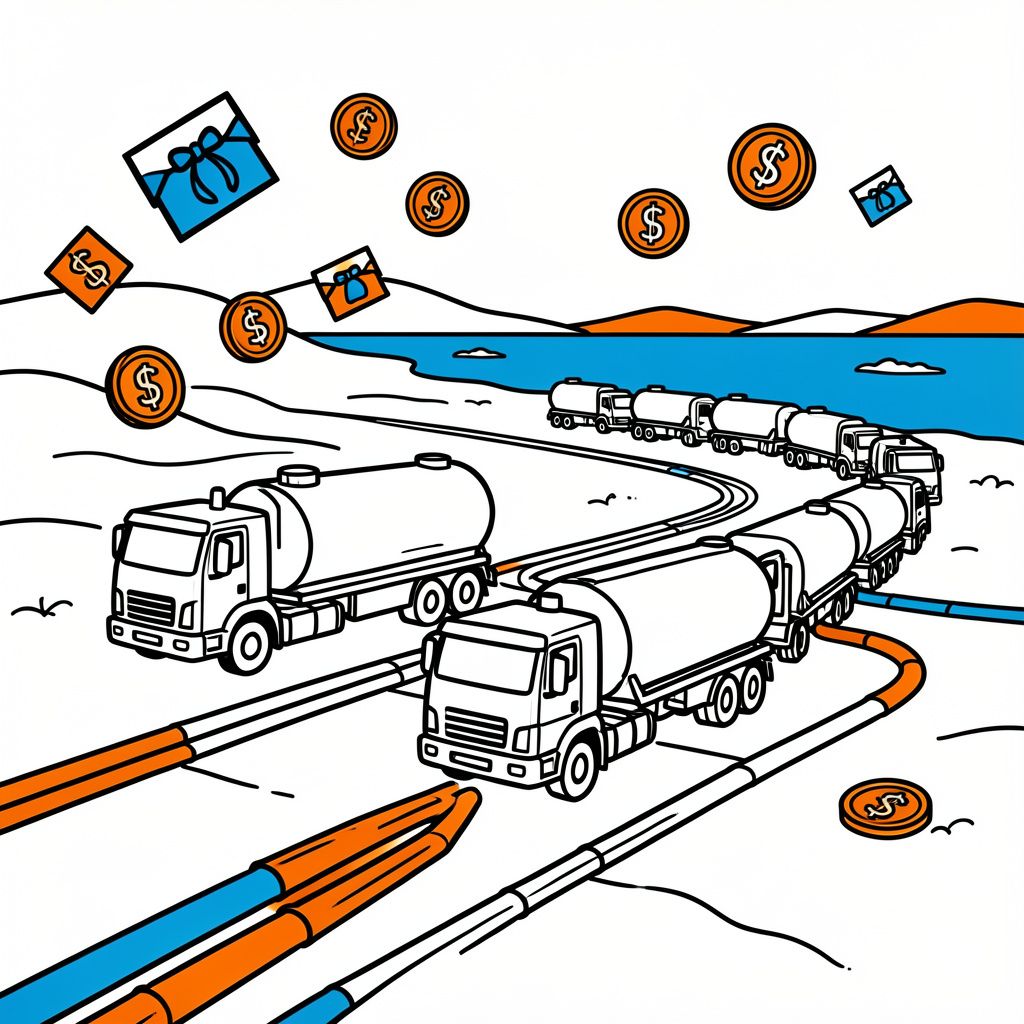
As of September 2026, the geopolitical landscape of energy transit is undergoing a significant transformation, driven by persistent disruptions in the Strait of Hormuz. Following a U.S.–Israeli conflict with Iran that halted cargo traffic in the waterway, an overland route through the Syrian desert has emerged as a critical alternative for Iraqi oil exports [3][4]. Since April 2026, approximately 5,000 heavy-duty trucks have been transporting crude oil daily from the Persian Gulf to the Mediterranean port of Baniyas, operating day and night to meet demand [4][6]. This surge in land-based logistics marks a departure from traditional maritime reliance, with convoys snakeing across barren stretches of desert to connect refineries in southern Iraq to the Syrian coast [4]. The initiative began as an experimental measure by Iraqi oil exporters but has evolved into a regular export line, highlighting the urgency of bypassing the volatile maritime chokepoint [3][6].
Political Endorsements and Strategic Realignment
The strategic pivot has garnered high-level political attention, notably from the United States. On Thursday, 3 September 2026, U.S. President Donald Trump publicly endorsed the concept of Syria serving as an energy transit hub via a Truth Social post, describing the development as “GREAT!” [7]. This endorsement aligns with broader efforts to reshape regional trade routes and reduce reliance on the Strait of Hormuz [5]. The shift is facilitated by significant political changes in Damascus; more than 18 months prior to September 2026, Bashar al-Assad was removed from power, leading to the lifting of international sanctions on Syria [6]. Consequently, the new Syrian government, under President Ahmed al-Sharaa, is leveraging the nation’s geography to establish itself as a stable land corridor to Europe [3]. This realignment is further evidenced by economic talks held during the Damascus International Fair, which concluded on 4 September 2026, involving delegations from Germany and Saudi Arabia [1].
Infrastructure Ambitions and Cost Discrepancies
While trucking provides an immediate solution, long-term plans focus on constructing a dedicated pipeline network to enhance capacity and efficiency. A consortium including Chevron, TotalEnergies, and Syrian and Qatari investors expects to sign a final contract in September 2026 to operate a new pipeline from Iraq to Syria [1]. However, estimates regarding the project’s scope vary significantly. One analysis suggests the pipeline could cost at least $15 billion and require a four-year construction timeline [1]. Conversely, other reports indicate a $5.7 billion project spanning 1,000 miles with a construction timeline of at least 2.5 years [3]. The variance in estimated costs is substantial, representing a 163.158 percent difference between the higher and lower estimates [1][3]. The proposed infrastructure aims to transport 2 million barrels of crude oil per day from Basra to Baniyas, a significant upgrade from current trucking capabilities [3].
Security Risks and Future Viability
Despite the strategic potential, significant security concerns persist regarding the long-term viability of the energy corridor. Experts note that the pipeline would remain vulnerable to armed groups throughout its projected 30-year lifespan, raising questions about security guarantees and insurance coverage [3]. Sporadic ISIS attacks and the influence of Iran-backed militias in western Iraq continue to pose threats to infrastructure stability [3]. Additionally, the existing 1952 pipeline connecting Kirkuk, Iraq, to Baniyas, Syria, requires extensive repairs before it can be fully utilized [1]. While the Syrian Petroleum Company relies on salvage operations to replace infrastructure components, severe underinvestment remains a challenge [3]. Ultimately, the success of this transit hub depends on sustaining international investment interest once the immediate crisis in the Strait of Hormuz subsides [3].
Sources
- www.jpost.com
- www.facebook.com
- syrianobserver.com
- www.washingtonpost.com
- x.com
- www.linkedin.com
- www.instagram.com
- www.facebook.com