Why the Federal Reserve Is Turning to Corporate Data to Track the Economy
Washington, Thursday, 13 August 2026.
Federal Reserve Chair Kevin Warsh is pushing to replace delayed government surveys with real-time corporate data, though private data cutoffs and high procurement costs pose major hurdles.
Shift to Real-Time Data Streams
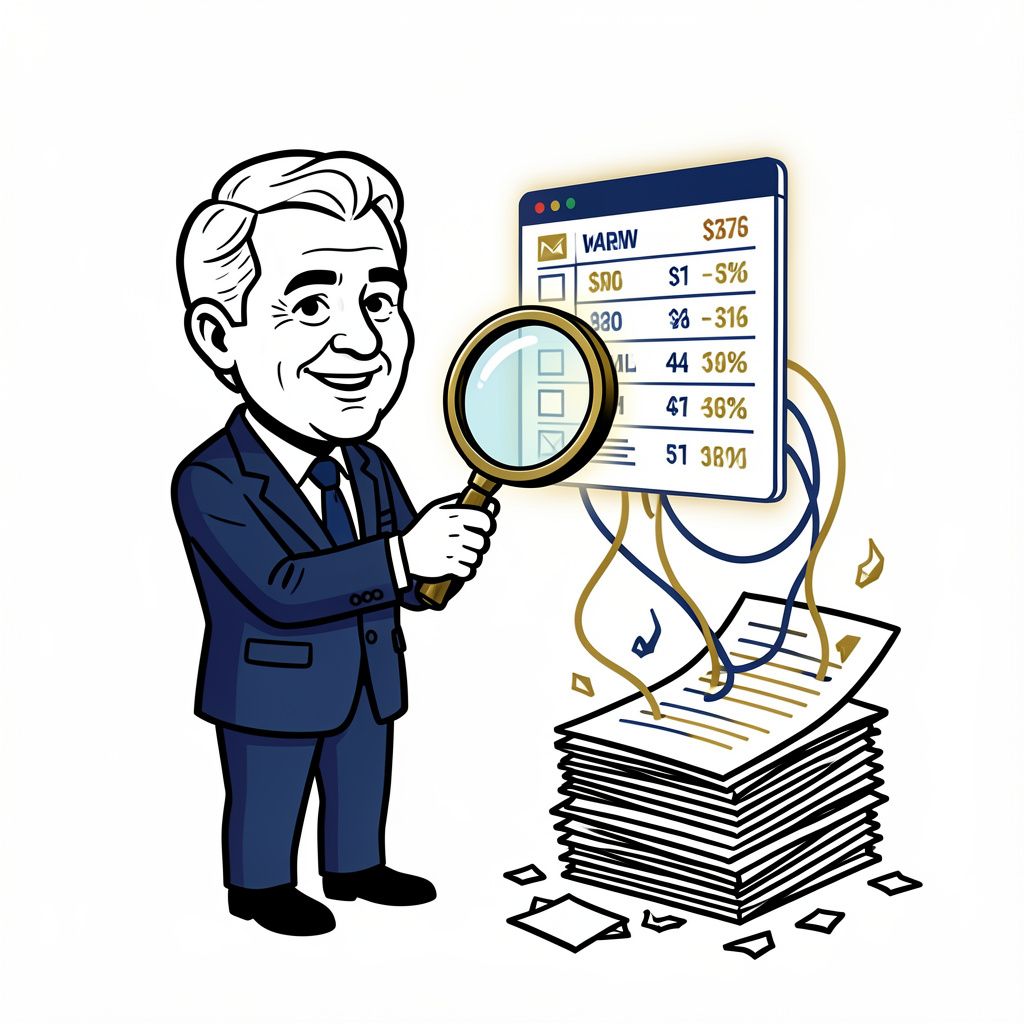
Federal Reserve Chair Kevin Warsh is actively pursuing a transition from traditional government surveys to high-frequency, real-time data streams provided by major retailers and financial institutions [1][2]. This initiative, announced shortly after Warsh took charge in May 2026, aims to enhance the precision of monetary policy decisions during rapid economic shifts [3][4]. The central bank seeks to replace lagging indicators with immediate information from entities such as Walmart and major banks to better track inflation and growth [1][2]. Warsh has characterized this leadership period as a new chapter, though the institution continues to face high inflation and weak jobs numbers similar to those seen in summer 2025 [3]. The goal is to provide a more reliable guide to economic conditions than government surveys, which suffer from considerable delays and sampling errors [1].
Structural and Financial Hurdles
Significant obstacles remain regarding data acquisition costs and proprietary privacy concerns [1]. The US Bureau of Labor Statistics currently does not utilize supermarket point-of-sale scanner data for the Consumer Price Index, primarily due to the high cost of acquiring this data compared to other nations [1]. Compounding these challenges, payroll processor ADP abruptly terminated the Federal Reserve’s access to their proprietary data in October 2025 due to dissatisfaction with public disclosure regarding data usage [1]. To address procurement issues, the Federal Reserve has established a Task Force on data sources led by former Walmart President and CEO Doug McMillon [1][4]. Additionally, the Federal Reserve initiated a workforce reduction program in May 2025 aiming to cut 10% of personnel to control expenditures [1].
Market Reactions and Policy Tools
Market volatility occurred following a press conference on July 29, 2026, driven by trader reactions to Warsh’s reluctance to explicitly discuss rate hikes as the primary policy tool [2]. Despite this, markets currently anticipate 1 to 2 interest rate hikes by the end of 2026, consistent with the emerging consensus of the Fed policy committee [2]. Warsh is currently utilizing traditional monetary policy tools, including analyzing government economic statistics and adjusting the federal funds rate target range, to address inflation that has been elevated for over 5 years [2]. Research published by the New York Fed on August 12, 2026, examines the impact of such monetary policy surprises on equity risk premia and dividend growth expectations [5]. Some observers note that while stock markets provide valuable information, the bill for monetary adjustments often impacts household budgets significantly [6].
AI Integration and Future Timelines
The Federal Reserve is developing AI-driven tools to analyze the economy in real time, with the goal of improving decision-making capabilities within approximately 2 years [2]. On July 9, 2026, Chair Warsh announced the formation of five high-priority task forces to integrate Central Bank AI with monetary policy forecasting, with actionable outputs expected within a 9 to 12-month timeframe [4]. These task forces include external advisers and utilize technologies such as Retrieval-Augmented Generation and federated learning to process high-frequency alternative data [4]. Internal experiments using knowledge distillation have already achieved an 80% reduction in compute load during Beige Book experiments [4]. However, leaders insist the effort will deliver policy-ready signals within a single year, though some experts caution against rushing adoption without robust decision support benchmarks [4].
Sources
- en.econreporter.com
- www.axios.com
- www.instagram.com
- www.aicerts.ai
- www.instagram.com
- www.instagram.com