US Demands Full Financial Reimbursement From European Allies for Ukraine Assistance
Washington, Saturday, 5 September 2026.
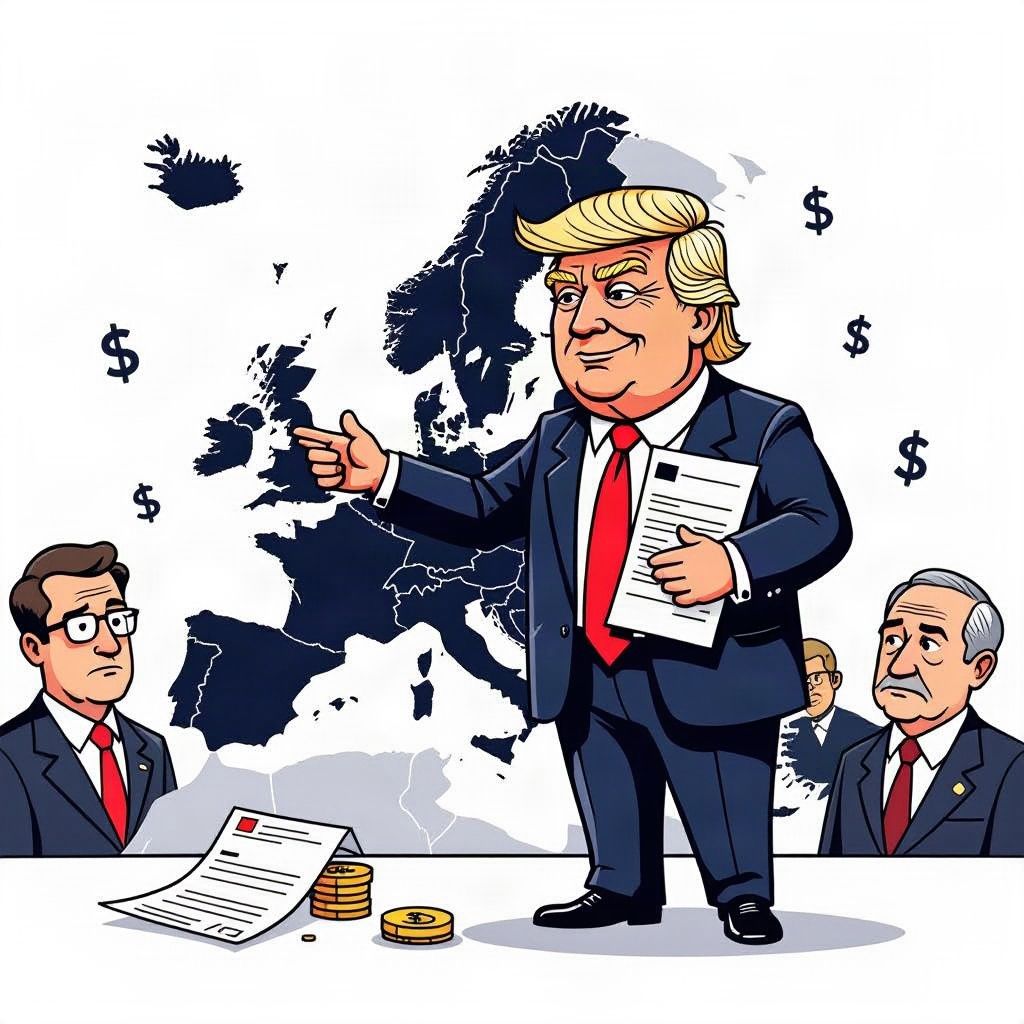
President Donald Trump’s demand for Europe to repay tens of billions in American aid sent to Ukraine threatens transatlantic relations and risks unsettling European fiscal stability and international markets.
Announcement of Financial Reimbursement Demand
On September 4, 2026, reports confirmed that President Donald Trump stated the United States will seek full financial reimbursement from European nations for aid extended to Ukraine [1][2]. This declaration marks a significant shift in foreign policy, moving from grant-based assistance to a demand for repayment regarding military and humanitarian support [1]. While the initial intention was announced on August 27, 2026, the formal demand introduces uncertainty for transatlantic relations [1]. The President emphasized that hundreds of billions of dollars were given free of charge, money he argues Europe should have provided [1][2].
Breakdown of United States Aid Contributions
Data indicates the United States has provided $66.9 billion in military assistance since the full-scale invasion began in February 2022 [1]. When including aid provided since 2014, the total figure reaches $69.7 billion [1]. The difference between total aid since 2014 and aid since the 2022 invasion is 2.8 billion, representing assistance prior to the escalation [1]. Additionally, $31.7 billion was delivered via Presidential Drawdown Authority since August 2021 [1]. Much of this assistance was delivered during the administration of former President Joe Biden, a point highlighted in current discussions regarding repayment [2].
Strategic Implications and Defense Stockpiles
To prioritize domestic readiness, the US has temporarily suspended overseas arms sales to build up domestic stockpiles [1]. President Trump stated that the US possesses virtually unlimited amounts of mid to high-grade ammunition and intends to resume sales to allies in the future [1]. This pause aims to ensure domestic sufficiency before re-engaging in international arms transfers [1]. Political discourse suggests European nations may need to cover costs previously managed by American funding [2].
Humanitarian Context and Ongoing Conflict
Amidst these political developments, the humanitarian situation remains critical, with a WHO warehouse in Kyiv Oblast hit by an air attack on August 28, 2026 [1]. This incident was the third such attack on humanitarian warehouses in three months, part of a pattern affecting operations across the country [1]. Throughout 2026, at least 20 attacks have targeted warehouses storing humanitarian supplies [1]. The UN has verified over 3,000 attacks on healthcare in Ukraine since the invasion began in February 2022 [1].