Europe Launches Dedicated Financial Hub to Secure Vital Green Energy Minerals
Brussels, Saturday, 5 September 2026.
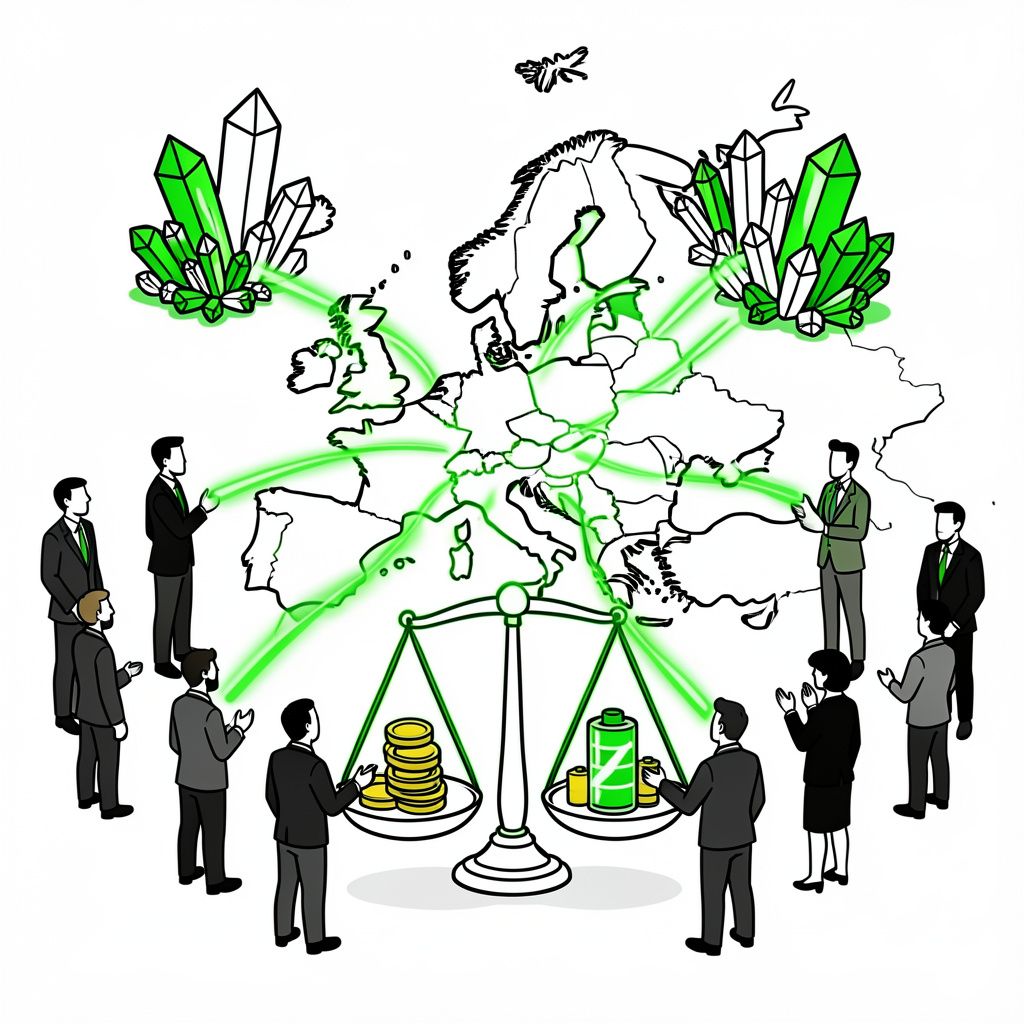
To counter foreign dominance, the European Union established a central raw materials investment hub. Armed with pooled capital, it aims to de-risk green technology supply chains across the continent.
Financial Architecture of Mineral Diplomacy
The newly inaugurated EU CRM Centre, officially launched on 3 September 2026, is designed to function as the financial arm of European mineral diplomacy rather than a mere coordination body [5]. To achieve this, the Centre requires an independent mandate and pooled financial resources sourced primarily from the European Competitiveness Fund and the Global Europe Instrument [1][2]. Proposed financial tools include equity, loans, and price support mechanisms such as Contracts for Difference to de-risk projects across the value chain [1][2]. This “Minvest EU” concept aims to aggregate offtake contracts, connecting mining companies with off-takers to accelerate deal flow and ensure competitive support [2][5].
Strategic Partnerships and Arctic Opportunities
Geopolitical efforts intensified on 2 September 2026, when Greenland’s Foreign Minister Múte Bourup Egede addressed the European Parliament to solicit investment for critical raw material extraction [4]. Greenland possesses 25 of the 34 raw materials identified as critical by the European Union, presenting a significant opportunity to reduce import dependency [4]. European Commission President Ursula von der Leyen is scheduled to visit Nuuk during the weekend of 5–6 September 2026 to sign a joint declaration on a strengthened partnership [4]. The European Commission proposes increasing funding for Greenland to approximately 530 million euros over seven years starting in 2028, plus an additional package exceeding 150 million euros [4].
Domestic Production Targets and Industrial Reality
The EU Critical Raw Materials Act, which entered into force in 2024, mandates that by 2030, the Union must extract 10% and process 40% of its annual consumption of strategic raw materials within its borders [5][6]. However, experts warn that these 2030 targets are at the limit of feasibility because many potential deposits remain unexplored and permitting processes span decades [6]. Scaling critical mineral processing is identified as the new primary competitive advantage, shifting focus from resource acquisition to industrial execution and automation [7]. For instance, Boliden’s Green Zinc Odda expansion in Norway aims to increase annual zinc production capacity to 350,000 tons while reducing carbon intensity by 15% [7].
Investment Pipelines and Execution Capabilities
EIT RawMaterials reports an existing operational foundation, including the “Metal & Mineral Platform M2i” which contains over 2.5 million verified data points to facilitate evidence-based decision-making [3]. The organization has deployed over 700 million euros across 800+ projects and startups, mobilizing approximately 8.3 billion euros in additional investment 11.857 [3]. The EU CRM Centre is scheduled to publish its first comprehensive risk assessment report on lithium and rare earth element supply chains by 15 October 2026 [5]. Previous EU initiatives to secure access to Critical Raw Materials have yielded mixed results, necessitating a move beyond mere monitoring to actionable supply chain diversification [5].
Sources
- cleantechnica.com
- www.transportenvironment.org
- eitrawmaterials.eu
- eualive.net
- www.linkedin.com
- oenergetice.cz
- afry.com