Federal Reserve Plans to Speak Less, Raising Fears of Financial Market Instability
Washington, Wednesday, 9 September 2026.
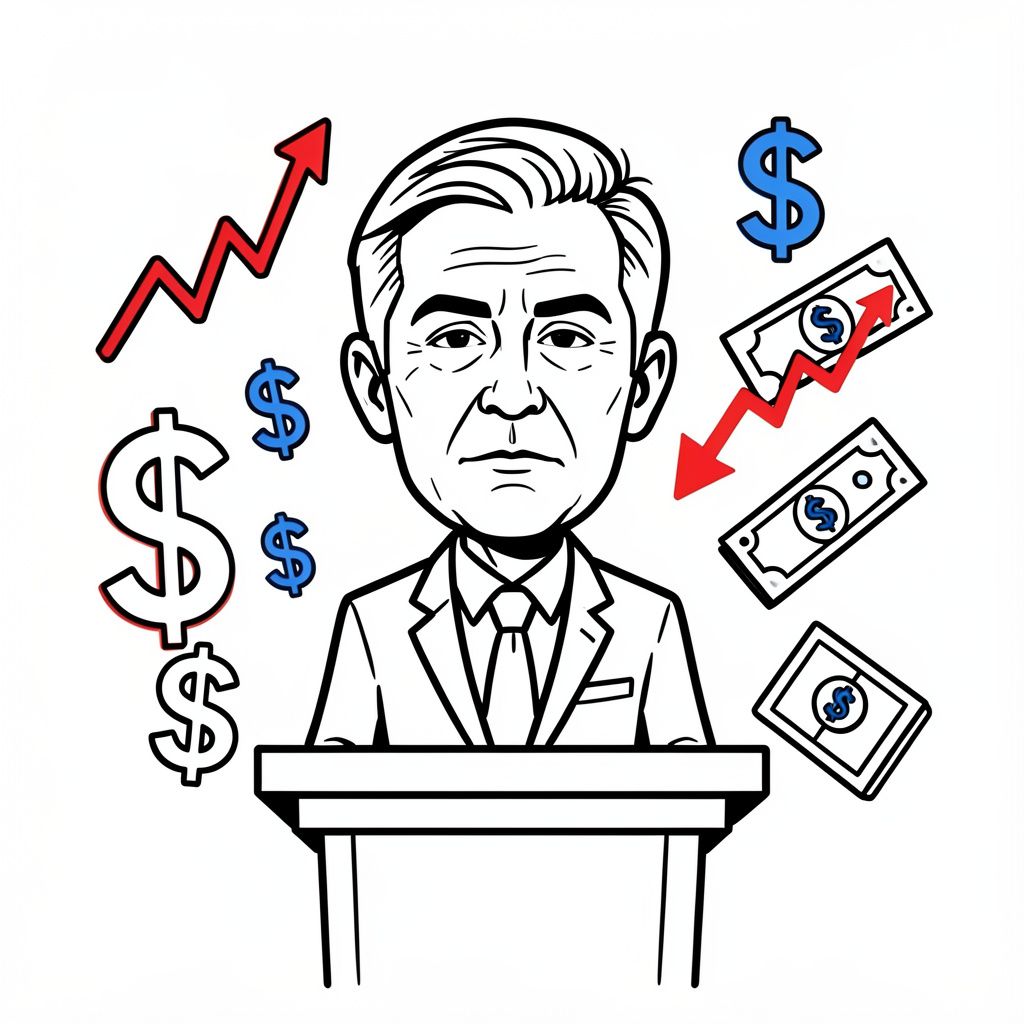
Federal Reserve Chairman Kevin Warsh plans to scale back public policy communications. Goldman Sachs warns this silence could trigger severe market volatility and distort interest rate expectations.
Federal Reserve Shifts Communication Strategy
Federal Reserve Chairman Kevin Warsh is implementing a significant reduction in public policy communications, a move that has prompted warnings from major Wall Street institutions [1]. On September 7, 2026, Goldman Sachs issued a note cautioning that diminished forward guidance from the Federal Open Market Committee could lead to market instability and inaccurate pricing of Fed policy [1]. This strategic shift marks a departure from previous norms, as Warsh advocates for allowing market prices to respond to economic data without central bank interference [1]. During a press conference following the July 29, 2026 FOMC meeting, Warsh stated that the central bank need not always be the center of attention [1]. However, critics argue that even without explicit forward guidance, central bankers retain an obligation to explain the economic framework behind their decisions [2].
Market Reaction and Volatility Concerns
Financial analysts warn that creating an information void may amplify misinformation and heighten financial instability as investors navigate monetary policy without explicit directional cues [1]. Jan Hatzius, chief U.S. economist at Goldman Sachs, noted that participants in short-term interest rate markets price what they think the Fed will do, not necessarily what they should do [1]. Hatzius warned that if the FOMC provides less information, markets may base thinking on potentially inaccurate beliefs, implying unnecessary volatility in financial conditions [1]. Following Warsh’s statements, long-dated bonds spiked and remained elevated, while two-year Treasuries slumped, signaling increased market uncertainty regarding Fed tightening [1]. The federal funds target upper bound is currently 3.75%, down from 4.5% one year prior, representing a -16.667 change in the benchmark rate [3].
Internal Divisions and Political Pressure
Chairman Warsh faces significant internal opposition, with three officials voting against holding interest rates steady at the July 2026 FOMC meeting, marking the most early dissents against a Fed chair since 1970 [3]. This internal division coincides with external political pressure, as President Donald Trump has publicly demanded rate cuts, linking interest rates to trade relations [4]. On September 4, 2026, the U.S. labor market report showed jobs increased three times more than analyst forecasts, complicating the President’s demands for lower rates [4]. Economists suggest that a rate hike could help Warsh prove his independence, with Dario Perkins noting that a single 25-basis-point hike would dispel talk of a loss of confidence [4]. Meanwhile, core inflation in the United States has exceeded the Federal Reserve’s 2% target for 65 consecutive months [4].
Economic Data and September Meeting Outlook
Market attention is now focused on the September 2026 FOMC dot plot, with wider forecast dispersion signaling increased internal Fed volatility [3]. US employment data for August 2026 showed non-farm payrolls increased by 162k, significantly exceeding the expected 55k [5]. Markets indicate a 60% probability of a Federal Reserve rate increase at the policy meeting scheduled for September 14, 2026 [5]. While UK economic data reflects mixed performance, US financial conditions remain loose despite inflation-related bond market stress [5]. If forecast dispersion widens in the upcoming release, it may confirm investor fears regarding the clarity of the Fed’s strategic direction [3]. Investors are advised to look beyond headlines, as earnings resilience and shifting rate expectations continue to reward careful analysis [5].