Thailand Re-evaluates Electric Vehicle Policies as Chinese Imports Threaten Local Automakers
Bangkok, Saturday, 17 October 2026.
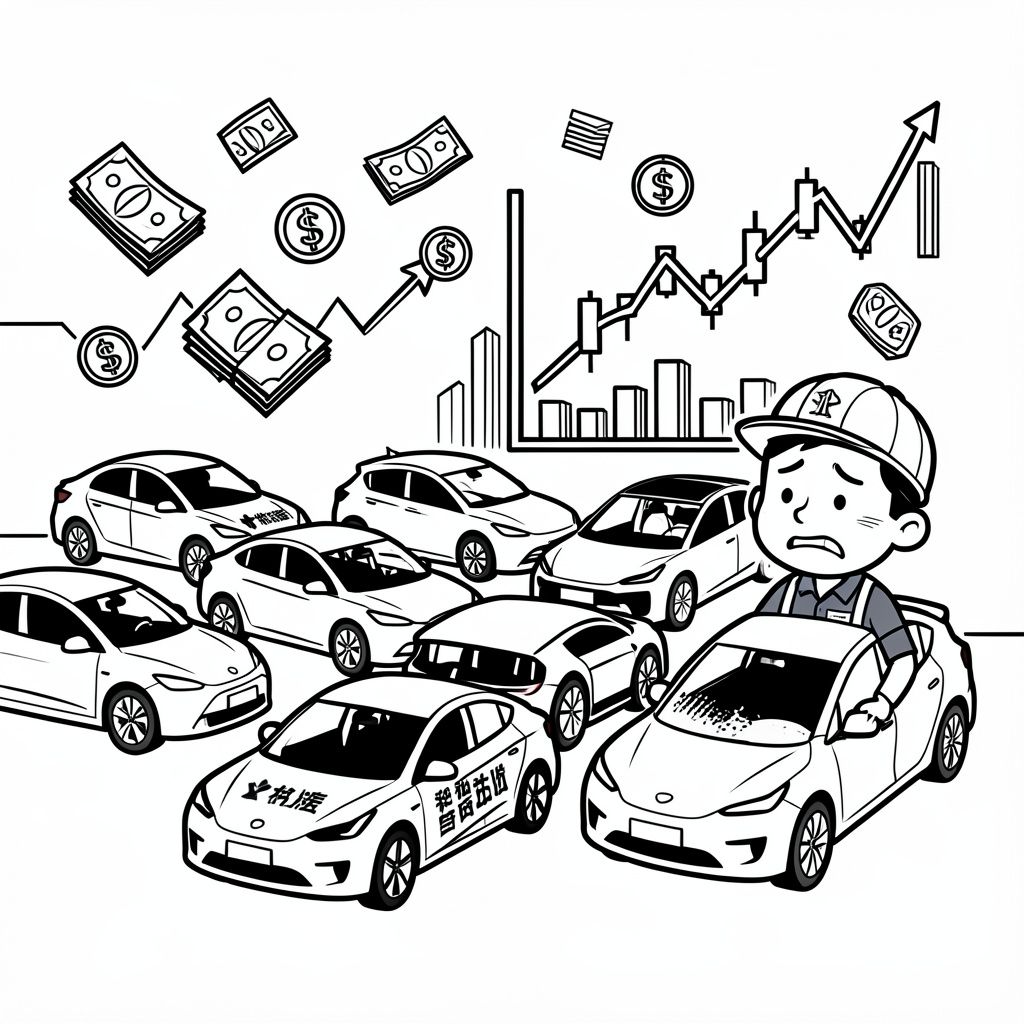
Chinese automakers now control 85% of Thailand’s electric vehicle market, up from near zero in 2022. This rapid expansion threatens 700,000 local supply chain jobs, forcing government policy adjustments.
Market Share Shift and Industrial Disruption
Chinese automakers now control approximately 85% of Thailand’s electric vehicle market, a dramatic rise from nearly 0% in 2022 [1]. This rapid expansion has alarmed government officials who initially introduced aggressive subsidies to attract EV investments but did not anticipate the speed of foreign dominance [1]. Supavud Saicheua, chairman of the National Economic and Social Development Council, noted that the transition was much faster than expected, admitting that the full picture of the impact was not initially considered [1]. The shift represents a significant restructuring of the automotive landscape in a nation long referred to as the ‘Detroit of Asia’ [1]. Social media analysis confirms that Chinese EVs are quickly replacing Japanese automakers who were once dominant in the region [2]. The Thai government, having courted Chinese EV investment, is now attempting to slow down imports amidst growing concerns about job losses [2].
Impact on Legacy Manufacturers and Supply Chains
Japanese automakers, who have dominated the Thai market since the 1960s, are facing a steep decline as a result of this influx [4]. Major manufacturers such as Subaru and Suzuki closed Thai plants in 2024 and 2025, while Nissan and Honda have reduced production levels [1]. This industrial transition threatens the local automotive supply chain, which employs approximately 700,000 workers [1]. Suppliers dependent on Japanese manufacturers are facing bankruptcy as the ecosystem pivots [1]. Analysts describe Thailand as a cautionary tale about the unintended consequences of opening the door to China’s electric vehicle manufacturers [3]. About two-thirds of electric vehicles sold in Thailand were imported, primarily from China, meaning core technology remains in China rather than being localized [3].
Policy Recalibration and Economic Dilemma
Thailand is now moving to adjust its tax cuts and subsidy programs for electric vehicles following the surge of low-cost Chinese imports [1]. The government is re-evaluating protectionist measures and domestic production mandates to safeguard the country’s broader industrial landscape [1]. This situation presents a dilemma of giving consumers more choices of cheaper cars with new-fangled technology but also risking the swift destruction of a manufacturing industry that has taken decades to build [4]. Officials are balancing the need for green transition policies with the preservation of local employment and industrial capacity [1]. The policy shift indicates a move from open invitation to strategic regulation within the EV sector [4].
Corporate Expansion and Future Projections
Amidst this transition, Chinese EV manufacturer Leapmotor has established a subsidiary in Thailand with a registered capital of 100 million baht [5]. The company aims to mirror Toyota’s legacy by staying for decades across production and after-sales service [5]. Leapmotor is evaluating local CKD assembly, with site inspections scheduled for November 2026 [5]. The initial goal is a staggering annual production capacity of 60,000 to 80,000 vehicles, though current sales tell a quieter story with roughly 450 units sold combined for previous models [5]. To match these targets, the dealership network plans to expand from 12 locations to 30 by late 2026, representing a 150 increase in footprint [5]. However, these production and sales targets remain company projections subject to market conditions [alert! ‘company projection’] [5].