Scientists Convert Everyday Plastic Waste Into Low-Cost Fuel
Oak Ridge, Tuesday, 22 September 2026.
Researchers at Oak Ridge National Laboratory developed a low-temperature process converting plastic waste into fuel with a 60 percent yield, offering a dual solution for trash and energy security.
Chemical Process and Efficiency
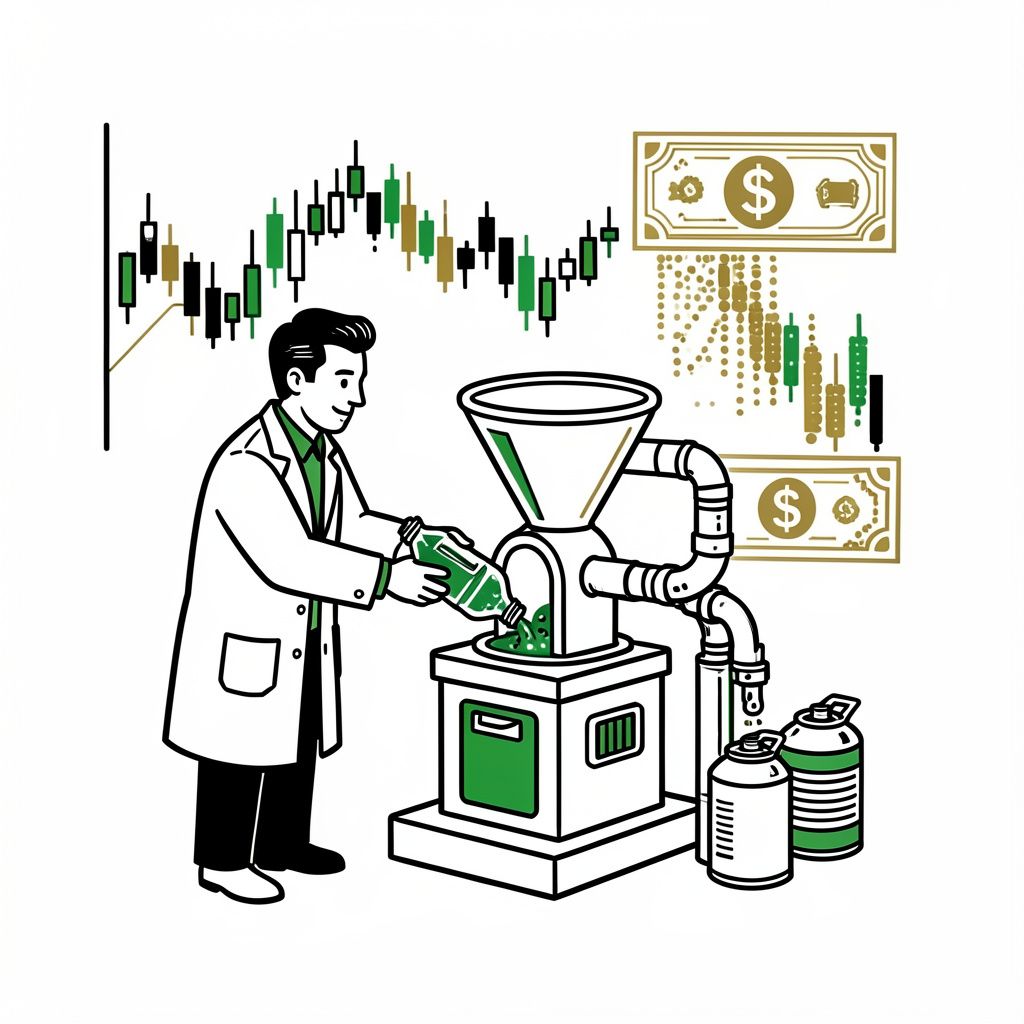
Scientists at the Department of Energy’s Oak Ridge National Laboratory (ORNL) have finalized a chemical technique that converts low-density polyethylene plastic into gasoline and diesel-grade fuels using aluminum-based molten salts [1][4]. This process operates at temperatures below 200 degrees Celsius, significantly lower than conventional pyrolysis techniques which typically require between 450 to 500 degrees Celsius [4][2]. The reduction in required thermal energy represents a potential decrease in operational heat intensity of approximately 60 percent when compared to the upper range of traditional methods [1][4]. The innovation achieves a gasoline yield of up to 60 percent under these relatively mild conditions without requiring noble-metal catalysts, organic solvents, or external hydrogen [3][4].
Economic and Environmental Impact
The economic implications of this breakthrough extend to both waste management and energy security sectors, offering a dual solution for expanding alternative fuel feedstock supplies [1]. By utilizing commercially available inorganic salts as the reaction media, the process avoids the high costs associated with noble-metal catalysts used in traditional polymer-to-fuel conversion [4]. Researchers indicate that the polymer source material is abundantly available from consumer waste, while the aluminum molten salt catalyst system remains very cheap compared to conventional alternatives [4]. This development aligns with broader goals to enhance U.S. energy security and industrial competitiveness by transforming trash into value-added fuels [2][4].
Future Scalability and Challenges
While the laboratory results are promising, the research team is currently evaluating the scalability of the system beyond initial experiments to ensure industrial viability [4]. A primary technical challenge identified is the hygroscopic nature of the aluminum-based catalytic system, as moisture absorption can reduce chemical stability during processing [4]. To address this, researchers are investigating confinement methods using halogens or carbon-based materials to improve stability and ease of processing before full commercial deployment [1][4]. The findings were published in the Journal of the American Chemical Society, and a patent application for the technology has been filed to protect the intellectual property as scaling efforts proceed [2][4].