Donald Trump's Push for Corporate Equity Signals a Major Shift in U.S. Economic Policy
Washington, Sunday, 10 May 2026.
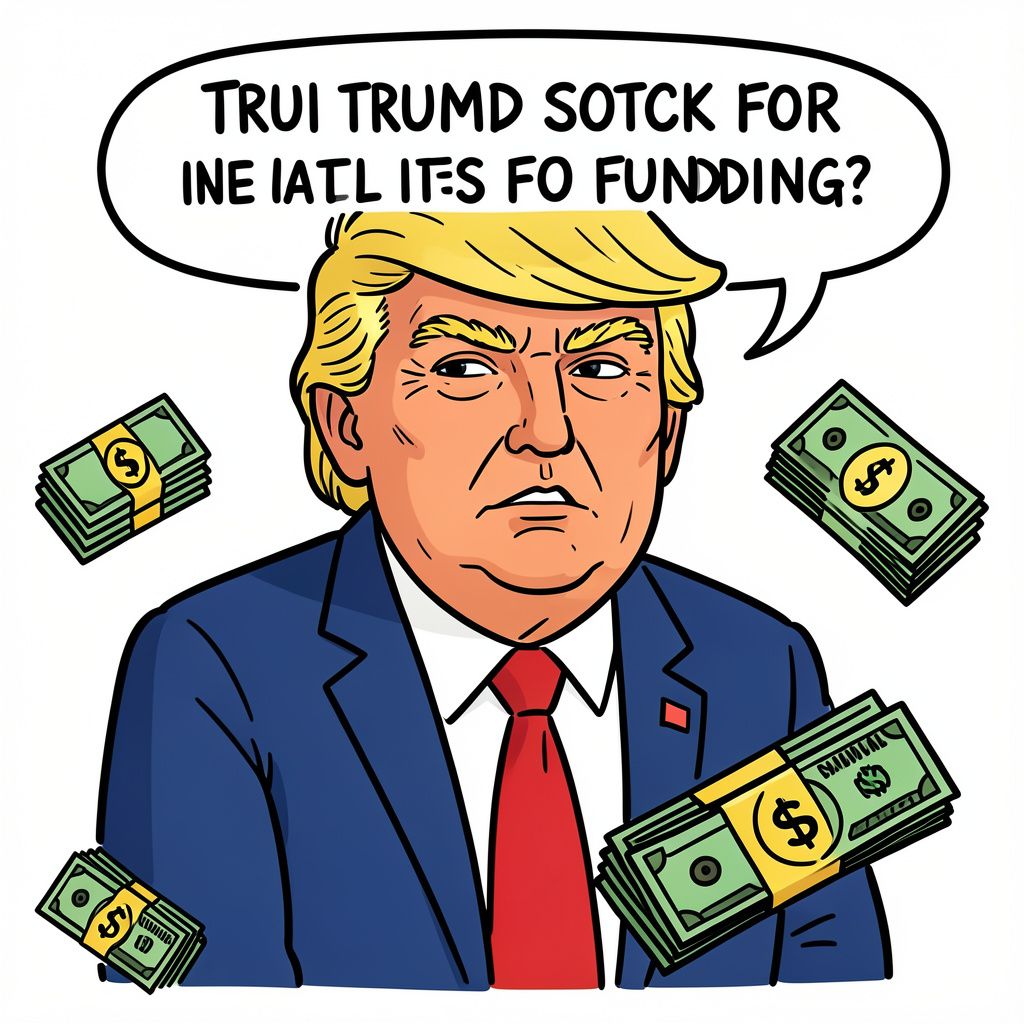
Shifting away from free-market conservatism, Donald Trump is now mandating heavy government intervention, notably demanding corporate equity from tech giants like Intel in exchange for federal funding.
Redefining the Republican Economic Playbook
In a striking departure from the free-market ethos championed by former President Ronald Reagan in 1981, President Donald Trump has increasingly embraced policies that critics liken to a Republican form of socialism [1]. This ideological pivot is most evident in recent unprecedented demands placed on private enterprises [1]. For instance, the Trump administration required semiconductor giant Intel to surrender 10 percent of its stock to the federal government in exchange for $9 billion in federal grants—funds originally approved by Congress during Joe Biden’s presidency [1].
Labor Market Resilience Amid Geopolitical Tensions
Despite these heavy-handed regulatory shifts and ongoing global conflicts, the U.S. labor market has demonstrated unexpected resilience. The Labor Department’s report for April 2026 revealed the addition of 115,000 new jobs, maintaining an unemployment rate of 4.3 percent [2][3]. This growth significantly outpaced expectations, catching off guard 94.203 percent of Bloomberg economists who had forecast lower figures [2]. Hiring was particularly robust in healthcare, retail, and transportation, suggesting that the domestic economy is absorbing the shocks of the ongoing conflict with Iran [2].
Tariff Battles and Regulatory Headwinds
While domestic investments surge, the administration’s aggressive trade policies are facing severe legal headwinds. On May 2, 2026, a split three-judge panel of the Court of International Trade ruled 2-1 against Trump’s imposition of 10 percent global tariffs, declaring them “invalid” and “unauthorized by law” [5]. This decision was a significant victory for small businesses like Burlap & Barrel and Basic Fun!, directly blocking tariff collections that the administration had attempted to justify under the 1977 International Emergency Economic Powers Act (IEEPA) [5]. This legal defeat follows a broader Supreme Court ruling in February 2026 that also struck down double-digit tariffs imposed the previous year [5].
The Political Ramifications of Economic Intervention
The aggressive restructuring of both domestic business operations and international trade is occurring against a backdrop of stark voter dissatisfaction. Despite the positive jobs data touted by the President during a recent White House Rose Garden luncheon—where he also pushed for new child investment initiatives dubbed “Trump Accounts”—his economic approval rating languishes at approximately 30 percent as of May 8, 2026 [3][6]. This represents a 9-point drop since late February 2026, largely driven by the economic fallout from the Iran conflict [3].