China Delivers Crucial Power Equipment to Russian Arctic Energy Project Despite US Sanctions
Beijing, Thursday, 17 September 2026.
In September 2026, two sanctioned Chinese heavy-lift ships delivered vital power-generation modules to Russia’s Arctic LNG 2 project, threatening to restore its restricted production capacity to 100 percent.
Sanctioned Shipment Moves Through Arctic
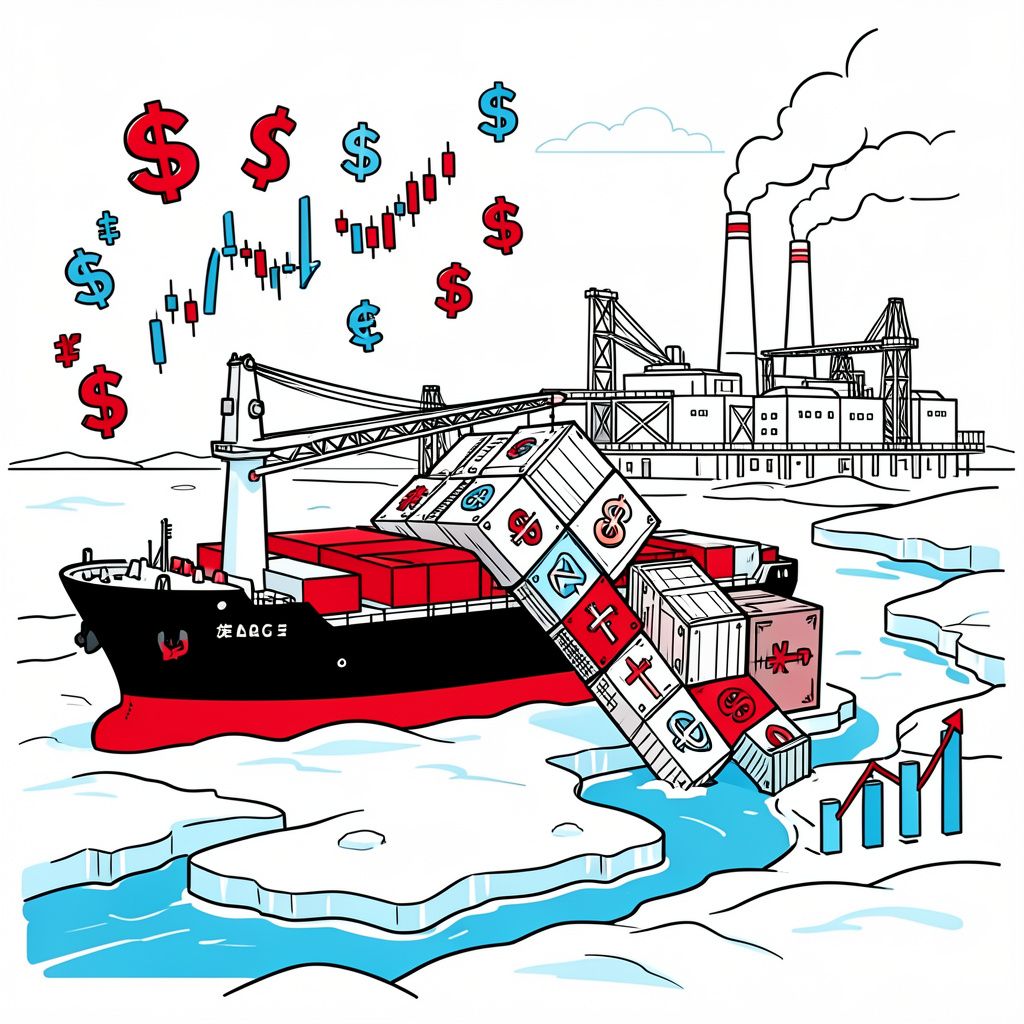
In September 2026, two U.S.-sanctioned heavy-lift vessels are transporting critical power-generation modules from China to Russia’s Arctic LNG 2 project, marking a significant development in the region’s energy landscape [1]. Between September 6 and September 10, 2026, the vessels Glory and Bright loaded two onshore power plant modules at Zhangjiagang port in China, destined for the Gydan Peninsula [1]. Satellite tracking data confirms that as of September 15, 2026, the shipment is traveling north toward the Sea of Japan, likely utilizing the Northern Sea Route to bypass traditional maritime corridors [1]. These modules represent the final two of four units originally fabricated at the Wison Zhoushan facility, which was sanctioned by the U.S. State Department on January 10, 2025, for supplying technology to the project [1]. The vessels themselves were reflagged to Russia and transferred to Eco Shipping LLC in 2026, following a pattern of ownership changes designed to circumvent Western restrictions [1]. International sanctions databases list specific vessels linked to logistical support for the project, noting prohibitions on port access and registration termination for specified ships [4].
Operational Capacity and Technical Constraints
The arrival of these modules is critical for Novatek’s Arctic LNG 2 Train 2, which has a design capacity of 6.6 million metric tons per year [1]. Current operations for Train 2 are limited to approximately 50% capacity due to the absence of the final two power modules, resulting in an operational output of 3.3 million metric tons per year [1]. The full power-generation system requires 20 gas turbines generating a total of 482 MW to reach full design capacity [1]. While the modules are intended for installation to potentially reach full design capacity, technical issues during startup may delay stable operation [1]. This logistical chain involves complex transit, as modules previously spent over one year at a sanctioned Chinese yard and were transferred to another Chinese port for months of storage before this current shipment [1]. Previous shipments of Arctic LNG 2 modules were returned to China following sanctions and spent approximately 10 months in transit, highlighting the fragility of the supply chain [1].
Broader Arctic Energy Strategy
This delivery occurs alongside broader Russian Arctic energy developments, including the launch of the Vostok Oil project by Rosneft on September 9, 2026 [2]. The Vostok Oil project includes a new pipeline linking the Vankor and Payakha fields to Bukhta Sever, featuring a design capacity of 100 million metric tons per year [2]. Rosneft targets a supply capacity of 30 million metric tons by the second half of 2027 and up to 50 million metric tons by 2030 [2]. These projects are underpinned by long-term partnerships, such as the Maritime Arctic Transport joint venture established in 2019 by Sovcomflot, Novatek, Cosco Shipping, and the Silk Road Fund [3]. The joint venture was designed to manage Arctic ice-class vessels and facilitate the transformation of the Northern Sea Route into a global transportation corridor [3]. Russia’s strategic Arctic expansion represents a significant investment aimed at securing oil and gas revenues, with the Vostok Oil project originally projected to cost approximately USD 135 billion at 2022 rates [2].
Western Policy and Market Reaction
Western policymakers continue to assess the efficacy of sanctions on the Russian energy sector, with experts arguing that sanctions on Arctic LNG 2 should not be traded away [5]. Commentary from financial analysts suggests that Novatek needs to come under greater scrutiny rather than receiving relief from restrictions [5]. The U.S. Consolidated Screening List manages restrictions on exports and transfers for thousands of parties, yet supply chains supporting the sanctioned facility remain operational [4]. The European Union and United Kingdom have enforced shipping sanctions that allow for port access denial and detention directions for specified vessels involved in the energy sector [4]. Despite these measures, the resilience of the supply chain underscores the challenge of enforcing maritime and energy sanctions globally [1]. The situation remains fluid as of September 17, 2026, with the shipment still in transit and no specific arrival date provided [1].