Strict League Spending Limits Trigger Roster Crisis Across Nineteen Basketball Franchises
New York, Wednesday, 11 November 2026.
Nineteen franchises face unprecedented financial gridlock under strict spending penalties, highlighted by Oklahoma City absorbing an $11.8 million tax surge simply to cover mid-season injuries with a single backup wing.
Nineteen Teams Trapped in Financial Freeze
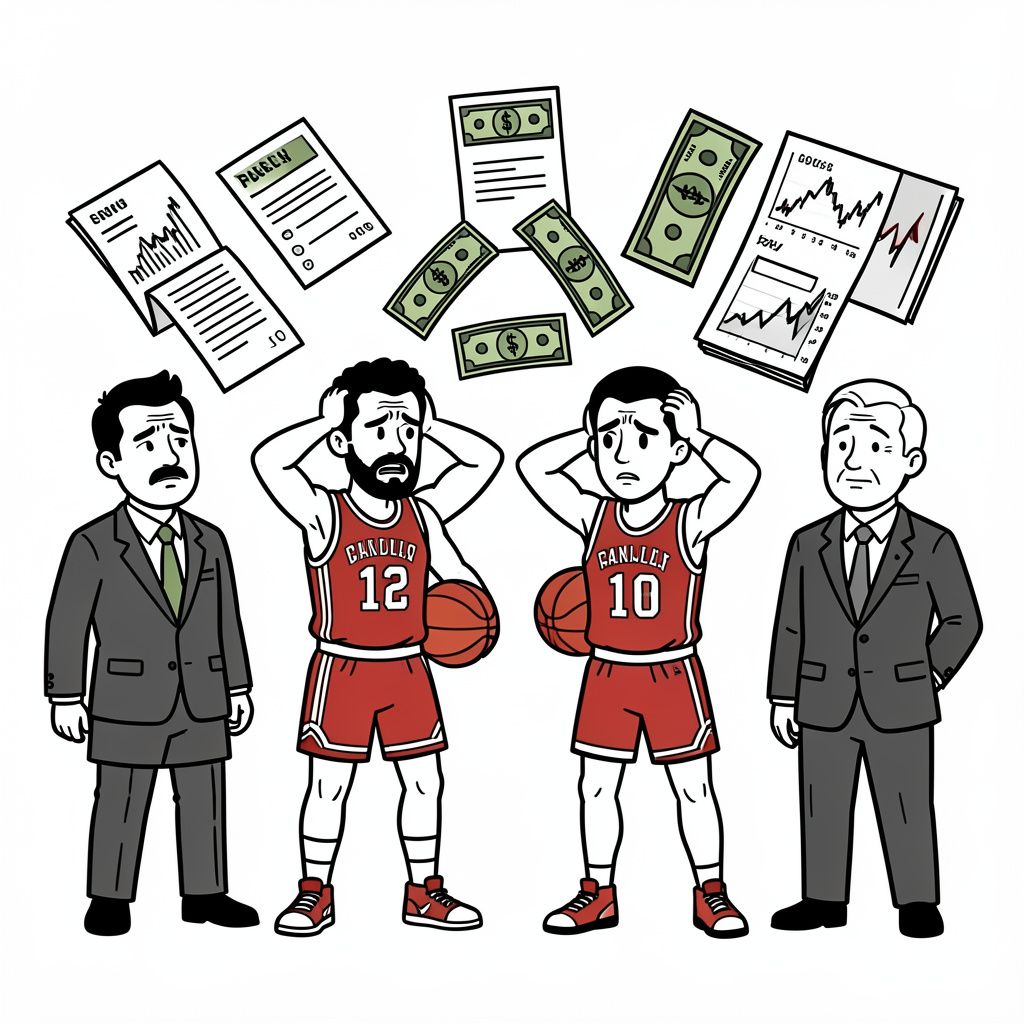
As of mid-November 2026, nineteen NBA franchises are navigating uncharted financial territory under the league’s increasingly punitive collective bargaining agreement (CBA). The restrictive luxury tax thresholds—particularly the second-apron luxury tax—have frozen front offices in place, restricting roster flexibility just as teams race toward mid-season deadlines. Among the franchises now operating under severe financial constraints are the Miami Heat, Milwaukee Bucks, and Los Angeles Lakers, each facing existential decisions about personnel, trades, and draft capital. The situation is exacerbated by the timing: roster decisions made now could determine playoff contention in a compressed postseason format that favors sustainable payrolls over splashy midseason splashes [1][5].
Injury Crisis Amplifies Tax Burden
Oklahoma City Thunder’s recent experience underscores the harsh consequences of these spending limits. After absorbing a projected $11.8 million surge in their luxury tax bill—lifting their total tax hit to nearly $31.5 million—through the acquisition of backup wing Nique Clifford, the franchise now faces a roster crunch due to injuries to key players such as Jalen Williams and Cason Wallace [2][4]. These absences, combined with Chet Holmgren’s extended timeline for recovery, have eliminated Oklahoma City’s ability to utilize disabled-player exceptions (DPEs) until at least mid-June 2027 [2]. The Thunder’s dilemma encapsulates the broader league trend: spending heavily to plug holes only deepens long-term financial penalties that restrict future flexibility [2][4].
Front Offices Grapple with Structural Shifts
The NBA’s tiered luxury tax system, now operating under the 2023 CBA’s second-apron threshold set at $207.8 million, effectively removes mid-level exceptions and freezes draft capital for teams like the Sacramento Kings—who recently traded Clifford to Oklahoma City to shed payroll and regain financial breathing room [5][6]. With the Kings sitting at a dismal 1-9 record and the Lakers flourishing at 9-2 despite frontcourt injuries, the contrast highlights how spending limits disproportionately affect struggling franchises. Teams caught over the second apron cannot aggregate salaries in trades, use the bi-annual exception, or acquire players on buyouts—effectively crippling their ability to adapt mid-season [5][6].
Milwaukee and Miami Struggle Under Dual Pressures
The Milwaukee Bucks, once a model of roster stability, have stumbled to a 1-9 start in 2026-27 amid front office upheaval and bad contracts, while the Miami Heat—despite trading for Giannis Antetokounmpo—sit at 4-6 and rank among the league’s worst defensive units [1][7]. Facing distrust among players and roster misalignment, Miami has seen Klay Thompson publicly question the team’s focus, further straining a culture already reeling from poor starts. The Bucks, meanwhile, waived Kevin Porter Jr. in October to trim roster size after the Giannis trade, symbolizing how even blockbuster deals can backfire under rigid cap rules [1][7].
Strategic Adaptation or Competitive Collapse?
For institutional investors and front offices, the current crisis presents a structural inflection point. Teams like Oklahoma City, which maintain significant draft capital despite tax burdens, may still pivot toward future flexibility through trade exceptions and smart asset management [2][4]. However, franchises such as the Heat and Bucks face a zero-sum choice: absorb crippling tax penalties to remain competitive or accept competitive decline in exchange for long-term financial health. With the trade deadline approaching, the NBA’s spending architecture is no longer just a financial mechanism—it is a competitive sieve, filtering franchises into tiers based not on talent but on fiscal prudence [1][5][6].