Meat Billionaire Met Trump One Day Before Beef Import Tariffs Were Lifted
Washington, Wednesday, 2 September 2026.
A private meeting between President Trump and JBS co-owner Joesley Batista preceded a sudden tariff pause on beef imports, sparking sharp market drops and fierce criticism from American ranchers.
Timeline of Meetings and Policy Announcements
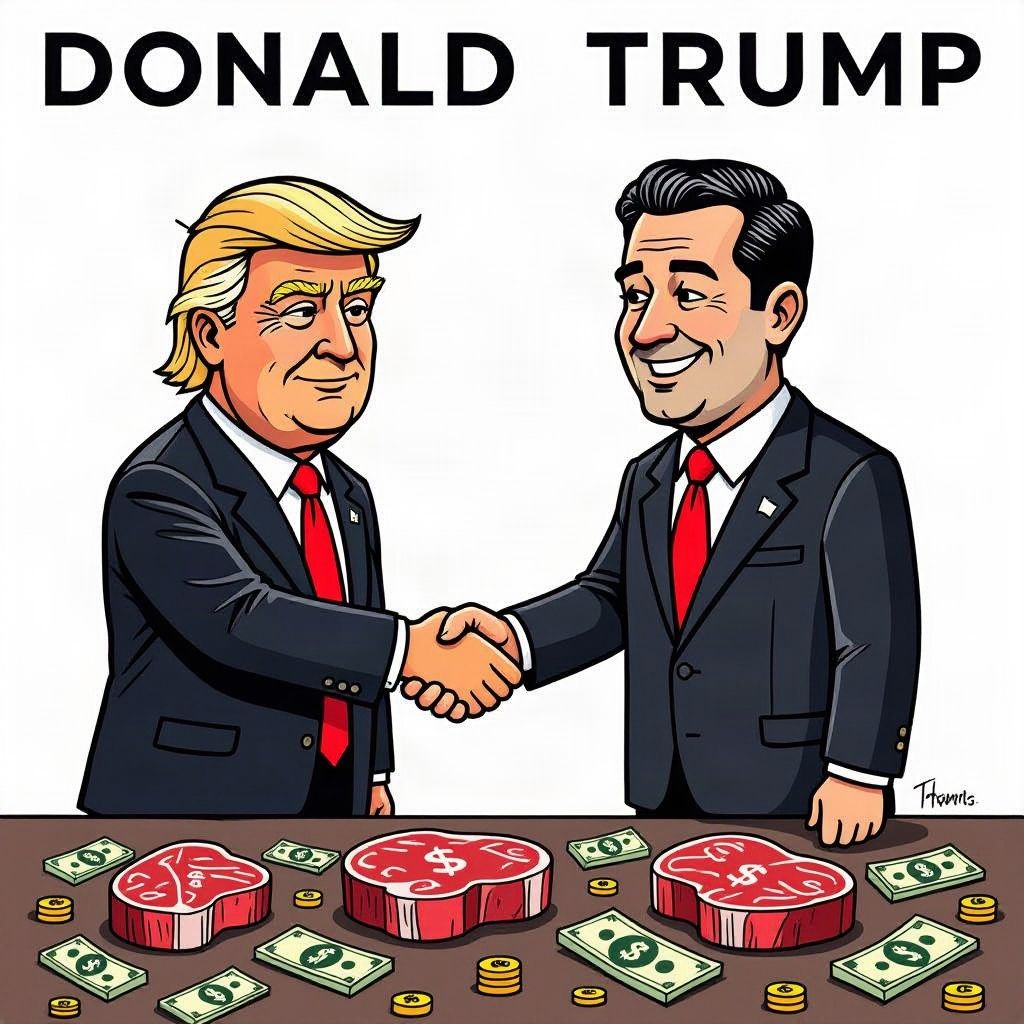
On August 20, 2026, JBS controlling shareholder Joesley Batista held a private meeting with President Donald Trump at the White House to discuss potential reductions on U.S. tariffs for Brazilian beef [1][2]. This interaction occurred exactly one day before the administration announced a temporary expansion of tariff-free beef imports into the United States [1][5]. The timing has drawn significant scrutiny regarding the influence of foreign agricultural interests on domestic trade policy decisions [2][4]. President Trump confirmed the meeting and the subsequent policy shift, framing it as a measure to reduce prices for Americans while allowing the domestic herd to rebuild [2][5].
Mechanics of the Tariff Waiver
On August 21, 2026, the administration formalized a policy allowing 300,000 metric tons of beef product for ground beef to enter the U.S. tariff-free over a 90-day period [1][5]. This volume represents roughly 2% of annual U.S. beef consumption and eliminates the existing 26% import duty typically applied to Brazilian beef [1][2]. The policy mandates that the imported beef be sold at 25% below current market prices to ensure consumer relief [1][5]. The allocation is structured to allow approximately 100000 metric tons per month for September, October, and November 2026 [5].
Market Volatility and Producer Pushback
Following the announcement, U.S. cattle producers reported that the August feeder board dropped by approximately $40 per head despite stable supply and demand conditions [2]. Industry leaders, including the U.S. Cattlemen’s Association and the National Cattlemen’s Beef Association, criticized the intervention as a market-disrupting measure that could undermine long-term herd expansion [1][2]. Justin Tupper, President of the U.S. Cattlemen’s Association, noted that such government interference signals instability during a critical time for ranch profitability [1]. Walter Schweitzer of the Montana Farmers Union added that while imports are necessary due to low cow herd numbers, the lack of labeling prevents consumers from making informed choices [1][2].
Political Connections and Donations
Financial ties between the administration and JBS have intensified the debate surrounding the tariff decision [2][5]. Pilgrim’s Pride, which is majority-owned by JBS, contributed $5 million to the Trump–Vance Inaugural Committee, marking it as the largest single donor to the inauguration celebration [1][5]. Additionally, in May 2026, Joesley Batista reportedly facilitated a meeting between President Trump and Brazilian President Luiz Inácio Lula da Silva in Washington [5]. These connections raise questions about the intersection of campaign finance, foreign lobbying, and agricultural trade policy [2][4].
Regulatory Oversight and Future Outlook
The U.S. Department of Justice is currently investigating the four largest U.S. beef processors, including JBS, regarding allegations of anticompetitive conduct [2][5]. Despite this scrutiny, the administration continues to engage with the company while simultaneously criticizing the concentration of foreign ownership in beef processing [2][5]. The tariff-free importation window is set to expire on November 19, 2026, following the 90-day implementation period [2]. Agriculture Secretary Brooke Rollins announced new risk management tools on August 31, 2026, citing concerns that beef processing has been consolidated and foreign-owned for far too long [5].