Private ICE Contractor Blocks NJ Governor from Newark Detention Center Amid Protests
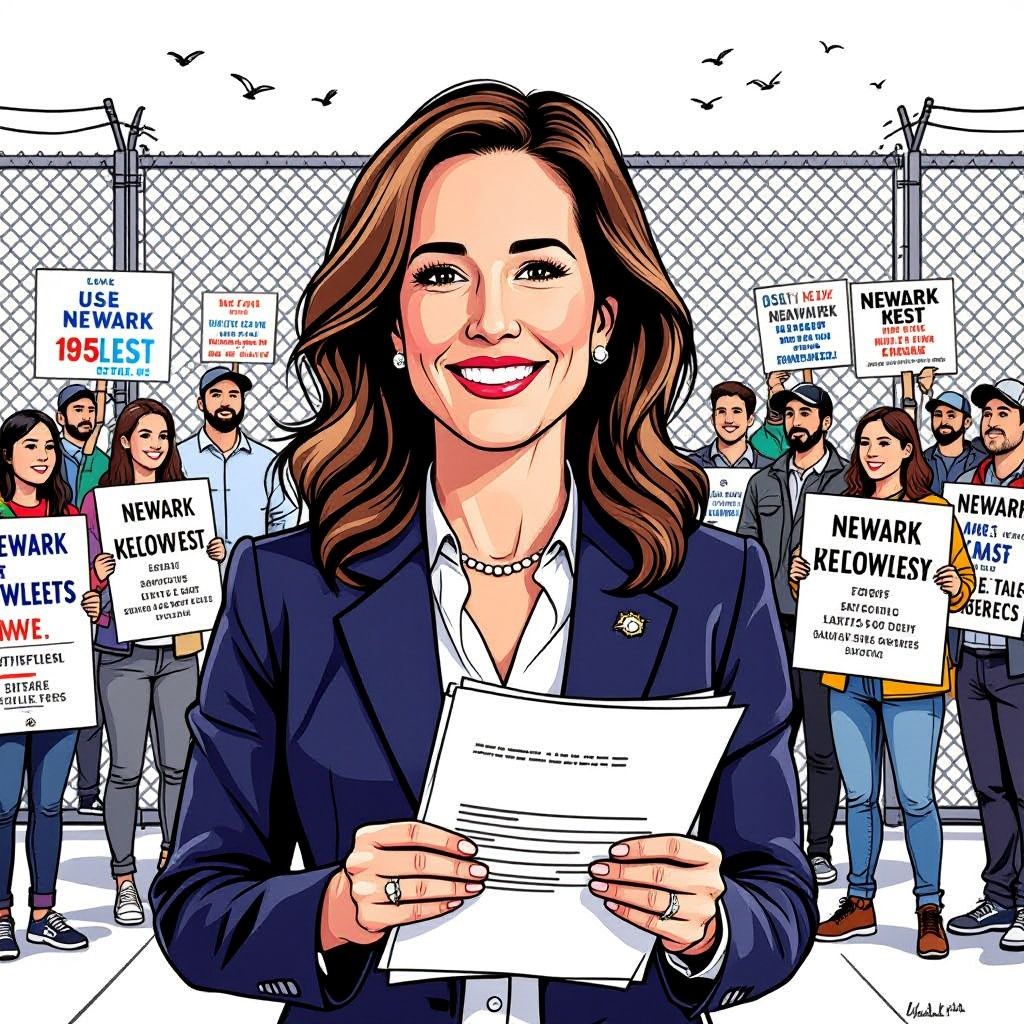
Newark, Monday, 25 May 2026.
New Jersey Governor Mikie Sherrill was denied entry to a private ICE detention facility during a detainee hunger strike, sparking intense scrutiny over the operational transparency of federal contractors.
Escalating Clashes and Denied Access
On Monday, May 25, 2026 [alert! ‘Sources conflict on the exact date of Governor Sherrill’s denial of entry, with some reports citing Sunday, May 24, and others citing Monday, May 25’], New Jersey Governor Mikie Sherrill, a Democrat, was formally denied access to the privately operated Delaney Hall immigration detention center in Newark [1][3]. This administrative blockade followed intense physical confrontations outside the facility, where demonstrators formed a human chain and reportedly threw water at U.S. Immigration and Customs Enforcement (ICE) agents [1]. In response, protesters allege that ICE agents deployed pepper spray and batons during the early hours of the morning [2]. The escalating situation has drawn a sharp rebuke from Governor Sherrill, who stated that the denial of entry raises “serious questions about what they are trying to hide from public view” [1][3].
Inside the Facility: Allegations and Denials
The catalyst for the current unrest is a coordinated hunger and labor strike that began on Friday, May 22, 2026, involving roughly 300 detainees [3]. This collective action was preceded by a group letter released the week of May 17, 2026, in which nearly 300 detainees detailed allegedly “inhumane” living conditions, encompassing chronic medical neglect and substandard food [1][2]. Detainees expressed feeling “kidnapped” and “tortured physically and psychologically” by the lack of adequate resources [1]. Nedia Morsy, director of Make the Road New Jersey, sharply criticized the private contractor’s operations, likening Delaney Hall to a “modern-day concentration camp” [3].
Political Fallout and Policy Intentions
The standoff at Delaney Hall is rapidly evolving into a broader partisan conflict regarding federal immigration policy under the Trump administration [2]. Democratic lawmakers have aggressively campaigned for increased oversight, with U.S. Senator Andy Kim and Congressman Rob Menendez Jr. previously visiting the site on May 18, 2026, to investigate complaints of spoiled food and medical negligence [2]. Senator Kim highlighted severe healthcare deficiencies, citing reports of a pregnant woman denied comprehensive OB-GYN care and another who allegedly suffered a miscarriage without adequate medical support [2]. Congressman Menendez explicitly tied the operational secrecy to federal leadership, arguing the restrictive access is a deliberate strategy to suppress stories of internal conditions and serves as a reflection of the country under the current Trump administration [2].