Trump Plans to End Iran Military Campaign Without Securing the Strait of Hormuz
Washington, Tuesday, 31 March 2026.
President Trump intends to conclude the Iran conflict while leaving the Strait of Hormuz closed, urging international allies to secure their own oil amid surging global energy prices.
A Strategic Pivot in Operation Epic Fury
Following the recent delivery of a 15-point peace proposal to Iran via Pakistani intermediaries
Shifting the Burden to European Allies
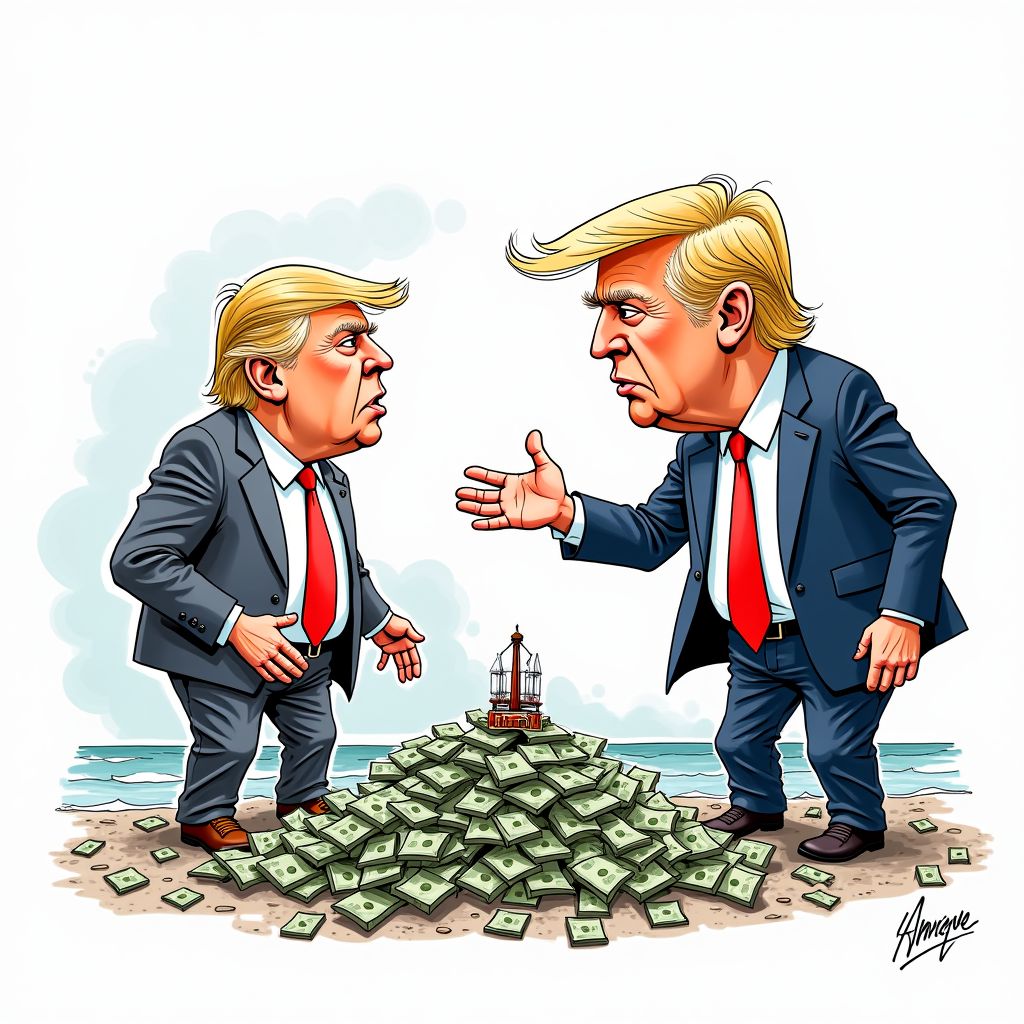
In a stark departure from traditional U.S. maritime security guarantees, President Trump is now explicitly demanding that European and Gulf allies take the lead in securing their own energy supply lines [1]. On Tuesday morning, the president used his Truth Social network to launch a blistering critique of European nations, specifically targeting the United Kingdom and France for their lack of direct military participation in the U.S.-Israeli mission [1][3]. “Build up some delayed courage, go to the Strait, and just TAKE IT,” Trump posted, adding, “Go get your own oil!” [1]. This rhetoric underscores a growing transatlantic rift regarding the management of Middle Eastern security and global energy flows [GPT].
Global Energy Markets Face Prolonged Disruption
The prospect of a persistently closed Strait of Hormuz has sent shockwaves through global energy markets, triggering what analysts are calling the most severe oil shock in decades [2]. Since the U.S.-Israeli military campaign began on February 28, 2026, European natural gas prices have surged by more than 70% [2]. In the United States, the national average for regular gasoline surpassed $1.06 per liter (equivalent to $4.018 per gallon) on March 30, the highest level observed since mid-2022 [2][5]. This represents a significant domestic price hike, climbing from $0.79 per liter just before the conflict began, marking an increase of 34.177% [2]. Concurrently, U.S. diesel prices have climbed to $1.44 per liter ($5.454 per gallon), while Brent crude has traded at roughly $112 per barrel and West Texas Intermediate (WTI) crude has hovered around $102 per barrel [2].
Ultimatum to Tehran Amid Ongoing Negotiations
While President Trump has signaled a willingness to step back from reopening the Strait of Hormuz, he continues to wield the threat of devastating infrastructure strikes to force Tehran’s hand [4]. The president stated that the U.S. is making “great progress” in talks with a “more reasonable regime” in Iran, but he issued a severe ultimatum should a diplomatic resolution fail to materialize [4][6]. Trump warned that if the waterway is not immediately opened, the U.S. military will completely obliterate Iran’s electric generating plants, oil wells, and the critical Kharg Island export terminal [4]. Additionally, he explicitly threatened to target civilian desalination plants, a move that prompted immediate alarm from neighboring Qatar, which relies on desalination for 99% of its drinking water and warned of the massive threat to human life in the region [2][4]. Concurrently, the military situation remains volatile; for instance, mysterious explosions were reported in Tehran on March 30 [alert! ‘The exact cause and responsible party for the March 30 explosions in Tehran remain unconfirmed by official military sources’] [2].