Egypt’s $750 Million Rail Upgrade to Cut Trade Times and Boost Global Logistics
Cairo, Thursday, 18 June 2026.
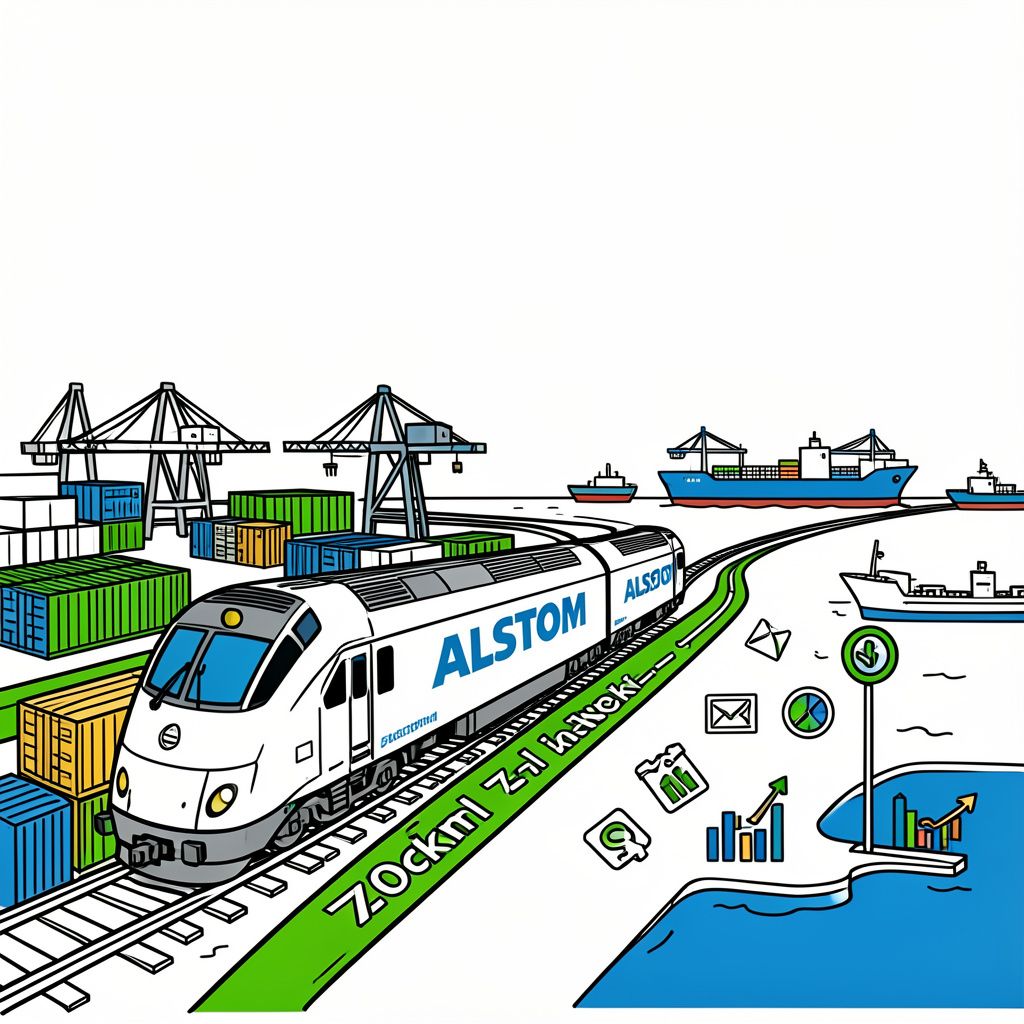
Egypt is set to slash rail transit times by over an hour with a €690 million ($750M) modernization project led by Alstom, transforming key trade corridors by 2028. This upgrade—part of Egypt’s Vision 2030—will double freight capacity, integrate digital signaling, and connect industrial zones to ports, positioning the country as a critical link between Africa, Europe, and Asia. The project’s most striking feature? A 70-kilometer greenfield rail link designed exclusively for freight, a first for Egypt’s logistics network. With European firms leading the charge, this initiative signals a shift in global supply chain resilience—one that could redefine trade flows for decades.
The Strategic Corridors: Mapping Egypt’s Rail Transformation
The €690 million ($750M) modernization project targets two of Egypt’s most critical rail corridors: the 6th of October–Alexandria line and the Belbes–10th of Ramadan (B10) connection [1]. The 6th of October–Alexandria corridor alone accounts for approximately €550 million of the total investment, with Alstom’s share valued at €240 million [1]. This corridor will see the implementation of three distinct lots, including a groundbreaking 70-kilometre greenfield rail link dedicated exclusively to freight—a first for Egypt’s logistics infrastructure [2]. The remaining €140 million is allocated to the B10 line, where Alstom holds a €60 million stake [1]. These corridors serve as vital arteries connecting Egypt’s industrial zones, dry ports, and seaports, forming the backbone of the country’s trade network [3].
Digital Revolution: The Technology Powering Egypt’s Rail Upgrade
At the heart of the modernization effort lies a comprehensive digital overhaul. The project introduces European Train Control System (ETCS) Level 1 signalling—a first for Egypt’s rail network—alongside state-of-the-art telecommunications and power infrastructure [1]. These upgrades will enable real-time network management through advanced operations control capabilities, significantly enhancing both safety and efficiency [1]. The digital railway systems are expected to reduce transit times by up to 80 minutes on the 6th of October–Alexandria corridor alone [1]. For context, this represents a 50% reduction in travel time, assuming the current journey takes approximately 160 minutes [GPT]. The integration of these technologies aligns with global trends in rail modernization, where digital signalling systems have been shown to increase network capacity by up to 40% in comparable projects [GPT].
Local Partnerships and Economic Impact: Building Egypt’s Rail Future
The Alstom-led consortium includes two key Egyptian partners: Rowad Modern Engineering (RME), a subsidiary of Elsewedy Electric Group, and Concrete Plus [2][3]. RME’s involvement extends beyond the current project, as the company is simultaneously serving as the main contractor for Alstom’s new railway manufacturing complex in Borg El Arab, Alexandria [2]. This 40-acre facility, located in the Borg El Arab industrial zone, will house production lines for railway electrical systems and rolling stock units [2]. The consortium’s approach emphasizes local content, with approximately 50% of the project’s value expected to be sourced locally through Egyptian engineering talent and materials [1]. This localization strategy not only supports Egypt’s Vision 2030 economic development plan but also creates long-term capacity within the country’s rail sector [3].
Global Trade Implications: Egypt’s Position in the New Supply Chain Landscape
The rail modernization project arrives at a critical juncture for global trade. Egypt’s strategic location at the crossroads of Africa, Europe, and Asia has long made it a key player in international logistics, but its rail infrastructure has historically lagged behind its potential [GPT]. The current upgrades are expected to double freight capacity on the targeted corridors, directly addressing supply chain bottlenecks that have constrained trade flows in the region [1]. The project’s timing coincides with a broader shift in global supply chains, as companies seek to diversify away from over-reliance on single routes or regions [GPT]. Egypt’s Vision 2030 explicitly identifies logistics as a priority sector, with the rail upgrades serving as a cornerstone of this strategy [1]. The World Bank and European Bank for Reconstruction and Development (EBRD) are supporting these infrastructure development programs, underscoring the international community’s recognition of Egypt’s growing importance in global trade networks [3].
Project Timeline and Future Outlook: What Comes After 2028?
The modernization project is scheduled for completion in 2028, with the consortium responsible for end-to-end delivery including engineering, design, supply, testing, and commissioning of the new systems [1]. The phased implementation approach will see the 6th of October–Alexandria corridor upgrades rolled out in three distinct lots, while the B10 line will be delivered as a single package [2]. Beyond the immediate benefits of reduced transit times and increased capacity, the project is expected to generate long-term economic multipliers. Studies of comparable rail upgrades in emerging markets suggest that every $1 invested in rail infrastructure generates between $3 and $4 in economic benefits over a 20-year period [GPT]. For Egypt, this could translate to economic impacts ranging from $2.25 billion to $3 billion over two decades, based on the current investment of $750 million [GPT]. The project also sets the stage for future expansions, with the new manufacturing complex in Borg El Arab positioning Egypt as a potential hub for rail technology production in Africa and the Middle East [2].