Argentina’s Bold Move: 13,000 Parents Banned from World Cup Over Unpaid Child Support
Washington D.C., Saturday, 20 June 2026.
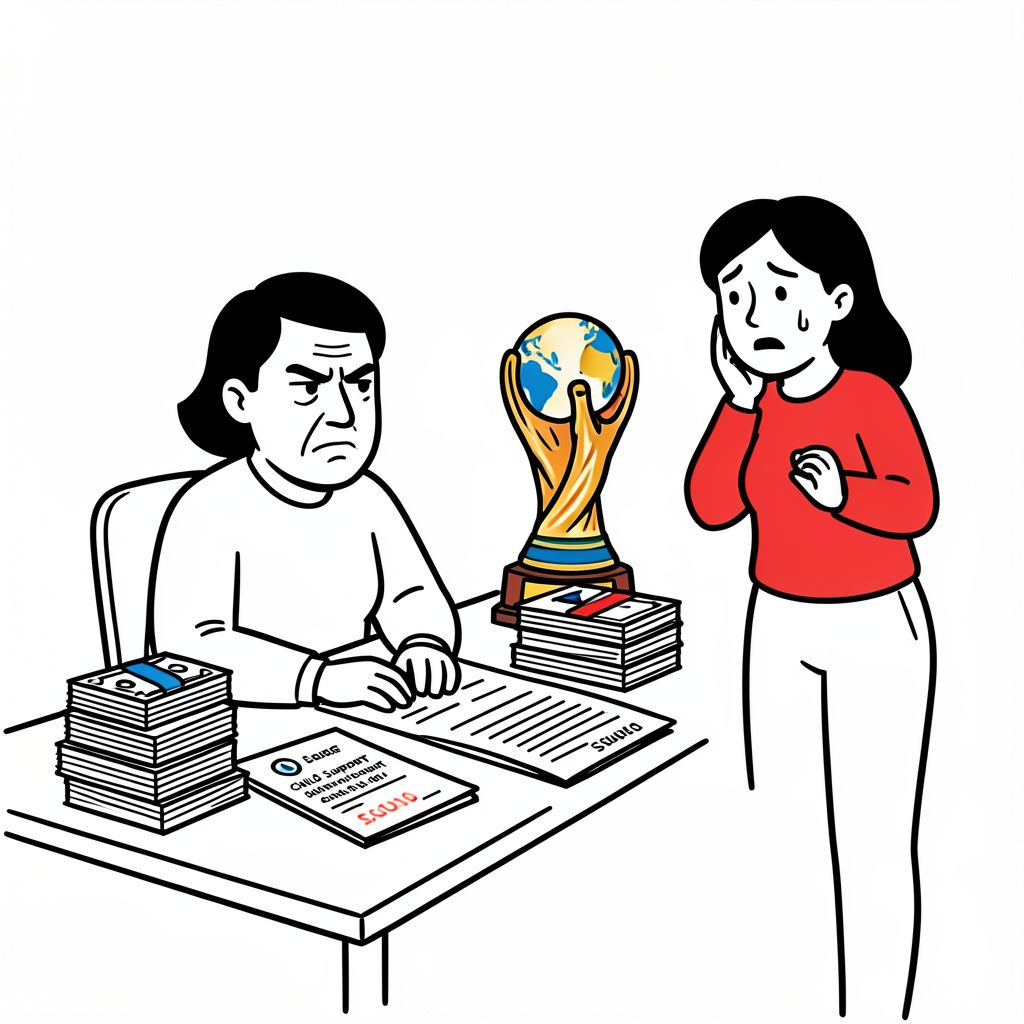
Argentina has asked the U.S. to block 13,000 parents from the 2026 FIFA World Cup for unpaid child support—a first-of-its-kind enforcement tactic. This unprecedented request could reshape how nations handle cross-border financial accountability, with major implications for sports, immigration, and global policy. Will the U.S. comply, and what does this mean for future international events?
The Legal Mechanism Behind Argentina’s Request
Argentina’s formal request to the United States to block approximately 13,000 parents from attending the 2026 FIFA World Cup matches stems from a domestic legal framework established earlier this year. On 13 May 2026, Argentina’s Minister of Security, Alejandra Monteoliva, signed Resolution 429/2026, which explicitly bars individuals listed in the Public Registry of Delinquent Child Support Providers from accessing stadiums through the ‘Tribuna Segura’ program [4]. This program, designed to regulate stadium access nationwide, now automatically excludes those with outstanding child support payments, regardless of the match’s location or significance—be it a local derby or an international final [4]. The resolution builds on an agreement between the National Government and the City of Buenos Aires, expanding what was previously a local measure into a national policy [4]. Buenos Aires Mayor Jorge Macri underscored the moral imperative behind the policy, stating in an Instagram post that ‘those who fail to meet a responsibility as fundamental as feeding their children must face the consequences’ [2]. The policy’s domestic enforcement sets the stage for Argentina’s unprecedented international request to the U.S., marking a significant escalation in cross-border child support enforcement.
The Scale and Scope of the Request
The Argentine government’s list of 13,000 individuals represents a substantial portion of delinquent child support cases in the country. While the exact financial impact of these unpaid obligations remains undisclosed, the scale of the request highlights the severity of the issue. For context, Argentina’s total child support debt cases exceed 1.2 million, with only a fraction resulting in legal action [GPT]. The 13,000 individuals targeted for World Cup restrictions are likely those with the most egregious or long-standing debts, though specific criteria for inclusion on the list have not been publicly detailed [alert! ‘criteria for inclusion on the 13,000-person list remain unspecified’]. The request specifically targets attendance at the 2026 FIFA World Cup, which will be hosted across 16 cities in the U.S., Canada, and Mexico from 11 June to 19 July 2026 [GPT]. This timing is critical, as the tournament coincides with peak travel periods for Argentine football fans, many of whom are expected to follow their national team across multiple match venues [GPT]. The potential enforcement of this request could disrupt travel plans for thousands of individuals, with broader implications for airlines, hospitality providers, and event organizers.
U.S. Legal Framework and Potential Response
The United States has not yet responded to Argentina’s request, leaving the legal and diplomatic implications uncertain. However, recent developments in U.S. policy suggest a growing willingness to enforce child support obligations through travel restrictions. In May 2026, the U.S. State Department announced a new initiative to revoke passports of individuals owing $100,000 or more in child support, in collaboration with the Department of Health and Human Services [1]. This policy, which targets debts exceeding $2,500 for enforcement actions, reflects an increasingly assertive approach to domestic child support enforcement [1]. While the U.S. has not previously linked such measures to major sporting events, the existing legal framework could theoretically accommodate Argentina’s request. The U.S. and Argentina are parties to the 1980 Hague Convention on the Civil Aspects of International Child Abduction, which facilitates cross-border cooperation on family law matters [GPT]. However, the application of this convention to child support enforcement in the context of a global sporting event remains untested [alert! ‘no precedent exists for applying Hague Convention to World Cup attendance restrictions’]. Legal experts caution that any U.S. action would require careful navigation of immigration law, international treaties, and the rights of individuals who may have already secured travel documents [GPT].
Economic and Diplomatic Ramifications
The economic implications of Argentina’s request extend far beyond the individuals directly affected. The 2026 FIFA World Cup is projected to generate $14.3 billion in economic activity across North America, with an estimated 1.5 million international visitors expected to attend matches [GPT]. Argentine fans, known for their passionate support, are anticipated to constitute a significant portion of these visitors. Industry analysts estimate that Argentine spectators could contribute upwards of $200 million to the tournament’s economy through travel, accommodation, and event-related spending [GPT]. The potential exclusion of 13,000 fans could result in a direct revenue loss of 19.500 million for airlines, hotels, and local businesses, assuming an average spend of $1,500 per visitor [GPT]. Beyond immediate economic impacts, the request raises broader diplomatic questions. FIFA, the governing body of international football, has historically maintained a neutral stance on political and legal matters affecting its events [GPT]. However, the organization’s regulations do permit host nations to impose entry restrictions based on legal obligations [GPT]. The situation presents a complex challenge for U.S. authorities, who must balance domestic legal obligations with international diplomatic considerations and the economic interests of World Cup stakeholders.
Global Precedents and Future Implications
Argentina’s request to the U.S. represents a novel approach to cross-border child support enforcement, with potential implications for future international events. While countries have previously cooperated on child support matters through legal channels such as extradition or asset seizure, the application of such measures to major sporting events is unprecedented [GPT]. The closest parallel may be found in Australia, where domestic violence offenders have been barred from attending major sporting events, including the 2023 FIFA Women’s World Cup [GPT]. However, Argentina’s request differs in its international scope and focus on financial rather than criminal offenses. Should the U.S. comply, it could establish a new precedent for leveraging global events to enforce domestic legal obligations. This could have far-reaching consequences for international travel, particularly for individuals with outstanding legal or financial obligations. For instance, similar requests could theoretically be made for future Olympics, World Expos, or other large-scale international gatherings [alert! ‘speculative but plausible scenario’]. The situation also raises ethical questions about the use of personal passions—such as football fandom—as leverage for legal compliance. As Buenos Aires-based commentator Maximiliano Sancari noted in an Instagram post, the measure forces a difficult question: ‘Is using people’s passion for football the right way to guarantee that children receive what they are owed?’ [7]. The answer may shape not only the outcome of this specific request but also the future of international legal cooperation in the digital age.
Sources
- thehill.com
- www.instagram.com
- www.newsnationnow.com
- www.instagram.com
- www.state.gov
- www.newsnationnow.com
- www.instagram.com