Central Florida Home Sellers Slash Prices as Listings Linger Past Two Months
Orlando, Monday, 2 November 2026.
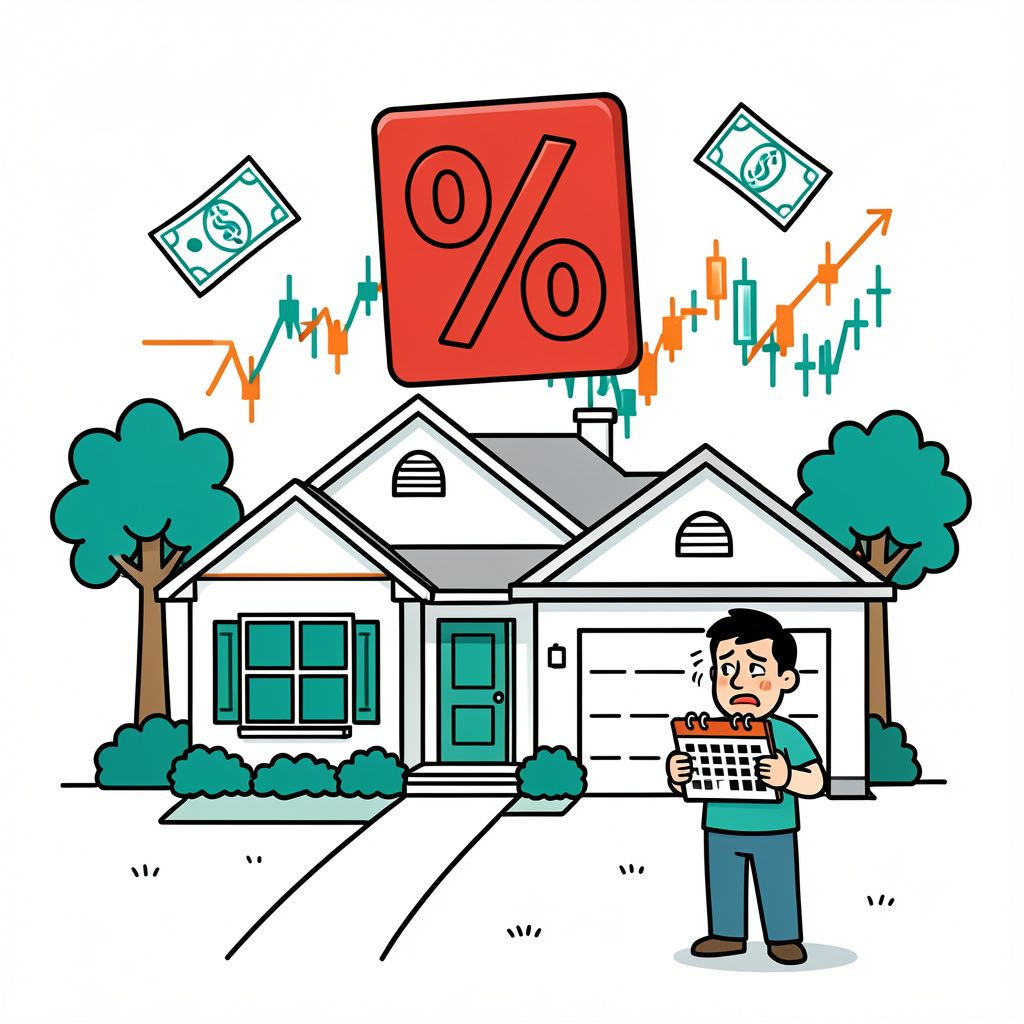
Over 1,200 Central Florida homes cut asking prices as weakening demand leaves 58% of discounted listings unsold for more than 60 days.
Market Conditions Signal Weakening Demand
A November 2026 regional real estate report by The Homes In Orlando Team at NextHome Neighborhood Realty, based on Stellar MLS data, reveals that 1,247 residential listings across Orange, Seminole, Volusia, and Lake counties underwent price reductions in the seven days preceding 1 November 2026 [1]. This represents a notable shift in the Central Florida housing market, where 720 of these discounted properties—57.74% of the total—have remained unsold for 60 days or longer. The regional average price cut stands at 3.30% from prior asking prices, with deeper reductions observed in Seminole County (3.51%), Volusia County (3.49%), and Lake County (3.50%). These figures underscore a growing imbalance between supply and demand, as sellers recalibrate expectations in response to higher borrowing costs and affordability constraints [1].
County-Level Disparities Reflect Localized Market Pressures
County-specific data highlights divergent trends within the broader Central Florida market. Orange County leads with 516 price reductions—a drop of 117 from the prior week—though its average list price remains the highest at $585,573 [1]. Notably, 54.65% of Orange County’s discounted listings have languished for 60+ days, suggesting persistent buyer hesitation despite price adjustments. In contrast, Seminole County recorded 188 reductions with the deepest average cut (3.51%) and a median list price of $407,493, while Lake County had the highest share of stale listings (61.86%) at an average price of $436,203 [1]. Volusia County, with 252 reductions and a median list price of $405,591, saw a 60.32% stale share, indicating that even aggressive pricing has failed to spur sales in a cooling market [1].
Broader Economic Implications for Central Florida
The surge in price reductions and prolonged listing durations carries significant economic implications for Central Florida. Realtor Brenden Rendo noted that the duration of a listing often matters more than the size of the price cut, as sellers who have already adjusted their prices and still failed to attract buyers demonstrate heightened motivation to transact [1]. This dynamic could pressure regional home valuations downward, particularly as higher mortgage rates—currently hovering near multi-decade highs—erode purchasing power [GPT]. Redfin data for Orange County reveals that median home sale prices rose by only 1.6% year-over-year in the three months ending September 2026, while the sale-to-list price ratio declined to 97.1%, signaling weaker bidding competition [3]. With homes spending an average of 67 days on the market (up from 47 days in 2025), the market’s sluggishness reflects broader affordability challenges that may ripple into local construction, retail, and financial sectors [3].
Future Outlook: A Market in Transition
Looking ahead, the Central Florida housing market faces a critical inflection point. While population growth and economic expansion have historically driven demand in the Sun Belt, elevated borrowing costs and persistent inventory overhang could temper these trends in 2026 and beyond [alert! ‘Fed policy uncertainty and mortgage rate volatility remain key variables’]. The 1,247 price-reduced listings recorded in early November represent a 95-listing decrease from the prior period, suggesting a potential stabilization in seller behavior [1]. However, with 57.74% of discounted properties still unsold after two months, the market’s resilience hinges on whether buyers re-enter the fray or if further price corrections become inevitable. For developers, lenders, and institutional investors, the current landscape demands a recalibration of risk assessments and investment strategies in one of the nation’s fastest-growing metropolitan regions.