Historic Rain Triggers Emergency Across Twenty-One Florida Counties
Cocoa, Saturday, 21 November 2026.
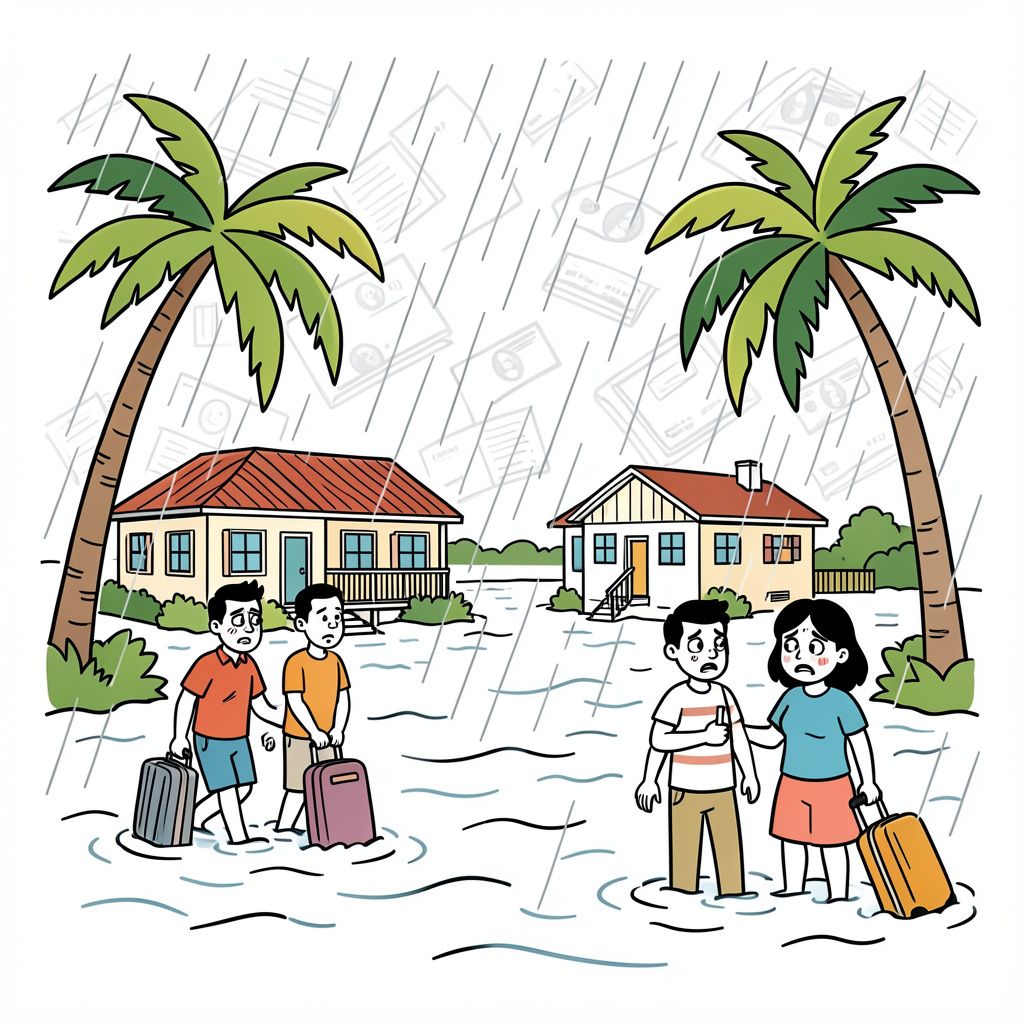
Unprecedented storms delivering up to 0.61 meters of rain have paralyzed Florida’s Atlantic coast, triggering National Guard deployments and expanding emergency declarations across 21 counties ahead of peak holiday travel.
Unprecedented Rainfall Paralyzes Florida’s Atlantic Coast
Catastrophic flooding has engulfed Florida’s Atlantic coastline as relentless storms dumped up to 0.61 meters of rain since Tuesday, November 17, 2026, triggering water rescues, evacuations, and operational paralysis in key logistics corridors [1][2]. The deluge has inundated critical infrastructure, including sections of Interstate 95, while localized rainfall in Brevard and Volusia counties exceeded 0.51 meters, with meteorologists warning of ‘major to extreme flooding’ where totals reached 0.3 to 0.51 meters [1]. As of November 21, 2026, the National Weather Service maintained Flood Watches across 320 kilometers of coastline from south of Melbourne to Jacksonville, with an additional 5 to 15 centimeters of rain expected through the weekend [2]. The St. Johns River, which rose above its 1953 record level near Cocoa on November 19, is forecast to remain at least 0.61 meters above flood stage through early next week, exacerbating tidal flooding risks [2].
Emergency Declarations Expand to Twenty-One Counties
Governor Ron DeSantis escalated the crisis on November 18, 2026, expanding the state of emergency to include Broward, Duval, Flagler, Miami-Dade, Monroe, Putnam, and St. Johns counties, bringing the total to 21 affected counties [3]. This followed an initial declaration on November 2 for seven counties, which was expanded on November 4 as flooding intensified. The executive order cited rainfall exceeding 0.25 meters within 12 hours in parts of Broward County, including Fort Lauderdale, Davie, and Hollywood, and warned of further damage to infrastructure and critical facilities from additional rainfall [3]. The Florida Realtors’ Disaster Relief Fund remains open to support members whose homes or real estate offices sustained serious damage, with applicants required to provide documentation such as damage photos, insurance summaries, and repair estimates [3].
National Guard Deployed Amidst Escalating Rescues
With over 1,000 state personnel—including National Guard, State Guard, and emergency management teams—conducting nearly 200 rescues, deploying 2,743 meters of flood barriers, and distributing 20,000 sandbags by November 20, the operational scale reflects the severity of the crisis [1]. The Florida Fish and Wildlife Conservation Commission (FWC) deployed approximately 235 emergency responders on November 19, rescuing over 90 residents at a flooded apartment complex in Broward County and transporting a non-breathing infant to emergency personnel [1][2]. Governor DeSantis announced the deployment of 750 Florida Department of Transportation (FDOT) team members, nearly 100 pieces of equipment, and over 45 pumps to repair state roads, including critical repairs to I-95 aimed at restoring traffic flow [1]. Meanwhile, the City of Palm Bay ordered mandatory evacuations for Palm Bay Estates on November 19, while Brevard County opened shelters in Cocoa and Melbourne [1].
Economic and Logistical Fallout
The flooding’s timing—coinciding with peak holiday travel—has paralyzed regional transportation networks, with I-95 closures and barricades along flooded roadways disrupting supply chains and travel plans [1][2]. The St. Johns River’s record rise and prolonged flood stage are expected to impact agricultural and commercial activities in the region, particularly in areas dependent on river access for shipping and tourism [2]. While residential property damage dominates immediate concerns, commercial infrastructure, including retail and logistics hubs, faces operational downtime, raising urgent questions for insurers and local businesses already grappling with severe physical damage [1][3]. The Florida Realtors’ Disaster Relief Fund, which remains open for applications, underscores the broader economic strain on homeowners and small businesses in the hardest-hit areas [3].
Meteorological Drivers and Forecast
The historic rainfall stems from the interaction between a strong high-pressure system over Virginia and a low-pressure system in the Gulf, compounded by persistent El Niño conditions expected to continue through spring 2027 [2]. NOAA’s Weather Prediction Center initially issued a Level 4 out of 4 flood risk for parts of Florida on November 20 but downgraded to Level 3 as conditions evolved, though Volusia and Brevard counties remained under grave warnings of 0.3 to 0.51 meters of additional rainfall on November 20 alone [1]. Meteorologist Noah Bergren of FOX 35 Orlando described the risk as ‘as high and serious a risk of flash flooding I have seen in a very long time,’ emphasizing the unprecedented nature of the event [1]. The low-pressure system is forecast to shift further north, impacting Georgia and the Carolinas over the weekend, followed by another Atlantic system bringing rain to the mid-Atlantic and New England regions by November 22 and 23 [2][alert! ‘Forecast status as of November 21, 2026, remains pending confirmation’].
Marine and Coastal Impacts
Coastal waters from Bonita Beach to the Suwannee River experienced gusty northeast winds of 15 to 20 knots through the morning of November 21, prompting a Small Craft Exercise Caution advisory, with wave heights reaching 1.2 to 2.4 meters in some areas [5]. The National Weather Service in Tampa Bay Ruskin issued a marine forecast on November 20, warning of continued rip currents and high surf through Saturday, November 21, while tidal flooding persisted in the St. Johns River basin and Intracoastal Waterway [5]. Forecasts indicate winds will decrease to 5 to 10 knots by Saturday evening, with marine conditions improving through midweek, though the extended duration of tidal flooding in the St. Johns River basin suggests prolonged disruptions to maritime activities [5].