Bank of Japan Set to Push Interest Rates to a 31-Year High
Tokyo, Friday, 12 June 2026.
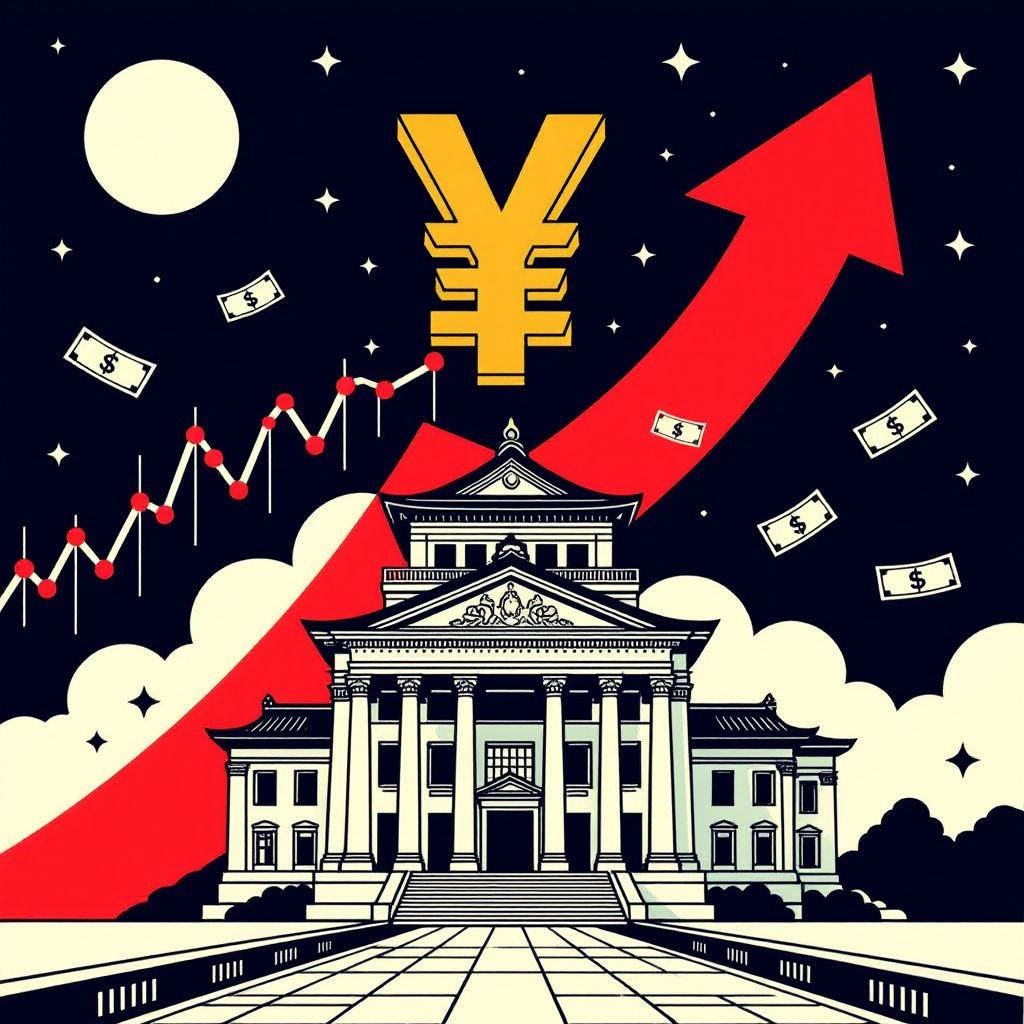
To combat persistent inflation and a depreciating yen, the Bank of Japan is expected to raise its key interest rate to 1% next week, hitting a historic 31-year high.
The Macroeconomic Drivers of Tightening
The Bank of Japan (BOJ) is widely anticipated to finalize its decision to raise its policy interest rate from 0.75% to 1.0% during its upcoming Monetary Policy Meeting scheduled for June 15 and 16, 2026 [2][7]. This move would mark a 31-year high, returning borrowing costs to levels not seen since 1995 [1][2][4]. The central bank previously raised rates in December 2025 but opted to hold them steady during its April 2026 meeting [1][7]. However, recent economic indicators and public statements from BOJ Governor Kazuo Ueda earlier this month have signaled a definitive shift from a wait-and-see approach to one characterized by urgency [1][6].
Market Consensus and Domestic Impact
Market consensus heavily supports the likelihood of immediate action. In a recent poll conducted between June 2 and June 8, 2026, 94.286 percent of surveyed economists predicted the BOJ would raise its key rate to 1.0% by the end of June [6]. Analysts project a continued tightening trajectory, with expectations that the rate will reach 1.25% in the fourth quarter of 2026 and potentially hit 1.50% by the second quarter of 2027 [6]. Sosuke Nakamura, an economist at Citigroup, emphasized that the recent depreciation of the yen means the downside risks of postponing a rate hike are mounting [6]. Reflecting this sentiment, former BOJ Governor Masaaki Shirakawa has publicly suggested that the central bank should have initiated these rate hikes even earlier [3].
Bond Purchases and the Global Context
Beyond standard interest rate adjustments, the BOJ is also reevaluating its quantitative easing mechanisms. During the upcoming mid-June meeting, the central bank is expected to outline its long-term government bond purchase policy, with internal discussions reportedly considering a pause in the tapering of its bond purchasing program starting in April 2027 [2][7]. Governor Ueda has emphasized the need to carefully balance these decisions, stating that policymakers must “consider both market functioning and market stability” [7]. The prospect of halting the reduction in bond purchases has already spurred targeted stock market activity, particularly driving investments into the domestic real estate and construction sectors [5].
Sources
- www.japantimes.co.jp
- asia.nikkei.com
- news.web.nhk
- newsdig.tbs.co.jp
- online.nikkei-cnbc.co.jp
- www.reuters.com
- japan-forward.com