Why Mega-Ships Bypassing Canadian Ports Threaten North American Supply Chains
Ottawa, Sunday, 7 June 2026.
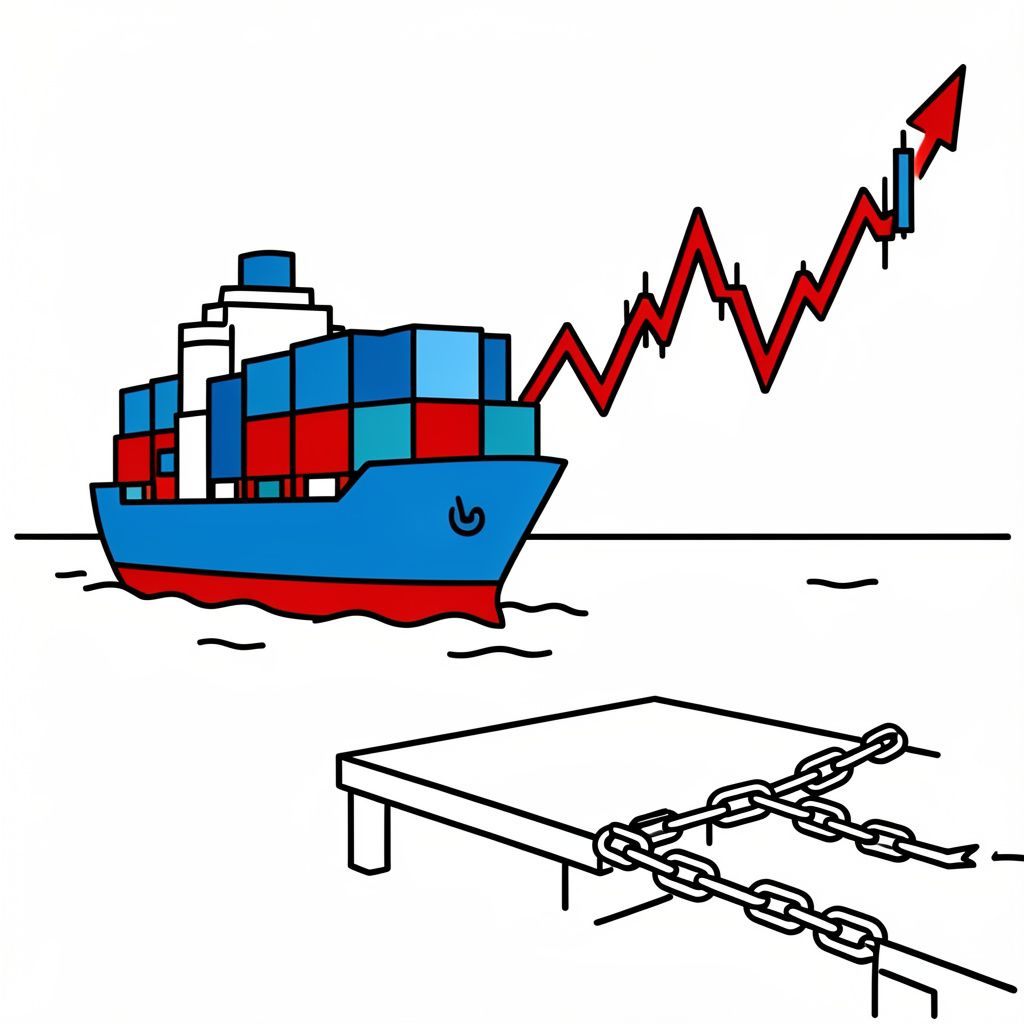
Canada’s global shipping rank plummeted from 6th to 23rd as massive new cargo vessels exceed local port capacities, exposing North American businesses to costly supply chain disruptions.
The Shift Toward East Asian Dominance
As North American ports struggle to accommodate modern mega-ships, global shipping connectivity has decisively shifted toward East Asia [1]. By 2023, East Asian ports claimed eight of the top ten spots for the world’s most-connected maritime hubs, an increase from six in 2016 [1]. Conversely, the United States, which boasted three ports in the top ten in 2016, saw its representation fall to zero by 2023 [1]. The Bank of Canada notes that the degree centrality—a metric evaluating the number of unique direct destinations—declined considerably for each of Canada’s top five ports during this timeframe [1].
Rising Freight Costs and Regulatory Headwinds
Compounding these logistical bottlenecks are escalating operational costs and tightening regulatory environments. On June 5, 2026, Japanese seafood conglomerate Nissui announced impending shipping price increases of up to 30 percent on frozen foods and fish products, citing intensifying cost pressures across global maritime networks [3]. Simultaneously, North American supply chains are navigating a labyrinth of new trade barriers. Following an executive order signed by United States President Trump on June 3, 2026, a new U.S. customs order tightened import scrutiny to transition toward Section 301 “reciprocal” tariffs [3].
Strategic Responses to Supply Chain Vulnerabilities
In response to these mounting vulnerabilities, governments and corporate coalitions are taking defensive measures to secure critical trade routes. The Canadian government recently announced an $816 million investment spread over seven years to bolster maritime security [3]. This funding will expand the Canadian Coast Guard’s monitoring capabilities in Arctic waters, establish a year-round Maritime Domain Awareness Hub in Iqaluit, and install four long-range radar sites along the Northwest Passage and Hudson Strait [3]. Concurrently, local leaders are fighting to protect regional logistics; on June 5, 2026, the Newfoundland and Labrador provincial government pleaded for federal support to maintain the “essential service” status of the Marine Atlantic ferry, a crucial supply chain link for North American seafood distribution [3].