Middle East Peace Stalls as Trump Seeks Direct Talks with Iran
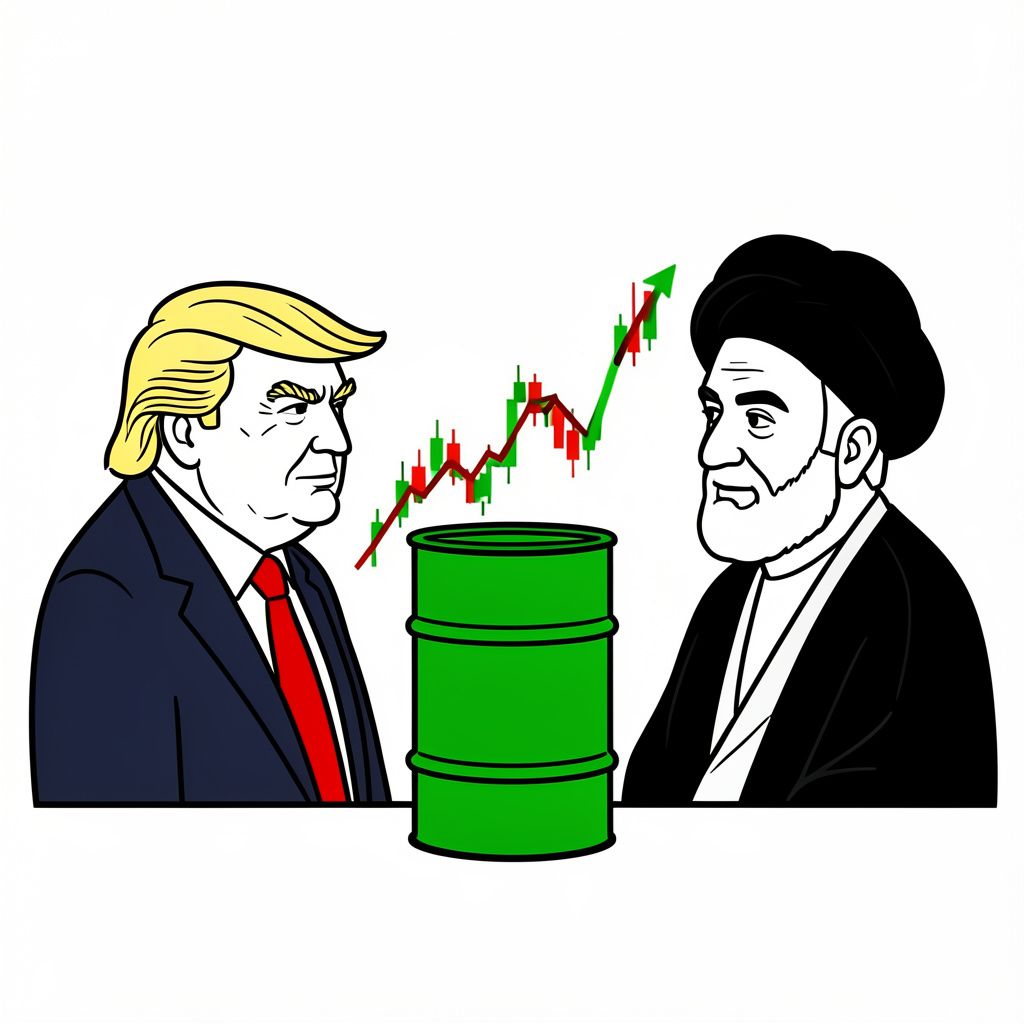
Washington, Friday, 5 June 2026.
Hezbollah has firmly rejected a US-brokered ceasefire. In a surprising pivot that could shake global energy markets, President Trump is now proposing a direct meeting with Iran’s Supreme Leader.
Diplomatic Deadlock and Escalating Hostilities
On June 4, 2026, Iran-backed Hezbollah formally rejected a new US-brokered ceasefire proposal [4][6]. The group’s leader demanded a complete cessation of hostilities and a full Israeli withdrawal from Lebanon as prerequisites for any peace agreement [2]. Despite Lebanese and Israeli officials agreeing to the framework in Washington, D.C., the truce failed to materialize on the ground [1]. Hezbollah Member of Parliament Ibrahim Al Moussawi publicly blamed the Trump administration for the ongoing conflict, asserting during a June 3 interview that President Donald Trump is fundamentally unable to contain Israel’s military actions [3].
Trump’s Pivot and the Gulf of Oman Confrontation
The diplomatic breakdown in Lebanon is deeply intertwined with the broader US-Iran relationship [GPT]. President Trump has floated the possibility of meeting directly with Iran’s new supreme leader if an agreement to end the war can be reached [2][3]. This potential summit, first suggested by Trump on May 28, 2026, introduces a critical new variable into international diplomacy [3]. However, Trump has also maintained a hardline stance on nuclear capabilities, asserting that the US does not necessarily need a deal with Iran to acquire enriched uranium [6]. Regarding Iran’s nuclear program, Trump confidently stated, “We could get it right now. I don’t think they could stop us if we wanted, but there’s no reason to. It’s entombed” [4].
Energy Markets and Global Supply Chain Vulnerabilities
The kinetic conflict is creating substantial shockwaves across global energy markets, exposing the fragility of international supply chains [GPT]. On June 4, 2026, Oman was forced to suspend oil loading operations at its Mina al Fahal terminal following an explosion [6]. Operations at the terminal resumed the following day, June 5, between the SBM 1 and SBM 2 berths, though the precise origin of the strike remains officially unconfirmed [alert! ‘The explosion is attributed to an alleged drone attack, but definitive attribution of the perpetrator is currently lacking in the provided reports’] [4]. The vulnerability of Middle Eastern oil infrastructure has been a critical concern since late February 2026, when US and Israeli airstrikes on Iran triggered a broader regional war [4].
The Humanitarian Toll and Defense Realignments
The economic fallout from the war extends far beyond energy markets, directly threatening global food security [GPT]. On June 5, 2026, the World Food Programme (WFP) issued a stark warning that rising fuel and transport costs are rapidly accelerating global hunger [4]. A previous forecast from March 2026 indicated that if oil prices remain at $100 per barrel through June 2026, 45 million people could face acute food insecurity [4]. The WFP projects it will serve 1.5 million fewer people globally in 2026, with severe hunger expected to impact 17.4 million people in Afghanistan and 6.5 million in Somalia [4]. The combined severe hunger projections for these two highly vulnerable nations alone total 23.9 million people [4].