Local Green Banks Bypass Federal Cuts to Fund Clean Energy Projects
Washington, Saturday, 17 October 2026.
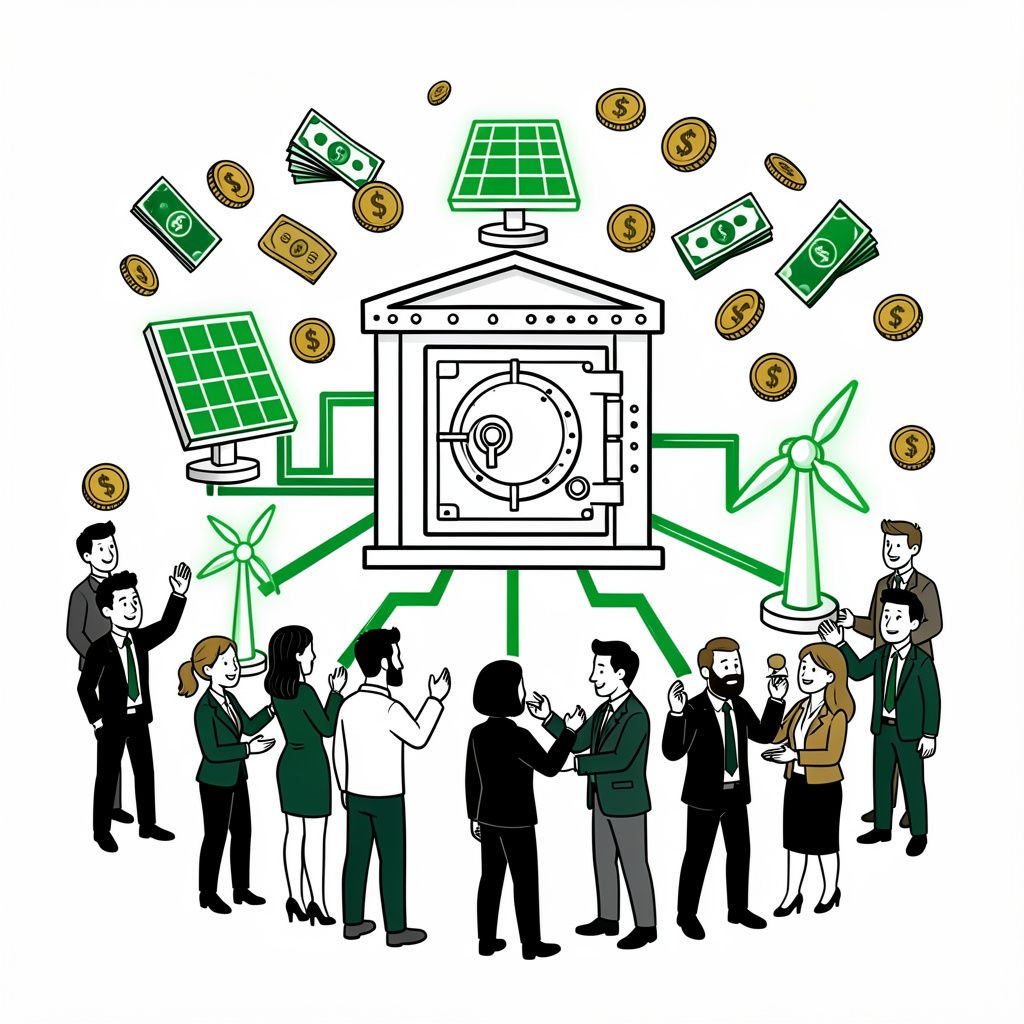
Despite federal funding freezes, U.S. green banks leveraged $1.4 billion to mobilize over $12 billion in clean energy investments by partnering with private lenders and major corporations.
Federal Legal Battles and Funding Freezes
Throughout 2026, the Trump administration has attempted to terminate significant portions of climate funding established under the Inflation Reduction Act, including a $7 billion Solar for All program and $20 billion in Greenhouse Gas Reduction Fund grants [1]. In August 2026, a federal ruling deemed the administration’s freeze of the $20 billion fund unlawful, followed by a separate October 2026 ruling by two federal judges that the termination of the Solar for All program was illegal [1]. Despite these judicial decisions, the administration has not released the funds and is expected to appeal to the U.S. Supreme Court, leaving the capital frozen as of October 17, 2026 [1]. This political landscape has forced green financial institutions to navigate federal climate funding clawbacks by diversifying funding sources away from reliance on federal grants [1].
Capital Mobilization and Private Sector Pivot
Despite federal uncertainty, 48 U.S. green banks financed over 40,000 projects during 2024 and 2025, deploying $1.4 billion of their own capital alongside $11 billion in private capital [1]. The U.S. Green Bank 50 coalition reports that across the network, green banks mobilized more than $12 billion in public and private investment for communities in 2024 and 2025 [2]. This leverage ratio indicates that for every dollar of green bank capital, approximately 7.857 dollars of private capital were mobilized [1]. Executive leaders note that public capital acts as a binding constraint, but green banks use flexible dollars to take on early risks, giving commercial banks confidence to invest subsequently [2]. Partners now include commercial banks, credit unions, philanthropic entities, and corporations such as Google [1][2].
Regional Implementation and Case Studies
Specific projects highlight the continued deployment of capital across various states. In September 2026, the U.S. Green Bank 50 released an impact report featuring a $10 million community solar array in New Orleans designed to reduce utility bills for up to 350 low-income households [1]. In Salt Lake City, a $4.5 million predevelopment loan supported a 396-unit affordable housing project, while the Florida-based Solar and Energy Loan Fund financed nearly $80 million in home energy-efficiency projects [1]. In Texas, solar panels are being installed on homeowner properties in Denton through the Clean Energy Fund of Texas [4]. Additionally, in Nevada, Google is backing a program with the Nevada Clean Energy Fund to help families fix up their homes and lower bills, targeting those turned away by traditional lenders [2].
Local Strategies and Future Outlook
At the municipal level, the Montgomery County Green Bank launched a $4 million initiative in March 2026 partnering with fintech company OneEthos to provide low-interest loans for residential energy projects [1]. Qualifying homeowners under this program can access solar loans with a subsidized interest rate of 2.99% for the first 15 years [1]. Separately, the bank’s Municipal Resilience Program, detailed in an article published on October 14, 2026, aims to bridge the gap between climate resilience planning and project financing readiness [3]. This program supports Montgomery County’s goal to achieve 100% greenhouse gas emissions reduction by 2035 [3]. While participating in resilience planning does not guarantee financing, it prepares municipalities to pursue capital pathways including public-private partnerships [3].