Transit Authority Suspends Agents After Violent Brooklyn Bus Dispute
New York, Saturday, 17 October 2026.
The MTA suspended four fare inspectors following a physical altercation in Brooklyn, highlighting operational challenges as bus fare evasion reaches 49% and costs hundreds of millions annually.
Escalation in Brownsville and Operational Fallout
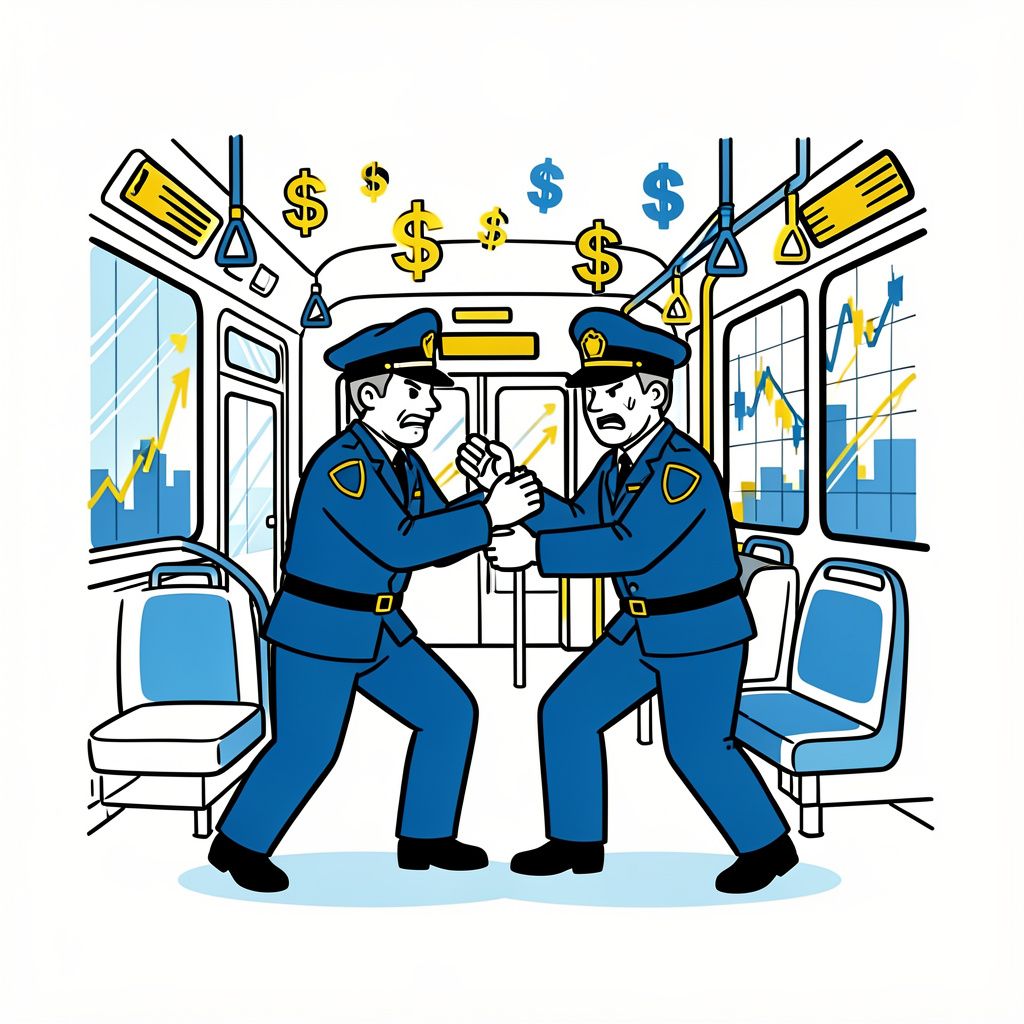
The operational crisis erupted following an incident on October 6, 2026, in Brownsville, Brooklyn, involving Kyle Taylor, a public school aide at Mott Bridges Academy [3]. According to account details, Taylor transferred from a B15 bus—where he had paid via debit card—to a B14 bus using a paper transfer [3]. When confronted at Pitkin and Rockaway Aves by members of the Metropolitan Transportation Authority’s (MTA) Evasion and Graffiti Lawlessness Eradication (EAGLE) team, Taylor declined to present identification after asserting his fare was paid [1][3]. Surveillance video circulating by October 13 showed agents pinning Taylor against a bus shelter [1][4]. Taylor’s legal counsel reported that he sustained a concussion along with head, neck, back, and shoulder injuries [3].
Administrative Action and Public Repercussions
By October 14, 2026, MTA leadership took administrative action, removing four EAGLE team inspectors from active enforcement duties pending a joint investigation with the New York City Police Department (NYPD) [1][3]. MTA Chair and CEO Janno Lieber and NYC Transit President Demetrius Crichlow emphasized that the inspectors receive extensive training in conflict resolution and de-escalation, noting concern over the physical nature of the encounter [1][3]. While NYPD officers responded to the scene, no criminal charges were filed against any parties involved [1][3]. Meanwhile, advocacy group Passengers United staged a protest outside Governor Kathy Hochul’s Midtown office on October 15, demanding mandatory body cameras, enhanced de-escalation protocols, and wider promotion of the ‘Fair Fares NYC’ income-subsidized program [4][7].
The Mounting Fiscal Strain of Fare Evasion
This enforcement friction occurs against a backdrop of severe revenue losses for New York City’s public transit network. MTA historical data illustrates a striking divergence between subway and bus compliance over recent years [4][7]. While subway fare evasion fell to 10% in 2026 after peaking at 14% in 2024 (up from 5% in 2019), bus fare evasion expanded to 49% in 2026 [4][7]. This represents a rise from 46% in 2024 and 20% in 2019, reflecting a growth rate of 145% in the non-payment rate over seven years [4][7]. Uncollected bus fares now drive annual losses exceeding $300 million, compounding fiscal strains on an agency tasked with maintaining critical urban infrastructure [3].
Policy Debates and Governance Dilemmas
The incident has ignited debates over transit governance and enforcement strategies across municipal and state levels. The EAGLE unit, consisting of approximately 350 unarmed employees established following the 2022 Blue Ribbon Panel on Fare and Toll Evasion, relies on handheld OMNY readers to verify tap-and-pay compliance rather than police powers [1][4][7]. Mayor Zohran Mamdani’s office voiced concerns over enforcement strategies while reiterating that transit safety must remain paramount [3]. As MTA officials evaluate both the internal investigation and broader revenue collection mechanisms, transit leadership faces the complex mandate of safeguarding hundreds of millions in necessary revenue without compromising passenger trust [1][3][4].
Sources
- www.nydailynews.com
- www.facebook.com
- www.amny.com
- pix11.com
- www.facebook.com
- www.reddit.com
- www.yahoo.com
- www.facebook.com