Billionaire Ken Griffin Funds Public Fossil Lab with Rare Dinosaur Loans in Pittsburgh
Pittsburgh, Saturday, 21 November 2026.
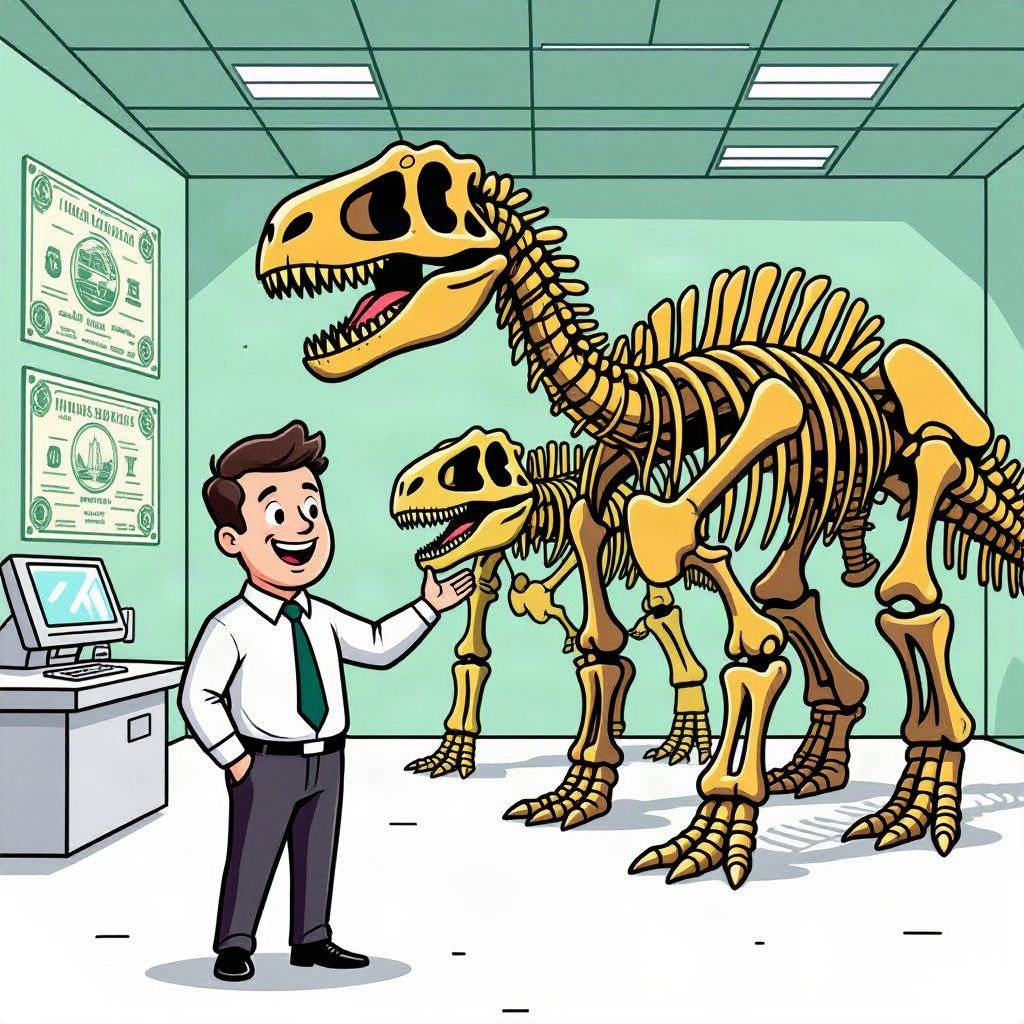
Citadel founder Ken Griffin loaned three 150-million-year-old sauropods and pledged $5 million to Pittsburgh’s Carnegie Museum of Natural History to build an interactive, public-facing fossil preparation laboratory.
A Philanthropic Power Move in Pittsburgh
Citadel founder Ken Griffin has made a landmark philanthropic investment in Pittsburgh’s cultural landscape, pledging $5 million alongside a decade-long loan of three rare sauropod fossils to the Carnegie Museum of Natural History. The donation, announced on November 19, 2026, underscores Griffin’s growing influence in reshaping regional institutions through high-net-worth capital allocation. The fossils—nicknamed Daisy (an adult), Lucky, and Lucy (two juveniles)—were excavated in Wyoming’s Morrison Formation between 2023 and 2025 and purchased by Griffin at Sotheby’s in 2025 for $44.6 million [1][2][4]. While Griffin’s $3 billion gift to Carnegie Mellon University earlier this year garnered headlines for its scale, this latest contribution signals a strategic pivot toward public-facing science education and infrastructure [3][5].
Building the Museum of the Future
The centerpiece of Griffin’s $5 million donation is the creation of a public fossil preparation laboratory, where visitors can observe paleontologists at work in real time. This initiative transforms passive museum exhibits into interactive learning environments, a model increasingly adopted by institutions seeking to demystify scientific processes. The laboratory will also support research into exceptionally rare fossilized skin samples, offering unprecedented insights into the physiology of these prehistoric giants [1][2][4]. Carnegie Museum of Natural History Director Dr. Carey Scheide Miller emphasized the collaboration’s potential to ‘bring the public directly into the practice of science,’ highlighting Griffin’s role in bridging philanthropy with community engagement [1][6].
Beyond Dinosaurs: Griffin’s Broader Philanthropic Vision
Griffin’s generosity extends beyond Pittsburgh. His $3 billion commitment to Carnegie Mellon University in 2026—earmarked for a Miami campus—remains the largest individual gift in higher education history [3][5]. This follows a pattern of transformative donations, including a $125 million gift to Chicago’s Museum of Science and Industry (renamed in his honor) and a $16.5 million contribution to Chicago’s Field Museum in 2017 [4]. The dinosaur fossils, however, represent a departure from traditional philanthropy: rather than permanent acquisitions, Griffin’s decade-long loan ensures these specimens remain accessible to both researchers and the public [1][2]. As of November 21, 2026, the fossils are slated to arrive at the museum by December 2026, with the new laboratory operational in early 2027 [2][4].
A Ripple Effect for Science and Tourism
The Griffin-funded initiatives are expected to boost Pittsburgh’s scientific research capacity and tourism appeal. The Carnegie Museum’s expanded DinoFest event and educational programming will leverage the fossils’ star power to attract visitors, while the public laboratory could serve as a model for other institutions. Museum President Steven Knapp framed the partnership as a testament to Carnegie Museums’ founding mission: ‘to transform lives and strengthen communities through art and science’ [6]. With Griffin’s net worth estimated at $56.3 billion as of November 12, 2026, his philanthropic strategy reflects a broader trend among ultra-high-net-worth individuals to prioritize legacy-building through large-scale cultural and educational investments [2][4].